


Ad
Kent Water Purifiers in India

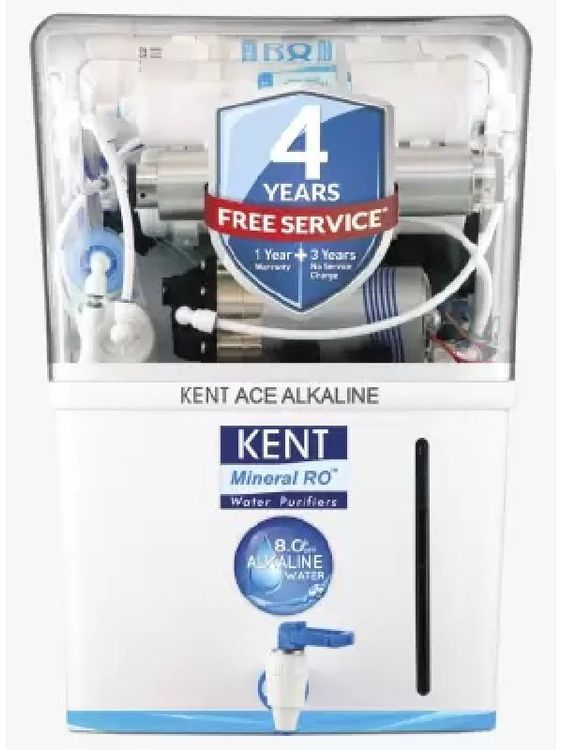
Kent Ace Extra Ace Alkaline
- Height : 50.5 cm
- Width : 38 cm
- Total Capacity : 8 Ltr. ₹17,499
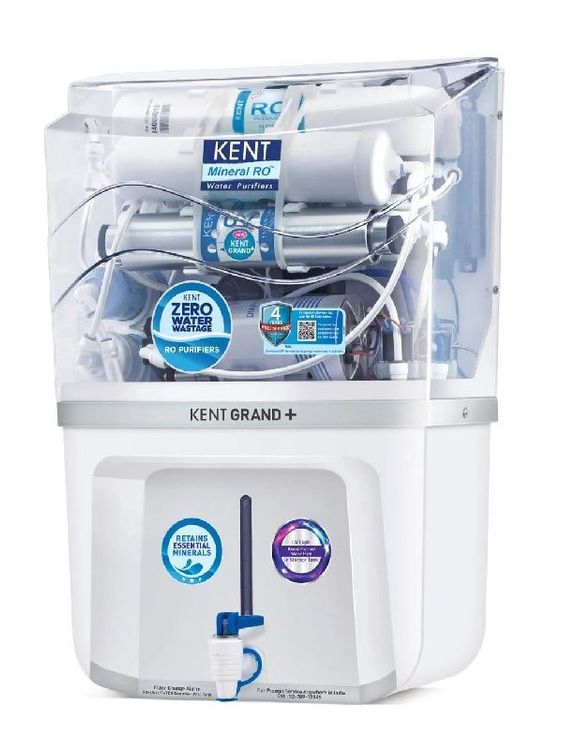
Kent Grand Plus-B
- Height : 54 cm
- Width : 23 cm
- Total Capacity : 9 Ltr. ₹18,650
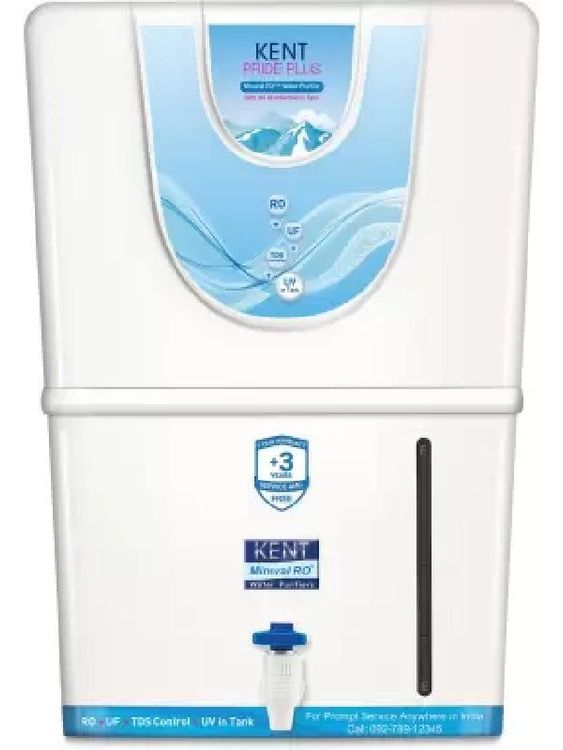
Kent Pride Plus
- Height : 50.5 cm
- Width : 38 cm
- Total Capacity : 8 Ltr. ₹14,980
Ad
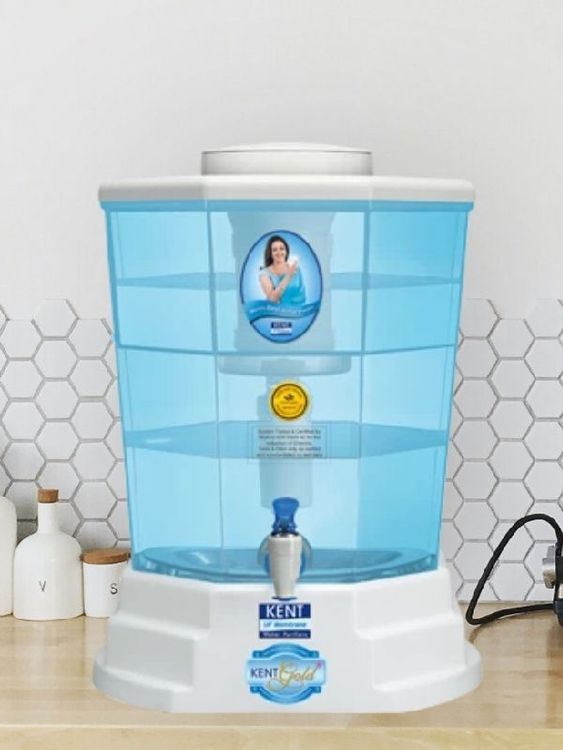
Kent Gold Plus
- Height : 38 cm
- Width : 36 cm
- Total Capacity : 20 Ltr. ₹2,779
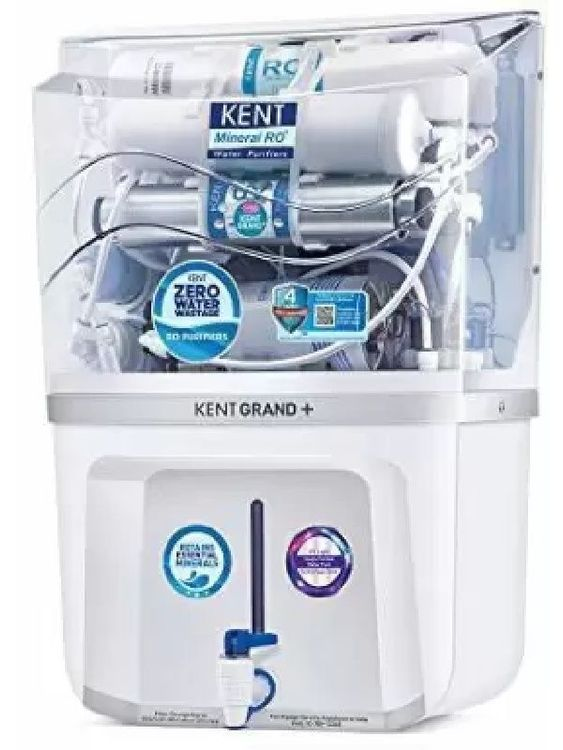
Kent Grand Plus ZW
- Height : 54 cm
- Width : 23 cm
- Total Capacity : 9 Ltr. ₹16,850
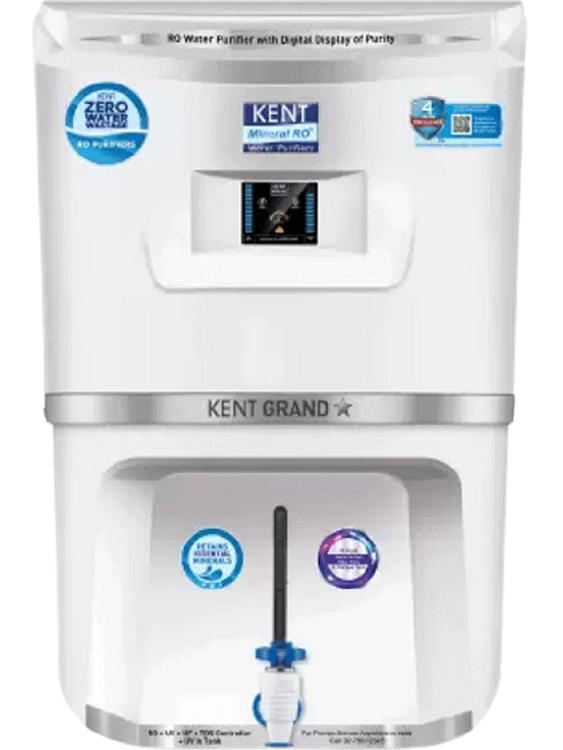
Kent Grand Star
- Height : 54 cm
- Total Capacity : 9 Ltr. ₹23,000
Ad
Best Kent Water Purifiers in India 2025
In a country like India, where water quality varies greatly from one region to another, having access to clean and safe drinking water is not just a luxury—it's a necessity. With rising concerns over waterborne diseases, high levels of total dissolved solids (TDS), and contaminants like bacteria, viruses, heavy metals, and chemicals, many households are turning to reliable water purifiers. Among the top brands, Kent stands out as a pioneer in water purification technology, especially tailored for Indian conditions. As a technology journalist, I've delved into Kent's lineup to bring you this in-depth article and buying guide. We'll explore the best Kent water purifiers across mixed budgets, focusing on models suitable for Indian homes. Whether you're dealing with hard water from borewells in Delhi or municipal supply in Mumbai, this guide will help you make an informed choice. We'll cover everything from basic features to advanced innovations, with real-world suggestions and examples to match your needs.
Kent has been a household name in India for over two decades, revolutionizing the way we purify water. Founded in 1999, the company introduced Reverse Osmosis (RO) technology to the masses, addressing the unique challenges of Indian water sources. Today, Kent purifiers are trusted by over 50 million users, backed by certifications like NSF/ANSI 58, CE, and ISO 9001:2015. Their products are designed to handle high TDS levels common in areas like Rajasthan or Tamil Nadu, while retaining essential minerals for healthy drinking water. In this guide, we'll break down the technologies, review popular models in budget, mid-range, and premium categories, and provide practical tips. Prices mentioned are approximate based on current market trends (as of October 2025) and may vary; always check online platforms like Amazon or Flipkart for the latest deals.
Understanding Water Purification Technologies in Kent Purifiers
Before diving into specific models, let's simplify the key technologies Kent uses. This will help you understand why certain purifiers suit your home better.
-
Reverse Osmosis (RO): This is the core of most Kent purifiers. RO uses a semi-permeable membrane to remove up to 99% of dissolved impurities like salts, heavy metals (arsenic, lead), pesticides, and fluorides. It's ideal for high TDS water (above 200 ppm), which is prevalent in many Indian cities. However, pure RO can strip away beneficial minerals, so Kent combines it with other tech.
-
Ultraviolet (UV) Disinfection: UV light kills bacteria and viruses without adding chemicals. Kent often includes UV in the storage tank to prevent recontamination, a smart feature for humid climates like Kolkata or Chennai where stored water can breed microbes.
-
Ultrafiltration (UF): This filters out larger particles like cysts and suspended solids. It's often paired with RO and UV for multi-stage purification.
-
TDS Controller: A patented Kent innovation, this allows you to adjust the TDS level in purified water, ensuring it retains natural minerals like calcium and magnesium. This prevents the water from tasting flat and promotes health benefits.
-
Additional Features: Many models now include Alkaline boosters (to raise pH for better digestion), Copper enrichment (for antimicrobial properties), Zero Water Wastage (recycles reject water), and Digital Displays for monitoring purity and filter life.
Kent's purifiers typically have 6-8 stages of purification, making them more thorough than basic models. For instance, in areas with borewell water, RO+UV+UF+TDS is a must to tackle hardness and microbes.
Why Choose Kent Water Purifiers for Indian Homes?
Kent isn't just about technology; it's about solving real Indian problems. Water in India often comes from diverse sources—municipal taps with chlorine, borewells with high TDS, or tankers with unknown contaminants. Kent's Mineral RO technology ensures purified water meets IS:10500 standards, the Indian benchmark for drinking water. The brand has won awards like the Golden Peacock for Eco-Innovation and is recognized as Asia's Most Promising Brand.
What sets Kent apart is its service network—the largest in India with over 1,500 centers. This means quick installations and maintenance, crucial in remote areas. Plus, most models come with a 1-year warranty and 3-4 years of free service. Users praise the durability; many report purifiers lasting 5-7 years with proper care. However, some note higher water wastage in basic RO models, which Kent addresses in premium ones with zero wastage tech.
In terms of energy efficiency, electric models consume about 60W, similar to a light bulb, and non-electric gravity-based ones are perfect for power-cut prone regions like Bihar or Uttar Pradesh.
Kent Water Purifier Buying Guide: Key Factors to Consider
Choosing the right purifier isn't one-size-fits-all. Here's a step-by-step guide tailored for Indian buyers:
-
Assess Your Water Source and TDS Level: Use a TDS meter (available for under ₹500 online) to check your water. If TDS is below 200 ppm (common in municipal water), a UV+UF model suffices. For 200-500 ppm (tap or borewell), go for RO+UV+UF. Above 500 ppm? Opt for advanced RO with TDS control. Example: In Hyderabad, where TDS can hit 800 ppm, Kent's Supreme series is popular.
-
Family Size and Storage Capacity: For 2-4 people, 7-8L storage is enough. Larger families (5+) need 9-12L. Purification rate (15-20 L/hr) ensures quick refills.
-
Budget: We'll cover mixed budgets—under ₹10,000 for basics, ₹10,000-20,000 for balanced features, and above ₹20,000 for premium smart models.
-
Features and Installation: Look for wall-mount designs for space-saving in small kitchens. Extras like alkaline or copper add health perks but increase cost. Ensure easy installation; Kent offers free demos.
-
Maintenance Costs: Filters last 6-12 months, costing ₹2,000-4,000 annually. Choose models with auto-flush to extend life.
-
Energy and Water Efficiency: Non-electric for rural areas; zero wastage for eco-conscious users.
Pro Tip: Read user reviews on Amazon or Kent's site. Avoid over-purification, as it can remove too many minerals—Kent's TDS controller helps here.
Best Kent Water Purifiers Under ₹10,000 (Budget Segment)
For entry-level buyers or small households, these models offer essential purification without breaking the bank. They're great for low TDS water or as a first purifier.
Kent Smart UV (≈₹9,000)
This non-RO model uses UV+UF for disinfection and filtration. With 7L storage and a detachable tank, it's easy to clean. Ideal for municipal water with TDS under 100 ppm. Pros: Low maintenance, no electricity for purification (though UV needs power), chemical-free. Cons: Not for high TDS; no mineral retention. User reviews highlight its simplicity—perfect for bachelors in cities like Bangalore. Example suggestion: If you live in a rented apartment with soft water, this saves money and space.
Kent Gold Plus (Gravity-Based, ≈₹3,000-5,000)
A non-electric UF purifier with 20L capacity (10L purified). It removes visible impurities and bacteria via gravity. Pros: Affordable, no power needed, portable. Cons: No UV or RO, so not for contaminated sources. Great for villages or during outages. Reviews praise its build quality for the price.
In this segment, expect 4-5 purification stages. Annual maintenance is under ₹1,000, making it budget-friendly.
Best Kent Water Purifiers Between ₹10,000-20,000 (Mid-Range Segment)
This is Kent's sweet spot—balanced features for most Indian families. These RO-based models handle diverse water types.
Kent Ace (8L RO+UV+UF+TDS, ≈₹10,000-12,000)
A bestseller with 7-stage purification and TDS controller. It purifies 15L/hr, suitable for borewell or tap water. Pros: Compact wall-mount, auto shut-off, 1-year warranty + 3 years free service. Cons: Basic design, no digital display. Reviews from Hindustan Times note its efficiency in high TDS areas like Gujarat. Suggestion: For a family of 4 in Pune with moderate TDS, this provides pure water tasting like mineral bottled ones.
Kent Grand Plus (9L RO+UV+UF+TDS+UV in Tank, ≈₹12,000-15,000)
Upgraded with zero water wastage and in-tank UV. It recycles reject water, saving up to 80% wastage—a boon in water-scarce Delhi. Pros: High 20L/hr rate, alkaline booster for pH balance. Cons: Slightly higher power use. Amazon users love the taste improvement. Example: In a Chennai home with tanker water, this ensures no wastage and adds health benefits like better digestion.
Kent Grand (8L RO+UF+TDS+UV LED, ≈₹9,999-12,000)
Similar to Grand Plus but without alkaline. It's NSF-certified for TDS reduction. Pros: Affordable entry to advanced RO, large service network. Cons: No copper feature. Ideal for mixed sources.
These models offer 7-8 stages, with maintenance around ₹3,000/year. They're versatile for urban and semi-urban India.
Best Kent Water Purifiers Above ₹20,000 (Premium Segment)
For those wanting smart features and health extras, these are top-tier.
Kent Grand Star (9L RO+UV+UF+TDS+Alkaline+Copper+UV in Tank, ≈₹20,000-25,000)
A smart purifier with digital display showing purity, filter life, and flow rate. Zero wastage and copper enrichment add antioxidants. Pros: 8-stage purification, auto-flush, suits all sources. Cons: Higher price, needs stable power. Reviews call it "future-proof" for health-focused families. Suggestion: For a large Mumbai family with high TDS, this monitors water quality in real-time.
Kent Supreme Alkaline (8L RO+UV+UF+TDS+Alkaline+UV in Tank, ≈₹18,000-22,000)
Focuses on alkaline water (pH 8-9.5) for immunity and acidity reduction. Pros: Inline UV, wall-mount, 20L/hr. Cons: Not for very low TDS. Popular in wellness circles. Example: If you're in Bangalore and want water that aids metabolism, this is ideal.
Kent Supreme Copper (8L RO+UV+UF+TDS+Copper, ≈₹20,000+)
Copper infusion for natural antibacterial properties. Pros: Enhances immunity, zero wastage. Cons: Premium pricing. Great for post-COVID health concerns.
Premium models have 8+ stages, smart alerts, and lower maintenance due to durability.
Recommendations and Real-World Examples
Based on scenarios:
-
High TDS Areas (e.g., Rajasthan Borewell): Go for Kent Supreme Copper. It handles 500+ ppm TDS while adding copper for health. A family in Jaipur reported fewer stomach issues after switching.
-
Small Urban Family (e.g., Delhi Apartment): Kent Ace or Grand. Compact and efficient; a user in Noida praised the quick service.
-
Health-Conscious Users (e.g., Gym-Goers in Mumbai): Kent Grand Star with alkaline and copper. It provides antioxidant-rich water, equivalent to eating fruits.
-
Rural or Power-Cut Prone (e.g., UP Village): Kent Gold Plus. Non-electric reliability; a farmer shared it lasts years with minimal care.
-
Eco-Friendly Choice: Any zero wastage model like Grand Plus, saving thousands of liters annually.
Always test your water and consult Kent's free demo.
Maintenance Tips for Long-Lasting Performance
To get the most from your Kent purifier:
-
Replace filters every 6-12 months or after 4,000-6,000 liters.
-
Clean the tank quarterly with mild soap.
-
Use genuine Kent parts to avoid warranty voids.
-
Schedule annual service; Kent's app reminds you.
Common issues like low flow? Check for clogged filters. With proper care, expect 5-10 years of use.
Conclusion: Invest in Health with Kent
In 2025, with water pollution on the rise, a Kent water purifier is a smart investment for your family's health. From budget options like Kent Smart UV to premium ones like Grand Star, the lineup covers all needs. Remember, clean water prevents diseases and boosts well-being—don't compromise. Check current prices, read reviews, and choose based on your water test. For more tech insights, stay tuned!
Ad
Ad


Ad
 |
|
Further Informations
Registered Office Address
807, 808, 8th Floor,
IRIS Tech Tower Sohna Road Sector 48,
Gurugram, Haryana - 122018
Popular Brands