



Ad
Expert Reviews
Samsung TVs Will Probably Never Support Dolby Vision: Here’s Why



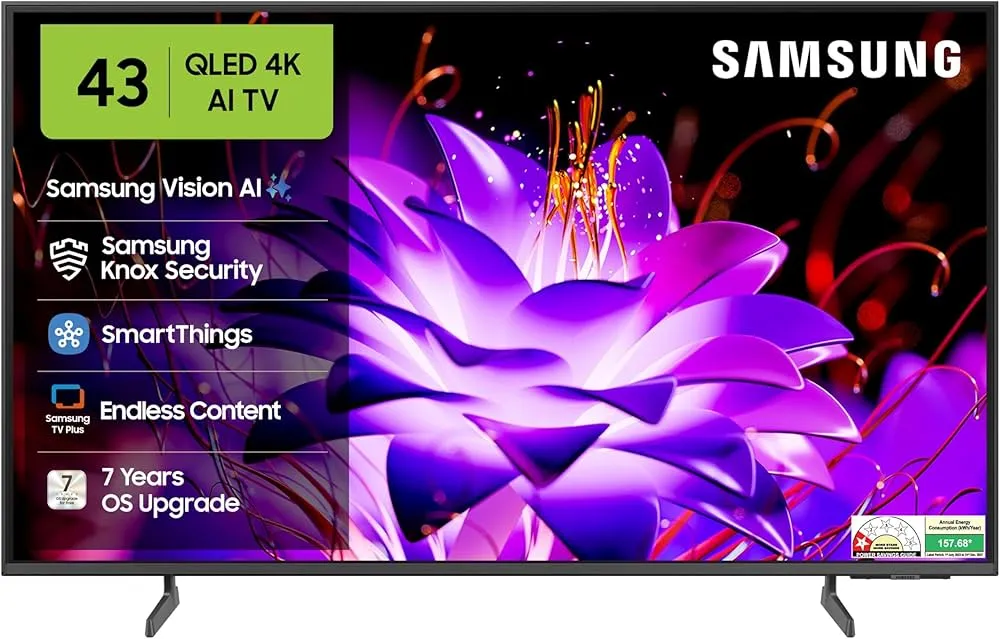
Samsung TVs continue to use HDR10+ instead of Dolby Vision, with Samsung continuing to leave Dolby Vision off its television lineup despite the format’s widespread adoption across streaming platforms, TVs and gaming devices. The company instead backs HDR10+, its own HDR format launched in 2017 as a direct alternative to Dolby Vision.
The decision is closely linked to licensing economics and Samsung’s long-term investment in HDR10+; and with new versions of both technologies arriving in 2026, the rivalry between the two HDR formats is continuing to evolve.
Key Highlights
Samsung TVs use HDR10+ instead of Dolby Vision.
Dolby Vision requires manufacturers to pay licensing royalties.
HDR10+ Advanced and Dolby Vision 2 introduced new AI-based features in 2026.
Why Samsung TVs Continue To Skip Dolby Vision
Samsung’s approach to HDR is largely built around HDR10+, which the company introduced in April 2017; unlike Dolby Vision, HDR10+ was developed as an alternative that gives Samsung greater control over the technology used in its televisions.
Dolby Vision is a proprietary format, meaning manufacturers need to license the technology and pay royalties for products that support it, and Dolby also requires testing to ensure compatible devices meet its standards. For a company selling televisions at Samsung’s scale, those costs can become significant.
HDR10+, meanwhile, is an open standard with substantially lower licensing costs; this allows Samsung to avoid the royalty structure associated with Dolby Vision while continuing to offer dynamic HDR capabilities on compatible televisions.
Dolby Vision Still Has Technical And Platform Advantages
The absence of Dolby Vision does not mean HDR10+ and Dolby Vision deliver identical capabilities. Dolby Vision supports up to 12-bit colour. HDR10+ uses 10-bit colour. Dolby Vision has also gained broader support across television brands, streaming services and gaming hardware.
HDR10+ has expanded considerably since its launch, but Dolby Vision remains widely available across the home entertainment ecosystem, for viewers choosing a Samsung TV, however, the distinction largely comes down to which HDR formats are supported by the content being watched.
HDR10+ Advanced And Dolby Vision 2 Arrive In 2026
The competition gained another chapter in August 2026 when Samsung introduced HDR10+ Advanced while Dolby announced Dolby Vision 2. Both formats bring AI-related improvements to HDR processing.
HDR10+ Advanced uses AI to adjust colour accuracy, brightness and motion, while also allowing scene-specific and genre-based optimisation. It includes features aimed at gaming as well.
Dolby Vision 2 similarly focuses on improvements to brightness and colour, while placing additional emphasis on creator control over how images are presented. HDR10+ Advanced is currently available with select Prime Video content on 2026 Samsung TVs, while Dolby Vision 2 has begun appearing on some Hisense televisions through firmware updates.
For Samsung, the continued development of HDR10+ makes Dolby Vision support appear increasingly unlikely, particularly as the company expands its own HDR ecosystem.
Follow Us:



Ad
Recent News

Leak Reveals Key Specs of Upcoming S2 FE With 10,000 mAh Battery
24-Sep-2026 03:30 PM

Qualcomm unveils new Snapdragon flagship chips
24-Sep-2026 11:38 AM

Samsung TVs Will Probably Never Support Dolby Vision: Here’s Why
24-Sep-2026 11:33 AM

Meta Connect 2026: New AI Glasses, VR Glasses & Muse AI
24-Sep-2026 10:30 AM

Realme 16 Pro 5G Harry Potter Edition Sells Out in India Within 24 Hours
24-Sep-2026 07:30 AM

Oppo K14 Plus Launches in India on September 29 with 8,000 mAh Battery
23-Sep-2026 02:30 PM
Ad
Reviews & Guides
View All


Samsung Galaxy Buds 4 Pro Review: Premium Sound And Powerful ANC

Best Battery Life Windows Laptops for Content Creators: 18+ Hours on a Single Charge

Samsung Galaxy S26 Ultra Review: Worth ₹1,39,999 in 2026?

MacBook Neo Review: Design, Display, Performance, Battery And Price

Samsung Galaxy S26 Ultra Review: AI से लेकर प्राइवेसी डिस्प्ले है सबसे खास, जानें कैसी है परफॉरमेंस
Vivo V70 Elite Review 2026: Price in India, Specs, Features

Best Budget Phones for Professional Content Creators in India

iPhone 18 Pro vs iPhone 17 Pro: Price, Specs, Camera & Features

Galaxy S26 FE vs iPhone 17: Price, Specs, Camera & Performance In India

Best Foldable Phones Under ₹1 Lakh in India

Best AI Smartphones Under ₹50,000

Apple AirPods 5: Price in India, Features and Specifications








Ad
 |
|
807, 808, 8th Floor,
IRIS Tech Tower Sohna Road Sector 48,
Gurugram, Haryana - 122018