



Ad
Articles
The Dawn of Foldable Phones: Are They Here to Stay?



Both customers and tech aficionados have let foldable phones inspire them. These gadgets are likely to transform the mobile market by promising to combine the broad screen real estate of a tablet with the smallness of a smartphone. Still, the issue is: Are foldable phones a passing fad or a mainstay of mobile technology going forward?
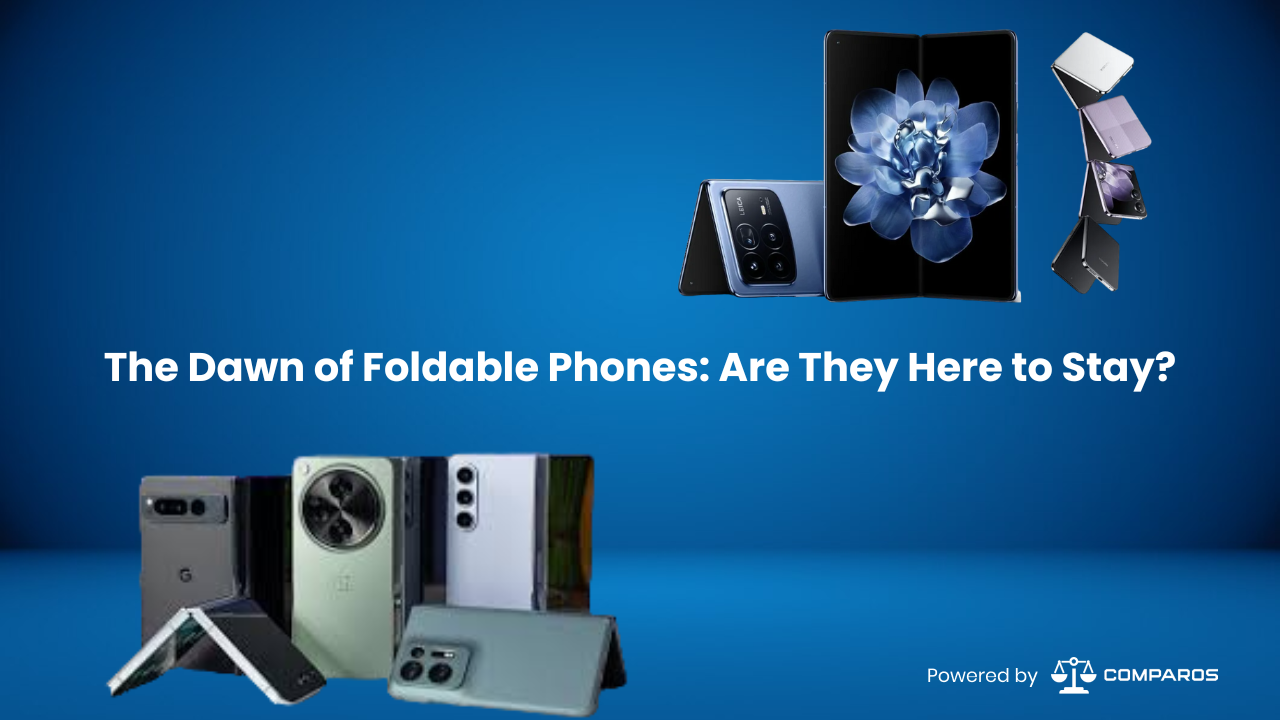
Foldable Phones: Their Evolution
Foldable displays have long been under development; early prototypes and ideas shown at tech expos create a lot of attention. But foldable phones didn't start to become popular until Samsung's Galaxy Fold launched in 2019. Notwithstanding early problems with screen durability, Samsung's tenacity helped rivals like Huawei, Motorola, and Xiaomi to launch their own foldable devices and cleared the path for better versions.
There were difficulties in Samsung's pioneering endeavor as well. The first Galaxy Fold drew criticism for its flimsy screen and hinge problems, which caused design changes and a delayed delivery. This uneven beginning emphasized the difficulty in designing foldable phones as well as the technology's promise. Every next model that has been developed since then has improved durability, utility, and general user experience.
Technological Advancements
Foldable phones have emerged thanks in great part to several technological innovations:
-
Flexible Display:OLED technology has made it possible to design screens that might fold and bend without sacrificing display quality. Engineering and material innovations have made these shows more dependable and sturdy. With its Ultra-Thin Glass (UTG) and other manufacturers, companies like Samsung have made major progress in improving the durability and adaptability of these screens.
-
Hinge Mechanisms: The evolution of complex hinge designs has been vital in guaranteeing that foldable phones can resist repeated opening and closing. Businesses have substantially spent in creating sturdy, yet smooth-operable hinges. Examples of manufacturers addressing the difficulty of producing a smooth fold while preserving structural integrity are Samsung's Hideaway Hinge and Huawei's Falcon Wing Hinge.
-
Software Optimization: Crucially, flexible software that can move between folded and unfolded states is The custom interfaces of both Android and OEMs have changed to enable split-screen and multitasking, so improving the user experience on foldable smartphones. Specific elements include app continuity and multi-active windows have been added into Samsung's One UI and Google's Android 10 and 11 versions to maximize the foldable phone experience.
Market Adoption and Consumer Interest
From tech enthusiasts to regular consumers looking for novel experiences, foldable phones have piqued interest across a broad audience. Widespread acceptance has been hampered by the initial high price points and questions about durability; yet, as the technology develops, prices should drop. Particularly for multitasking, gaming, and media consumption, early adopters of foldable phones have hailed its adaptability and efficiency gains.
For business customers, for instance, being able to run several programs concurrently on a larger screen can improve output. Gamers with a bigger display fit for their pocket can savor an immersive experience. Media aficionados can also value the ability to view movies and peruse the internet on a larger screen. This adaptability attracts to different user groups, therefore generating interest and acceptance.
Challenges and Criticisms
Foldable phones provide various difficulties even with their great excitement:
-
Durability: Issues over the long-term durability of foldable screens and hinges still exist even with developments. Potential problems producers have to deal with are mechanical breakdowns, wrinkles, and scratches. Real-world application can expose weaknesses not obvious in controlled testing conditions. Manufacturers must make sure these devices can resist daily use and wear.
-
Cost : Foldable phones limit their accessibility since they are much more costly than conventional smartphones. Prices are probably going to lower as manufacturing scales and technology gets more accepted, but cost is still a major consideration. The exorbitant pricing makes these gadgets less appealing to the typical user, who might choose more reasonably priced, standard cellphones.
3.Usability : Foldable phones' additional weight and thickness can compromise the convenience of a small device. Not all programs are also optimized for foldable screens, which would result in different user experiences. On foldable devices, developers must make sure programs function smoothly and quickly so that there is a flawless change between several screen states.
4.Battery Life : Larger, flexible displays use more energy to power, which may affect battery life. An ongoing difficulty is making sure foldable phones have enough battery capacity without greatly adding weight and bulk. Dealing with this issue will depend mostly on developments in energy-efficient components and battery optimization.
Foldable Phones: Their Future
Foldable phones have bright futures based on numerous measures of possible lifetime:
-
Continuous Innovation : Manufacturers are dedicated to perfecting foldable technology; every new generation of gadgets shows enhancements in durability, design, and use. For instance, Samsung has regularly upgraded its Galaxy Fold and Z Flip models by fixing early problems and introducing fresh functionality. Other businesses are probably going to do, stretching the possibilities for foldable phones.
-
Expanding Ecosystem: The usability and attraction of foldable screens will increase as more developers perfect applications for them. Adoption is probably driven by improved multitasking capacity and original user experiences. By working with manufacturers to produce foldable-friendly versions of Android, Google guarantees that the software ecosystem will efficiently support these devices. :
-
Consumer Demand: Foldable phones' adaptability and originality appeal clearly to a certain market niche. Companies will keep innovating and spending in this technology as long as demand exists. Foldable phones are still being developed and adopted in response to consumer demand in innovative technologies and novel form factors.
-
Diversification of Models : Foldable phone models should become more diverse as the market develops in order to appeal to various markets and budgets. This will put foldable phones more within reach for a larger audience. While premium models are pushing the envelope of technology and design, entry-level versions may have less features at a reduced price.
-
Integration with Other Technologies : Foldable phones might possibly find synergy with other developing technologies as 5G connection, augmented reality (AR), and enhanced artificial intelligence capabilities. These connections will improve the appeal and utility of foldable gadgets, hence increasing their attractiveness to consumers.
Comparos Says
Since their introduction, foldable phones have advanced beyond early doubt and technical challenges. Although foldable phones have difficulties with durability, pricing, and usage, the continuous developments and rising customer demand point to them as more than simply a fad. Foldable phones are likely to carve out a major niche in the mobile market as technology develops and maybe become a basic need in the future of personal electronics.
Rising foldable phones provide a major breakthrough in the mobile sector since they give a peek of the future of flexible, multifunctional tools. Their further evolution and acceptance will rely on tackling present issues and using innovations to provide an engaging user interface. Foldable phones are probably here to stay because to constant innovation and user demand, therefore influencing the direction of mobile technology for years to come.
Follow Us:



Ad
Recent News

Samsung Certified Re-Newed Galaxy S26 and S26 Ultra Now Available in India
11-Sep-2026 10:30 AM

Apple iPhone 18 Pro and Duo Launch in India: Price Hikes, Market Impact, and Consumer Trends
11-Sep-2026 08:30 AM

XECH Unveils Atmos Portable Air Purifier at ₹2,999, Designed for Every Indian Home
07-Sep-2026 11:05 AM

realme Retains No. 1 Spot in INR 3K–5K TWS Segment for Second Consecutive Quarter with 17% YoY Growth
07-Sep-2026 10:52 AM

WhatsApp Introduces Alphanumeric Passwords and New Security Features
26-Aug-2026 12:30 PM

Apple Launches New Mac Mini and Mac Studio With Advanced M6 and M5 Chips
26-Aug-2026 10:30 AM
Ad
Reviews & Guides
View All


Samsung Galaxy Buds 4 Pro Review: क्या ₹22,999 में मिलते हैं सबसे बेहतरीन प्रीमियम वायरलेस ईयरबड्स?

कंटेंट क्रिएटर के लिए सबसे दमदार बैटरी लाइफ वाले Windows लैपटॉप, 18 घंटे की मिलेगी बैटरी लाइफ

Samsung Galaxy S26 Ultra क्यों है साल का सबसे बेहतरीन स्मार्टफोन? जानें 5 बड़े कारण

MacBook Neo Review: सस्ता नहीं, Apple का मास्टरस्ट्रोक है ये Laptop!

Samsung Galaxy S26 Ultra Review: AI से लेकर प्राइवेसी डिस्प्ले है सबसे खास, जानें कैसी है परफॉरमेंस
Vivo V70 Elite Review 2026: Price in India, Specs, Features

Raksha Bandhan Special: 6 vivo Smartphones for Every Kind of Sibling

Acer Launches New Nitro 5 Series in india starting price of 167,990

Flipkart Freedom Sale 2026 Starts August 8 With Big Discounts on Smart TVs

Samsung has unveiled its first credit card, Earn 5% back

5 Anti-Scam Tools on WhatsApp that protect you from Digital Fraud

How Samsung’s Galaxy S26 Series is Democratizing Mobile Filmmaking








Ad
 |
|
807, 808, 8th Floor,
IRIS Tech Tower Sohna Road Sector 48,
Gurugram, Haryana - 122018