



Ad
Articles
How Samsung’s Galaxy S26 Series is Democratizing Mobile Filmmaking



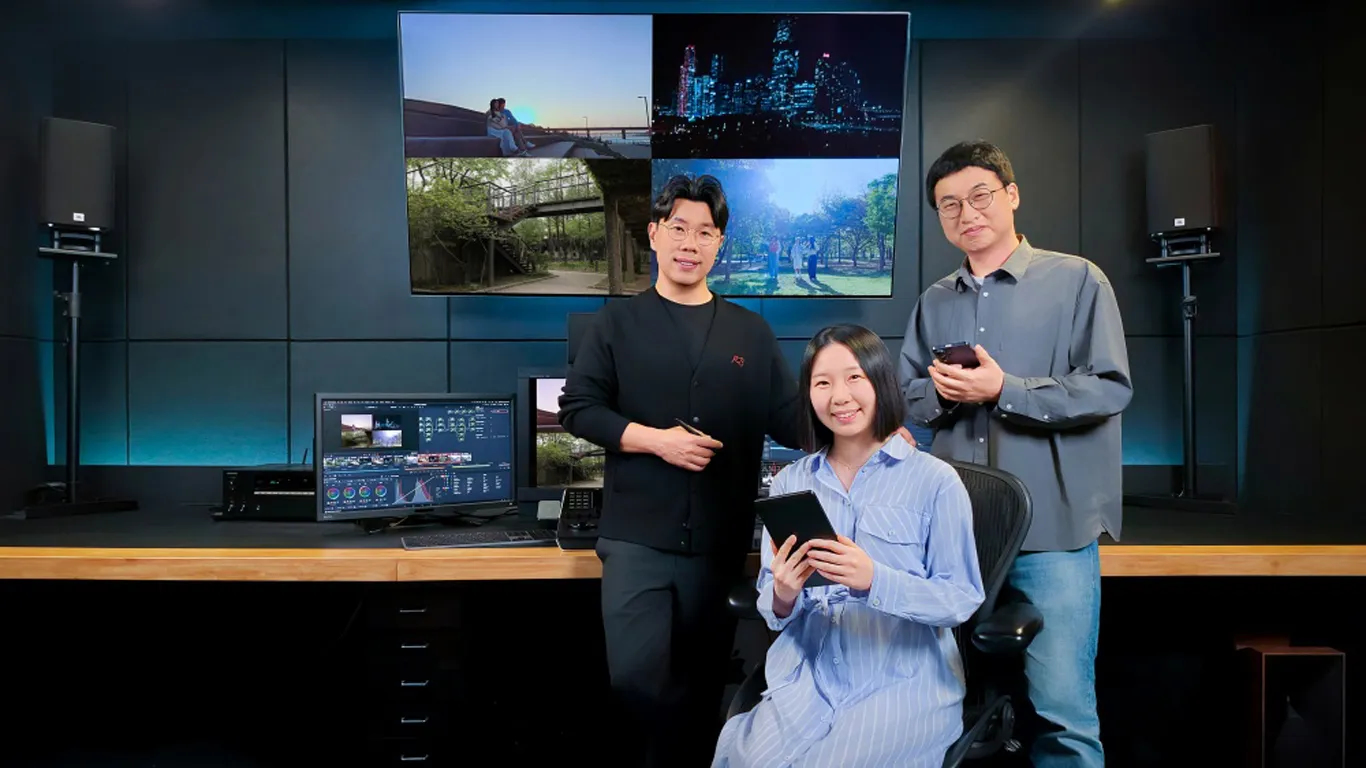
High-quality cinematic footage requires specialised codecs, advanced colour grading software and complex editing workflows that demand technical expertise and robust hardware setups. Samsung has now revolutionised professional video production with the Galaxy S26 series—tackling long-standing challenges in videography for smartphone users—with its Advanced Professional Video (APV) codec and the Cinematic Look-Up Table (Cine LUT). These innovations help everyday users, content creators and small businesses to achieve sophisticated filmmaking with just their smartphone.
Preserving Quality Through Every Edit with APV
The APV codec, independently developed by Samsung Electronics, and introduced with the Galaxy S26 Ultra, is engineered to mitigate video quality loss throughout the entire editing pipeline. Samsung developed APV to facilitate professional-grade video production while navigating the limitations of mobile hardware.

Traditional video codecs often sacrifice image data during compression, a necessity to manage file sizes during editing and storage. Samsung’s APV codec optimises this step for more efficient handling of large UHD and 8K video recordings on smartphones while reducing visible degradation across multiple editing iterations. Standardised by the Internet Engineering Task Force (IETF) and released as open source, APV slashes file sizes by over 10% compared to existing codecs while maintaining superior compression.
Sunmi Yoo from Samsung Electronics’ Mobile eXperience (MX) Business Visual Solution Team highlighted the strategic decision: “We chose to develop the APV as open source to encourage wider adoption and to build an ecosystem through standardisation, ultimately bringing this technology and its benefits to more users.”
Beyond file size and efficiency, the APV codec ensures visually lossless image quality and enhances colour reproduction through YUV 4:2:2 – a chroma subsampling format that stores more colour information for greater flexibility during editing. This is crucial for creators who work across multiple platforms: A short film edited several times for YouTube, Instagram and commercial presentations can now retain more detail and colour consistency throughout the process.
Managing such high-quality footage—UHD 30fps video recorded with APV can consume up to 6GB per minute—presented considerable hardware challenges. To solve this problem, the team partnered with Samsung Electronic’s Memory Business to ensure data storage stability.
Junseang Min of MX Business noted, “To enable real-time processing of UHD and 8K video within the constraints of mobile devices, efforts were focused on thermal management and system-level optimisation.” Samsung also collaborated closely with chipset manufacturers, video player developers and editing software providers to ensure broad compatibility and foster a comprehensive ecosystem for professional mobile video.
Yoo envisions APV finding use in film environments, while Min says the “goal is to make it easier for everyday users to create professional, cinematic content.”
Bringing Cinematic Colour Grading to Everyday Video with Cine LUT
Complementing the APV codec, Samsung also developed the Cinematic Look-Up Table (Cine LUT) to democratise professional colour grading, empowering users to apply cinematic looks without the need for complex editing software or advanced technical knowledge.
As Sugon Baek of the Camera Image Quality R&D Group explains, “A LUT is essentially a ‘map’ that transforms one set of colours into a desired look. Unlike conventional filters that simply overlay colour, Cine LUT reinterprets Samsung Log1 footage to deliver the depth and aesthetic of professional filmmaking.”
Bomi Kim of Samsung Research’s Reality Media Lab noted, “While Galaxy devices supported Log video for high-quality capture, colour grading remained challenging for users. We aimed to make professional-looking results accessible without advanced editing skills.”
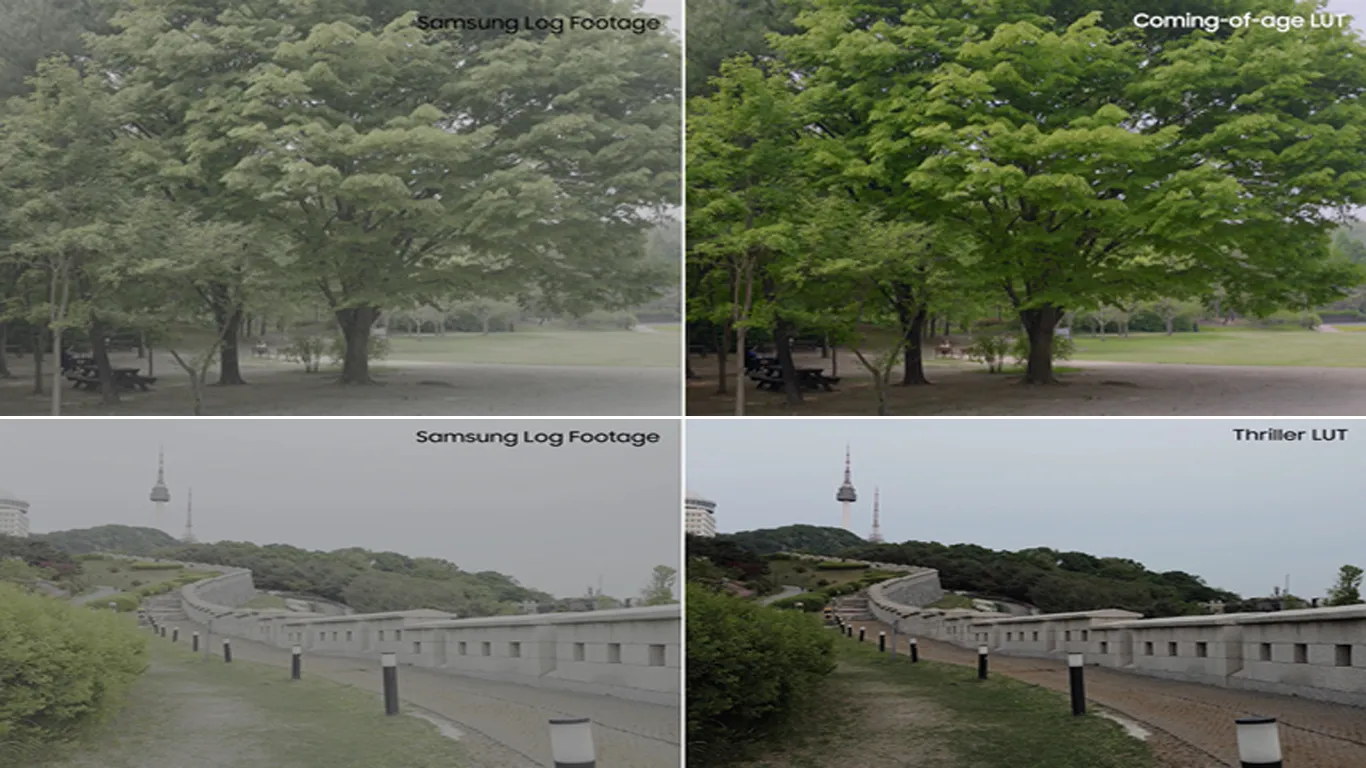
Samsung’s objective was to make this process both immediate and accessible. Users can preview cinematic footage in real-time while shooting; they can apply a chosen LUT directly within the Gallery app, and instantly share the edited clip without transitioning to a dedicated professional editing environment. This intuitive process allows users to effortlessly alter the emotional tone of their footage. A rainy city street can take on the cooler contrast associated with thrillers. A holiday clip can adopt softer tones and warmer highlights closer to romantic dramas. Everyday footage of cafés, beaches or family gatherings can appear closer to scenes usually associated with professionally-graded productions.
The development of Cine LUT involved a pivotal collaboration with U5K Imageworks. Taesik Eom, CEO of the renowned colourist studio, shares, “Our collaboration began two years ago with Rec. 7092 LUT advisory work for Samsung Log video, where we refined strong colours into more natural tones; an experience that led to Cine LUT.”
This collaboration led to the refinement of multiple LUT variations across neutral, soft and strong intensities, ultimately crystallising into four distinct cinematic styles: Thriller, Blockbuster, Coming-of-age and Romance.
across diverse lighting, environments, and scenarios. The teams optimised the LUTs specifically for smartphone footage to ensure reliable performance where lighting, exposure, and white balance constantly fluctuate.
Engineers meticulously analysed individual frames and validated results using colour charts, grey balance and vector scopes throughout the development process. The final four styles were crafted around visual cues commonly associated with mainstream film genres, promising an instant cinematic transformation for everyday scenes.
A Wider Shift in Smartphone Filmmaking
Early feedback on Cine LUT has been overwhelmingly positive. Users quickly recognised that Cine LUTs significantly expands creative possibilities beyond simple filters, inspiring new approaches to content creation.
Samsung views Cine LUT as a critical component of a broader shift in smartphone videography, where tools traditionally confined to production studios are becoming available to ordinary users on the S26 Ultra through software, processing power and advances in mobile imaging.
For creators, the implications extend far beyond aesthetics: Small businesses can now produce polished promotional videos without hiring external editors, journalists can shoot and grade broadcast-ready footage directly in the field while preserving broadcast quality, and independent musicians can create music videos using just a smartphone and accessible editing software.
Looking ahead, Samsung is firmly positioning the Galaxy S26 series as a professional-grade video tool. As director Heesub Han demonstrated through short films shot entirely on the Galaxy S26 Ultra using APV and Samsung Log, the series embodies a profound ambition – to integrate more of the intricate filmmaking process into the device people carry every single day.
Follow Us:



Ad
Recent News

Leaked Galaxy S27 Ultra Renders Reveal Major Camera and Design Changes
24-Aug-2026 03:30 PM

Uber Fined €825 Million by Dutch Regulator Over Automated Driver Account Decisions
24-Aug-2026 01:30 PM

Nvidia Acquires Poolside in $6 Billion Deal to Expand AI Model Development
24-Aug-2026 10:30 AM

Ox Alpha AI Model Emerges With Unknown Developer and 1 Million Token Context
24-Aug-2026 10:30 AM

Sam Altman Revises AI Disruption Timeline, Cites Slow Economic Adaptation
24-Aug-2026 09:30 AM

Airtel and Croma Offer Up to Rs 23,000 Discount on iPhone Models for Members
21-Aug-2026 01:30 PM
Ad
Reviews & Guides
View All


Samsung Galaxy Buds 4 Pro Review: क्या ₹22,999 में मिलते हैं सबसे बेहतरीन प्रीमियम वायरलेस ईयरबड्स?

कंटेंट क्रिएटर के लिए सबसे दमदार बैटरी लाइफ वाले Windows लैपटॉप, 18 घंटे की मिलेगी बैटरी लाइफ

Samsung Galaxy S26 Ultra क्यों है साल का सबसे बेहतरीन स्मार्टफोन? जानें 5 बड़े कारण

MacBook Neo Review: सस्ता नहीं, Apple का मास्टरस्ट्रोक है ये Laptop!

Samsung Galaxy S26 Ultra Review: AI से लेकर प्राइवेसी डिस्प्ले है सबसे खास, जानें कैसी है परफॉरमेंस
Vivo V70 Elite Review 2026: Price in India, Specs, Features

Raksha Bandhan Special: 6 vivo Smartphones for Every Kind of Sibling

Acer Launches New Nitro 5 Series in india starting price of 167,990

Flipkart Freedom Sale 2026 Starts August 8 With Big Discounts on Smart TVs

Samsung has unveiled its first credit card, Earn 5% back

5 Anti-Scam Tools on WhatsApp that protect you from Digital Fraud

How Samsung’s Galaxy S26 Series is Democratizing Mobile Filmmaking








Ad
 |
|
807, 808, 8th Floor,
IRIS Tech Tower Sohna Road Sector 48,
Gurugram, Haryana - 122018