


- News
- All News
- Mobiles
- Laptops
- Watches
- Cameras
- Printers
- Refrigerators
- Televisions
- Air Conditioners
- Washing Machines
- Air Purifiers
- Water Purifiers
- Expert Reviews
- All Reviews
- Mobiles
- Laptops
- Watches
- Cameras
- Printers
- Refrigerators
- Televisions
- Air Conditioners
- Washing Machines
- Air Purifiers
- Water Purifiers
- Articles
- All Articles
- Mobiles
- Laptops
- Watches
- Cameras
- Printers
- Refrigerators
- Televisions
- Air Conditioners
- Washing Machines
- Air Purifiers
- Water Purifiers
- Videos
- Videos

Ad
Washing Machine Fully Automatic vs Semi Automatic


on Google
on Google
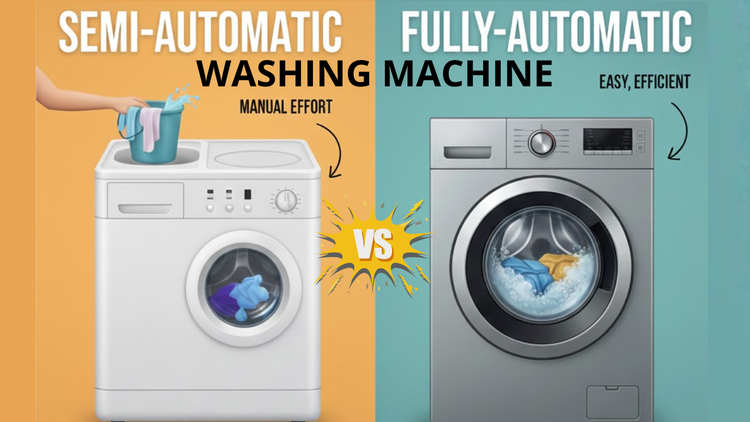
Semi automatic washing machines continue to be a popular choice in India, particularly in budget-conscious households and regions with irregular water supply. These machines feature two separate tubs—one for washing and another for spinning. Users manually add water, start the wash cycle, and transfer clothes to the spin tub.
Common features include adjustable wash timers, spin timers, lint filters, and rust-proof bodies designed for Indian conditions. Their simple design allows users to soak heavily soiled clothes and reuse water if needed.
Why Semi Automatic Machines Still Matter in 2026
- Lower upfront cost
- Better control over water usage
- Simple mechanics reduce repair costs
- Suitable for heavy or muddy laundry
They are especially practical for users who do not mind manual effort and want predictable running costs.
Understanding Fully Automatic Washing Machines
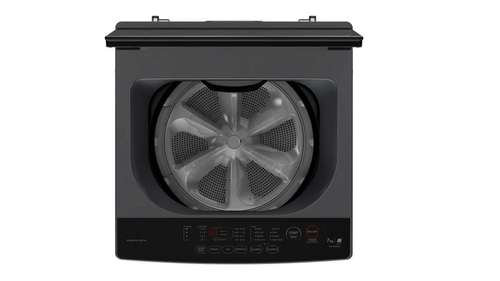
Fully automatic washing machines handle the entire washing process in a single tub, from water intake to spinning. Available in top load and front-load variants, these machines require minimal user intervention after selecting a program.
Modern fully automatic models in 2026 come equipped with inverter motors, load sensors, quick wash modes, eco programs, and even AI-based fabric detection. These features optimize water and energy consumption while delivering consistent wash quality.
Why Fully Automatic Machines Are Growing in Demand
- Saves time and physical effort
- Compact designs for urban homes
- Higher wash consistency
- Advanced hygiene and fabric care
They are ideal for working professionals, nuclear families, and users who prioritize convenience.
Key Differences Explained in Real-World Use
1. Convenience and Daily Usage
Semi-automatic washing machines require active involvement, which can be time-consuming but flexible. Fully automatic machines offer a “set-and-forget” experience, making them better suited for busy schedules.
2. Water and Energy Efficiency
Semi-automatic machines allow manual control over water, making them suitable for areas with water shortages. Fully automatic models use more water per cycle but compensate with sensors, inverter motors, and high energy ratings that reduce overall consumption.
3. Space and Installation
Semi-automatic machines occupy more floor space due to dual tubs. Fully automatic front load machines are compact and can fit into smaller utility areas, making them popular in apartments.
4. Long-Term Cost
Semi-automatic machines are cheaper to buy and maintain. Fully automatic machines cost more upfront but may reduce water and electricity bills over time.
Top Semi-Automatic Washing Machines in India (2026)
1. LG P9555SKAZ 9.5 kg Semi-Automatic Top Load
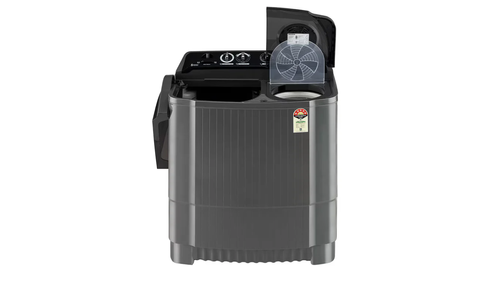
Launched in December 2025, this model focuses on heavy-load performance.
- Capacity: 9.5 kg
- Spin Speed: 1350 RPM
- Energy Rating: 5 Star
- Price: ₹19,899 Best For: Large families with frequent laundry
2. Samsung WT75B3200RR 7.5 kg Semi Automatic Top Load
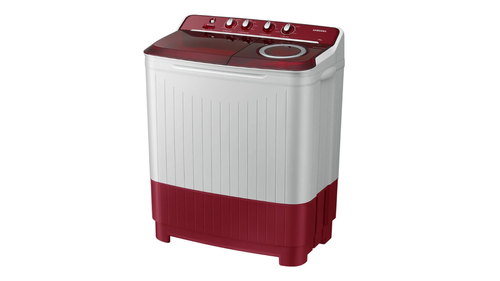
Released in late 2025, this model balances price and reliability.
- Capacity: 7.5 kg
- Spin Speed: 1300 RPM
- Features: Eco tub clean, double storm pulsator
- Price: ₹12,490 Best For: Budget-focused households
Top Fully Automatic Washing Machines in India (2026)
1. LG AI DD 2.0 Series 11 kg Fully Automatic Front Load
A premium model launched in December 2025 with AI fabric sensing.
- Capacity: 11 kg
- Spin Speed: 1400 RPM
- Features: Steam wash, AI DD
- Price: ₹45,000–₹50,000 Best For: Large families seeking hygiene and automation
2. LG T75SKMB1Z 7.5 kg Fully Automatic Top Load
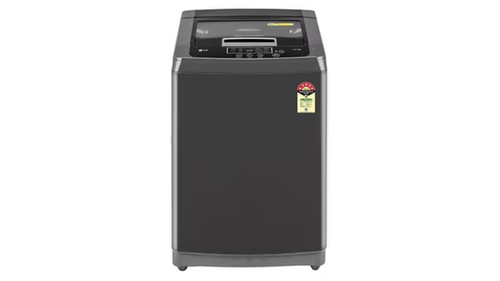
Updated in early 2026 for mid-range buyers.
- Capacity: 7.5 kg
- Energy Rating: 5 Star
- Features: Smart inverter, turbo drum
- Price: ₹18,490 Best For: Small to mid-sized families
Washing Machine Market Trends in India (2026)
- AI-Based Washing: Automatic adjustment of wash cycles
- Energy Efficiency: Inverter motors dominate new launches
- Compact Designs: Front load machines gain popularity
- Feature-Rich Semi Automatics: Air dry and lint control
- Sustainability: Water-saving and eco modes
Which Washing Machine Should You Buy?
| Requirement | Recommended Type |
|---|---|
| Budget under ₹15,000 | Semi Automatic |
| Minimal manual effort | Fully Automatic |
| Limited water supply | Semi Automatic |
| Small apartment | Fully Automatic Front Load |
| Large family | Fully Automatic Top Load |
| Low maintenance | Semi Automatic |
Also Read: Best Budget Air Purifiers Under ₹10,000
Final Thoughts
In 2026, the decision between fully automatic vs. semi-automatic washing machines in India depends on how you balance convenience, cost, and control. Semi-automatic machines remain practical and economical, while fully automatic models offer comfort, efficiency, and advanced care.
Evaluating your household size, water availability, space, and budget will help you choose a washing machine that fits seamlessly into your daily routine.
Comparos Says: Both fully automatic and semi-automatic washing machines have a clear place in India’s appliance market in 2026." The right choice lies in matching technology with real-world usage needs.
Ad
Ad
Confused? Choose Your Phone
What Matters Most


Get TheWeekly Brief
One email each morning: the launches,
the price changes and the reviews
worth reading.

Ad
Ad
 |
|
807, 808, 8th Floor,
IRIS Tech Tower Sohna Road Sector 48,
Gurugram, Haryana - 122018