


- News
- All News
- Mobiles
- Laptops
- Watches
- Cameras
- Printers
- Refrigerators
- Televisions
- Air Conditioners
- Washing Machines
- Air Purifiers
- Water Purifiers
- Expert Reviews
- All Reviews
- Mobiles
- Laptops
- Watches
- Cameras
- Printers
- Refrigerators
- Televisions
- Air Conditioners
- Washing Machines
- Air Purifiers
- Water Purifiers
- Articles
- All Articles
- Mobiles
- Laptops
- Watches
- Cameras
- Printers
- Refrigerators
- Televisions
- Air Conditioners
- Washing Machines
- Air Purifiers
- Water Purifiers
- Videos
- Videos

Ad
Why Is a Samsung AC Leaking Water or Not Cooling?


on Google
on Google
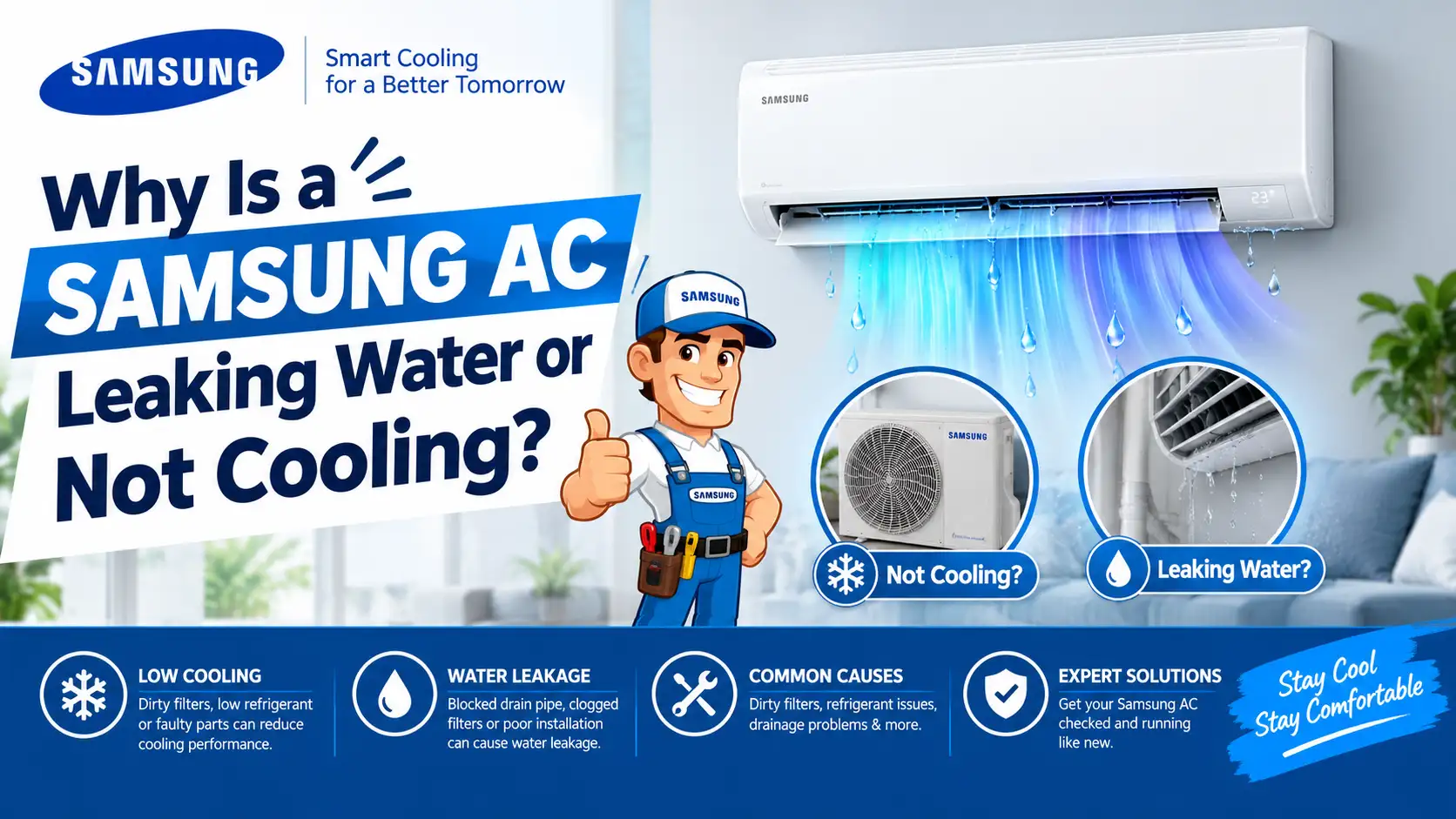
The Samsung air conditioner can leak water or can not cool properly due to clogged drain pipes, dirty air filters, low refrigerant or wrong operating settings, and in India, these issues are more visible with dust, extreme temperatures and monsoon humidity in summer. Some problems can be repaired with basic maintenance, but other problems such as refrigerant leaks, electrical problems, and damaged internal parts require professional servicing .
Knowing what can cause this will help you catch it early and stop further damage to your air conditioner or surrounding walls.
Why Is My Samsung AC Leaking Water?
Water leaking from the indoor unit is typically indicative of a problem with the drainage, excessive condensation or ice build up on the evaporator coil; all of these are the most common reasons.
1. Blocked Or Out-Of-Position Drain Pipe
The drain pipe carries the condensed water to the outdoors from the indoor unit, and dust, algae and accumulated dirt can block the pipe, especially in dusty Indian cities and in the monsoon season, and this can cause water to collect in the drain tray and spill inside.
Water cannot flow out properly when the drain hose bends up, has a kink in it, or is submerged in a bucket.
Solution: Ensure the visible drain hose is sloping downwards at all times and is free from kinks. Place the outlet higher than any water you collect. If the pipe is still clogged, call a professional to clear it out, instead of trying to shove objects in.
2. Airflow Restricted By Dirty Air Filters
If the filters are dusty this can limit the air flow across the evaporator coil and cause the coil to get too cold and ice to form. Especially, when the ice melts, the water may overflow from the drainage system and leak from the indoor unit.
Solution: Turn off the AC, wash the removable filters as per the user manual and wash the washable filters with running water and let them dry completely before replacing. In dusty environments, just check the filters often, and clean every couple of weeks or so.
3. Poor Indoor Unit Installation
If the indoor unit is not installed at the correct height, condensation may form on one side of the drain tray and not reach the outlet; if the insulation around the pipes is damaged, moisture can also form on exposed surfACes.
What to Do: If water still leaks with cleaned filters and a free drain pipe, have a technician check the mounting level, drain tray and pipe insulation.
4. Indian Monsoon And High Humidity Levels
Condensation can be more apparent in humid weather, especially in coastal areas also with heavy monsoon rains. If the humidity level of the room is high or there is restriction of the airflow, water droplets may be seen around the air outlet or louvres.
Solution: When the AC is on, keep doors and windows closed. If you are primarily concerned with humidity, then use Dry Mode. Just follow the instructions for your model. If dripping continues, don’t assume it’s all humidity; check the filters and drainage system.
Why Samsung AC Doesn’t Cool?
If your air conditioning system is running, but the room is still warm, it could be an airflow, refrigerant, outdoor unit or operation issue.
1. Dirty Filters Or Blocked Airflow
A dirty filter can limit the flow of room air through the cooling coil. At the same time, curtains, furniture or other objects blocking the indoor vents can also limit the cooling performance.
Solution: Clean filters, keep the air outlet free and check that the indoor unit is getting sufficient airflow. Just don’t put any objects near the outdoor unit, and it should have enough ventilation to release heat.
2. Refrigerant Leak Or Low Refrigerant Charge
Refrigerant picks up heat from inside air and moves it outside. If the system loses refrigerant through a leak, the cooling performance may suffer. You may also get ice on the evaporator coil or refrigerant lines.
Hissing noises, repeated ice formation and continuously feeble cooling can be signs of a refrigerant-related fault, but these symptoms can have other causes.
Solution: If ice has built up, turn off the cooling function and call for an authorised service inspection. Before recharging the system, the technician should find and fix any leaks. Refrigerant should never be added to replace finding the source of the problem.
3. Dirty Outdoor Coil
The outdoor unit expels the heat collected from the room to the outside. Dust and debris around the condenser can restrict heat transfer; this can be a particular problem in India during the hot summer months.
Solution: Have a qualified technician clean heavily soiled coils. Do not spray onto electrical components, and do not open the unit when it is switched on.
4. Wrong Mode Or Temperature Setting
Cool Mode does not function when the AC is set to Fan, Dry or any other mode, as it may also not cool the room enough in hot weather when the temperature setting is high.
Solution: Set the thermostat to a comfortable temperature. But let the room cool down, then set the thermostat to the outside temperature.
5. Voltage Fluctuations Or Compressor Issues
Voltage fluctuations can cause trouble with the AC. Especially when the electricity demand is high and the outside compressor may not start or may cycle on and off resulting in less cooling. Other electrical issues such as a compressor or sensor issue can also cause the same symptoms.
Solution: Switch the unit to Cool mode and set the baseline temperature to around 24-26 degrees Celsius and if possible, select a Medium or High fan speed. Set thermostat to a comfortable setting. But cool down the room first, then set the thermostat to the outside temperature.
Samsung AC Troubleshooting: Quick Reference
Problem | Possible cause | Recommended ACtion |
Water dripping indoors | Blocked drain pipe | Check the visible hose and arrange drain cleaning |
Water leaking after ice melts | Dirty filter or refrigerant issue | Clean the filter; request service if icing returns |
Weak cooling | Dirty filter or blocked vents | Clean filters and remove airflow obstructions |
AC runs but room stays warm | Incorrect mode or refrigerant leak | Select Cool Mode; seek professional inspection if needed |
Outdoor unit struggles in summer | Dirty condenser or electrical issue | Clear external obstructions and arrange servicing |
Water dripping during monsoon | High humidity or drainage problem | Use Dry Mode if suitable and inspect drainage |
Samsung AC Service Time
Some airflow and drainage problems can be solved with basic checks; however, constant leakage or inefficient cooling may be a sign of an internal fault and professional servicing is recommended when:
Filters and drain hose are checked, and water is still leaking.
The indoor coil or refrigerant pipe repeatedly freezes up.
The AC blows warm air even when set properly, and there’s no airflow blockage.
The outdoor unit repeatedly stops, trips the power supply or displays an error code.
Unusual electrical smells, smoke or sparking occur.
For electrical warning signs, switch off the AC and isolate the power supply if it is safe to do so. Do not operate the unit until it has been inspected.
Samsung AC owners in India can visit the official Samsung India Support website for model-specific troubleshooting and authorised service booking. Be advised that Samsung’s operating hours and published support channels are subject to change, and we recommend you verify the current contACt information before planning a visit.
Common Questions
1. Reasons why Samsung AC is leaking water inside the room?
The most common causes of this problem are a clogged drain pipe, a kinked hose, dirty filters, ice build-up or incorrect installation of the indoor unit; inspect the filters and visible hose. Should the leaks continue, see a professional.
2. Why is my Samsung AC running but not cooling?
Dirty filters, plugged condenser coils, wrong modes of operation, low refrigerant or problems with the compressor can all reduce cooling, just choose Cool Mode, clean the filters, check for clogs and if the issue continues, call a technician.
3. When to Call Samsung AC technicians?
When you encounter issues like recurring water leaks, ice build-up, suspected refrigerant leaks, persistent inadequate cooling, unusual electrical behaviour and unresolved error codes, simply call an approved technician. Do not try to do the work yourself on refrigerant handling or electrical repairs.
Ad
Ad
Confused? Choose Your Phone
What Matters Most


Get TheWeekly Brief
One email each morning: the launches,
the price changes and the reviews
worth reading.

Ad
Ad
 |

807, 808, 8th Floor,
IRIS Tech Tower Sohna Road Sector 48,
Gurugram, Haryana - 122018