


- News
- All News
- Mobiles
- Laptops
- Watches
- Cameras
- Printers
- Refrigerators
- Air Conditioners
- Washing Machines
- Air Purifiers
- Water Purifiers
- Expert Reviews
- All Reviews
- Mobiles
- Laptops
- Watches
- Cameras
- Printers
- Refrigerators
- Air Conditioners
- Washing Machines
- Air Purifiers
- Water Purifiers
- Articles
- All Articles
- Mobiles
- Laptops
- Watches
- Cameras
- Printers
- Refrigerators
- Air Conditioners
- Washing Machines
- Air Purifiers
- Water Purifiers
- Videos
- Videos

Ad
Window AC or Split AC: What Should You Choose in 2026?

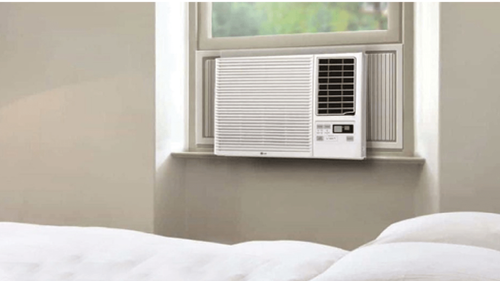
A window AC is a single box unit that sits in a window frame or wall hole. It has the fan, compressor, and coils all in one place. Air blows directly into the room from the front. These are popular in India for their low price and quick setup.
Pros of Window AC:
- Low cost to buy and install.
- Easy to fix since everything is in one unit.
- Good for small rooms like bedrooms or study areas.
- Less power use with new inverter models.
- No need for extra space outside.
Cons of Window AC:
- Makes more noise because the compressor is inside.
- Blocks part of the window, reducing light.
- Not as good for big rooms or open spaces.
- Can look old-fashioned in new homes.
- Harder to clean filters if not removed easily.
Window ACs work well if you have a tight budget or live in a rented place where big changes are not allowed. In 2026, with new energy rules from BEE (Bureau of Energy Efficiency), look for models with at least 3-star ratings to save on bills.
What is a Split AC?
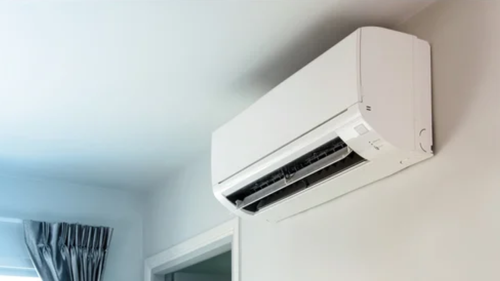
A split AC has two parts: an indoor unit on the wall inside and an outdoor unit with the compressor. Cool air comes from the indoor unit, connected by pipes. This setup is common in modern Indian homes.
Pros of Split AC:
- Very quiet inside the room.
- Looks nice and fits any decor.
- Cools faster and more even in larger areas.
- Better energy savings with advanced inverters.
- Can add features like air filters for dust and germs.
Cons of Split AC:
- Higher price for the unit and setup.
- Needs a pro to install, which costs extra.
- Outdoor unit takes space on balcony or wall.
- Fixing can be costly if pipes leak.
- Not easy to move if you shift homes.
Split ACs are ideal for families or offices needing quiet and strong cooling. In 2026, many come with smart controls via apps, making them easy to use from your phone.
Key Differences Between Window AC and Split AC
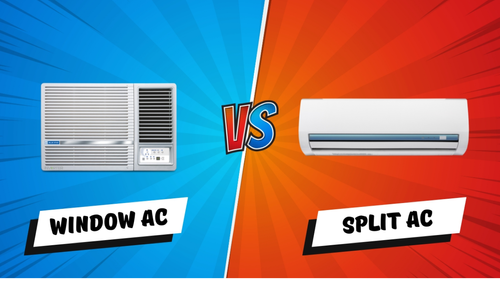
When deciding window AC or split AC, think about your room and needs.
-
Room Size and Cooling: Window ACs cool small spaces up to 150 square feet well. For bigger rooms, split ACs spread air better without hot spots.
-
Energy Use and Bills: Both can be efficient, but split ACs often have higher ISEER (Indian Seasonal Energy Efficiency Ratio) scores. In 2026, BEE rules make 5-star models save up to 30% on power compared to old ones. For example, a 1.5 ton inverter split AC uses less electricity than a non-inverter window AC.
-
Installation and Space: Window AC needs a window slot, easy to set up in 1-2 hours. Split AC requires drilling and pipes, taking 4-6 hours and ₹2,000-₹5,000 extra.
-
Noise and Comfort: If you sleep light, split AC is better as it's quiet. Window AC noise can disturb in small rooms.
-
Cost Over Time: Window AC starts cheaper but may use more power. Split AC costs more upfront but saves on bills long-term.
-
Features: Split ACs have more options like swing modes for air flow, timers, and eco modes. Window ACs are basic but some new ones add inverters.
In India, where dust and pollution are high, both types now have anti-dust filters. Choose based on if you want simple or advanced.
Top Recent AC Models in India 2026
Here are four top models launched or updated in 2026. We picked two window and two split ACs based on energy ratings, features, and user feedback. Prices are approximate ex-showroom in Delhi.
Top Window and Split AC Models Table 2026
| Model Name | Type | Capacity | Star Rating | Key Features | Price Range (INR) |
|---|---|---|---|---|---|
| LG RW-Q18WWXA Inverter Window AC | Window | 1.5 Ton | 5 Star | Wi-Fi control, dual inverter, anti-bacterial filter, cools up to 52°C | ₹35,000–₹40,000 |
| Voltas 185V Vert Elite Window AC | Window | 1.5 Ton | 5 Star | Turbo mode, self-clean, copper coils, low noise for window type | ₹30,000–₹35,000 |
| LG TS-Q18ENXE Split Inverter AC | Split | 1.5 Ton | 5 Star | 6-in-1 convertible, smart diagnosis, 4-way swing, virus removal filter | ₹45,000–₹50,000 |
| Daikin FTKM50U Split Inverter AC | Split | 1.5 Ton | 5 Star | Streamer discharge tech, PM2.5 filter, power chill, eco mode | ₹40,000–₹45,000 |
These models meet 2026 BEE standards for better efficiency. LG window AC has smart Wi-Fi, good for tech users. Voltas is budget-friendly with strong cooling. For split, LG offers flexible modes, while Daikin focuses on air purity, great for Delhi's air quality.
India’s AC Market in 2026: Emerging Trends and Shifts
The AC market in India is growing fast, expected to hit ₹50,000 crore by 2030. Here are key trends:
-
Stricter Energy Rules: From January 2026, BEE raised efficiency levels. Old 5-star ACs may now rate as 3-star. This pushes buyers to new models saving 20-30% power.
-
Inverter Technology Rise: Over 80% ACs sold are inverters, adjusting speed to save energy. Non-inverters are fading out.
-
Smart Features Boom: ACs with app control, voice commands (Alexa/Google), and AI that learns your habits are popular. They cut bills by auto-adjusting.
-
Eco-Friendly Changes: New refrigerants like R32 or R290 are common, less harmful to the environment. Brands focus on green tech.
-
Price and Demand Shift: Prices up 5-10% due to rules, but sales grow in Tier-2 cities. Online buys via Amazon/Flipkart offer deals.
These trends make ACs smarter and cheaper to run, helping with India's power needs.
Choosing the Right AC for Your Needs
Pick based on your home and budget. Here's a quick guide:
| Use Case | Best Type | Why | Suggested Model |
|---|---|---|---|
| Small bedroom, low budget | Window AC | Cheap, easy fit, quick cool | LG RW-Q18WWXA or Voltas 185V |
| Living room, quiet needed | Split AC | Low noise, even air, modern look | LG TS-Q18ENXE or Daikin FTKM50U |
| Rented flat, easy move | Window AC | No big install, portable | Voltas 185V Vert Elite |
| Family home, smart control | Split AC | App features, better efficiency | LG TS-Q18ENXE |
| High dust area like Delhi | Either with filters | Air purification key | Daikin FTKM50U (split) or LG window |
Measure your room: 1 ton for 100-150 sq ft, 1.5 ton for 150-200 sq ft. Check star rating for savings – 5-star saves ₹5,000-₹10,000 yearly on bills.
Also Read: Inverter vs Non-Inverter AC: Which One Is Better for Indian Homes in 2026?
Tips for Buying AC in 2026
-
Check ISEER: Higher means less power use.
-
Warranty: Most give 1 year on unit, 5-10 on compressor.
-
Service: Brands like LG, Voltas have good networks in India.
-
Deals: Festive sales or online EMI cut costs.
-
Test Noise: Read reviews for real sound levels.
-
Power Backup: Inverter ACs work better with home inverters.
Avoid old stock; buy 2026 compliant for future-proofing.
Final Thoughts: Making the Smart Choice Between Window AC and Split AC
In 2026, both window AC and split AC offer good options for cooling in India. Window AC suits small spaces and budgets, while split AC gives quiet, stylish comfort for bigger homes. With new energy rules, focus on inverter and high-star models to keep bills low. Brands like LG, Voltas, and Daikin lead with recent launches adding smart tech and clean air features. Think about your room, noise tolerance, and long-term costs to pick the best. Right choice means cool summers without worry.
Comparos Says: Window AC or split AC depends on your needs, but go for energy-efficient models in 2026 to save money and stay comfortable. Top picks like LG and Daikin make cooling simple and smart for Indian homes.
Ad
Ad
Confused? Choose Your Phone
What Matters Most


Get TheWeekly Brief
One email each morning: the launches,
the price changes and the reviews
worth reading.

Ad
Ad
 |
|
807, 808, 8th Floor,
IRIS Tech Tower Sohna Road Sector 48,
Gurugram, Haryana - 122018