




Ad
Expert Reviews
Anthropic CEO Voices Concerns Over Chinese Open-Weight AI Models Amid Silicon Valley Debate




A split has emerged in Silicon Valley over Chinese open-weight AI models. More than 50 companies, including Nvidia and Microsoft, have urged the White House not to ban these models, citing their strong performance and accessibility. However, Anthropic did not join this group. CEO Dario Amodei has clarified his company's position, stating that Anthropic is not against open-weight models but remains concerned about their potential misuse, especially by China.
Key Highlights
- Over 50 tech companies urged the White House not to ban Chinese open-weight AI models.
- Anthropic CEO Dario Amodei warns of risks if China gains access to powerful AI models.
- Amodei suggests targeted US restrictions on chip exports and industrial-scale AI distillation.
- Debate grows as Chinese AI models rival US systems in performance and cost.
Anthropic's Position on Open-Weight Models
In a recent blog post, Dario Amodei emphasized that Anthropic "never advocated for a ban on open-weights models." He acknowledged the benefits of open-weight models, noting they are cost-effective and valuable for businesses, developers, and researchers. Open-weight models like Kimi K3 and GLM 5.2 are cheaper to run than closed models such as Claude or GPT-5.6, and can be operated locally on personal devices.
Despite these advantages, Amodei expressed concerns about two major risks. He warned that authoritarian governments, particularly China, could exploit powerful AI models. Amodei stated, "The Chinese Communist Party (CCP) is clearly the most capable threat to build AI models that are more powerful than those built by the US." He fears that China could use advanced AI to achieve military superiority or suppress its citizens.
Risks and Proposed Restrictions
Amodei also highlighted the broader risks of open-weight models. As AI becomes more advanced, the potential for misuse increases, including cyberattacks and biological threats. He argued that open-weight models are harder to control because it is difficult to apply guardrails or monitor their use. Once released, model weights cannot be withdrawn, increasing the risk of misuse.
Anthropic has faced scrutiny over cybersecurity, particularly with the launch of Claude Mythos. The US government banned the Mythos and Fable models due to security concerns, though Anthropic later re-released them with added safeguards.
Instead of a blanket ban, Amodei suggests targeted restrictions. He recommends the US limit the sale of powerful chips and chipmaking equipment to China and address smuggling and workarounds. Despite US export controls, Chinese firms have continued to advance, with DeepSeek’s CEO noting that restrictions have pushed Chinese labs to collaborate with companies like Huawei to improve AI chips.
Amodei also calls for a crackdown on industrial-scale distillation, a process where smaller models are trained on the outputs of larger ones. He claims this allows Chinese labs to quickly approach US capabilities, though not surpass them. Additionally, he advocates for safety testing of all AI models to assess cyber, biological, and alignment risks before release.
Industry Reactions and Ongoing Debate
The debate has divided the tech industry. OpenAI, Nvidia, and Microsoft support open access to AI models, arguing it makes advanced AI more accessible and adaptable. Anthropic’s absence from the open-letter has drawn criticism, with some accusing the company of protecting its closed-weight business model.
Chinese startups like DeepSeek and Moonshot AI have released models that challenge US dominance, offering lower costs and competitive performance. This has intensified the policy debate in Washington, as US and Chinese firms compete for leadership in AI development.
Follow Us:



Ad
Recent News

Nothing Expected to Launch First Smartwatch Under Its Own Brand in September
28-Jul-2026 02:30 PM

vivo S2 Expected to Launch Soon in India With Dual Cameras and 7,000mAh Battery
28-Jul-2026 12:30 PM

Anthropic CEO Voices Concerns Over Chinese Open-Weight AI Models Amid Silicon Valley Debate
28-Jul-2026 10:30 AM

vivo T5e Launched in India With 5,500mAh Battery and 90Hz Display
28-Jul-2026 10:30 AM

Apple Releases iOS 26.6 and iPadOS 26.6 With 78 Security Fixes
28-Jul-2026 03:30 AM

Google Prepares Phone-to-Watch Unlock Feature for Pixel Devices
28-Jul-2026 02:30 AM
Ad
Reviews & Guides
View All


Samsung Galaxy Buds 4 Pro Review: क्या ₹22,999 में मिलते हैं सबसे बेहतरीन प्रीमियम वायरलेस ईयरबड्स?

कंटेंट क्रिएटर के लिए सबसे दमदार बैटरी लाइफ वाले Windows लैपटॉप, 18 घंटे की मिलेगी बैटरी लाइफ

Samsung Galaxy S26 Ultra क्यों है साल का सबसे बेहतरीन स्मार्टफोन? जानें 5 बड़े कारण

MacBook Neo Review: सस्ता नहीं, Apple का मास्टरस्ट्रोक है ये Laptop!

Samsung Galaxy S26 Ultra Review: AI से लेकर प्राइवेसी डिस्प्ले है सबसे खास, जानें कैसी है परफॉरमेंस
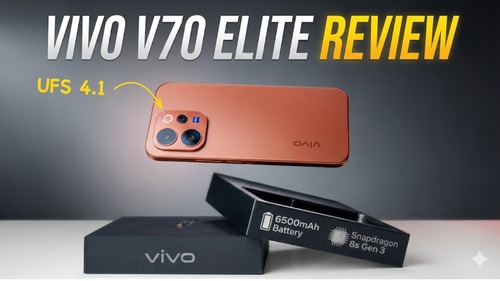
Vivo V70 Elite Review 2026: Price in India, Specs, Features

Samsung has unveiled its first credit card, Earn 5% back

5 Anti-Scam Tools on WhatsApp that protect you from Digital Fraud

How Samsung’s Galaxy S26 Series is Democratizing Mobile Filmmaking

30,000 से कम आने वाले बेस्ट स्मार्टफोन, 4K वीडियो शूट और फुल डे बैटरी लाइफ

Why switch to iPhone These Reasons Will Convince You Instantly

Haier Launches F11, India’s Only Ultra Fresh Air Technology Washing Machine with Full AI Color Touch Panel








Ad
 |
|
807, 808, 8th Floor,
IRIS Tech Tower Sohna Road Sector 48,
Gurugram, Haryana - 122018