



Ad
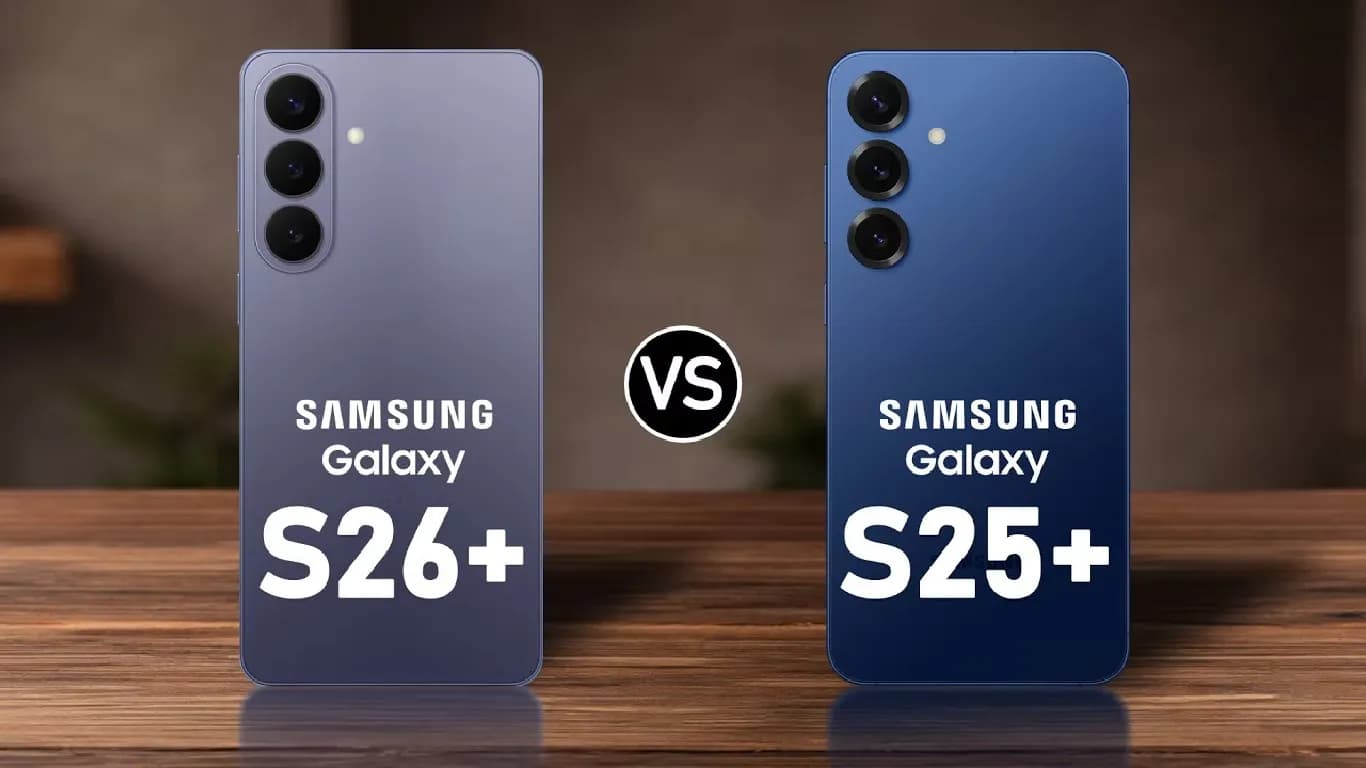
Samsung Galaxy S26 Plus vs S25 Plus: Detailed Comparison of Features and Performance



Follow Us:


1,674 views
The Samsung Galaxy S26 Plus introduces several updates over the S25 Plus, but many differences are subtle. Both devices share similar designs, displays, and battery capacities. However, the S26 Plus features a new chipset and minor camera improvements. This comparison examines the main changes and performance differences between the two models.
Key Highlights
- Samsung Galaxy S26 Plus features a new Exynos 2600 or Snapdragon 8 Elite Gen 5 chipset.
- Both S26 Plus and S25 Plus have 6.7-inch 120Hz LTPO displays and 4,900 mAh batteries.
- S26 Plus shows 13 to 15 percent better performance in benchmark tests over S25 Plus.
- Camera updates on S26 Plus include a new main sensor and wider selfie lens.
- Price difference between S26 Plus and S25 Plus ranges from €100-200 in Europe.
Design and Display Comparison
The Galaxy S26 Plus and S25 Plus are nearly identical in size and build. Both use the Armor aluminum 2 frame and Gorilla Glass Victus 2 on the front and back. They carry the same IP68 rating for water and dust resistance. The main visual change is the camera stack design, which is slightly different on the S26 Plus. New color options are available for the S26 Plus, with more muted tones compared to last year.
Both phones feature a 6.7-inch LTPO display with a 120Hz refresh rate and a resolution that remains unchanged. Display brightness tests show both reaching over 1,400 nits. Despite similar displays and a 4,900 mAh battery, the S26 Plus achieves better battery endurance in web browsing and video streaming tests. Charging speeds are the same, with both supporting 45W Power Delivery charging.
Performance and Hardware Changes
The most significant update in the S26 Plus is the chipset. Samsung returns to a dual-chip strategy: the Exynos 2600 powers the S26 Plus in Europe and South Korea, while the Snapdragon 8 Elite Gen 5 is used in the US, China, and Japan. Last year, the S25 Plus used only the Snapdragon 8 Elite SoC globally.
The Exynos 2600 uses a 2nm manufacturing process and features an AMD-designed Xclipse 960 GPU. The Snapdragon 8 Elite is built on a 3nm process and uses an Adreno 830 GPU. Both models offer 12GB RAM with either 256GB or 512GB storage. Benchmark tests show the Exynos 2600 outperforms the previous Snapdragon 8 Elite by about 13% in CPU and GPU tests, and by 15% in combined benchmarks. The S26 Plus also shows better sustained performance, which benefits gaming.
Camera and Multimedia Features
The S26 Plus introduces a new Isocell GNG sensor for its main camera, replacing the GN3 sensor but keeping the same 50MP resolution and 1.0µm pixel size. The telephoto camera uses a different sensor, but the ultrawide camera remains unchanged. The selfie camera now uses a wider 23mm equivalent lens, offering better coverage and sharper images.
Daylight photos from both phones are similar, with the S26 Plus showing slightly more detail and saturated colors. Low-light performance is marginally better on the S26 Plus, especially with night mode enabled. Video capabilities remain the same, with both supporting 4K60 on all cameras and 8K30 on the main rear cameras. The S26 Plus adds Horizon lock stabilization and LUT support for Log recording.
Pricing and Value
In Europe, the S26 Plus costs about €100-200 more than the S25 Plus. In the US, the S25 Plus is priced at $1,000 through official channels, while the S26 Plus is $1,100. However, third-party retailers may offer the S26 Plus for around $850. The S25 Plus remains a strong value, as the S26 Plus offers only modest improvements in performance and battery life.
Latest News


Reviews & Guides
View All


Samsung Galaxy Buds 4 Pro Review: क्या ₹22,999 में मिलते हैं सबसे बेहतरीन प्रीमियम वायरलेस ईयरबड्स?

कंटेंट क्रिएटर के लिए सबसे दमदार बैटरी लाइफ वाले Windows लैपटॉप, 18 घंटे की मिलेगी बैटरी लाइफ

Samsung Galaxy S26 Ultra क्यों है साल का सबसे बेहतरीन स्मार्टफोन? जानें 5 बड़े कारण

MacBook Neo Review: सस्ता नहीं, Apple का मास्टरस्ट्रोक है ये Laptop!

Samsung Galaxy S26 Ultra Review: AI से लेकर प्राइवेसी डिस्प्ले है सबसे खास, जानें कैसी है परफॉरमेंस
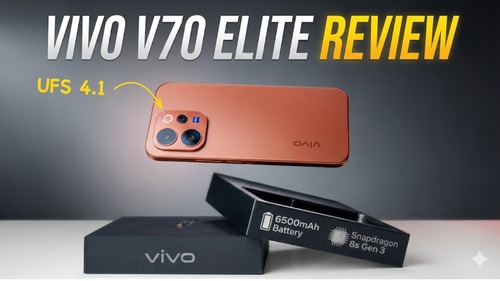
Vivo V70 Elite Review 2026: Price in India, Specs, Features

Apple AirPods 5: Price in India, Features and Specifications

Haier Smart TV Review 2026: Is It Worth Buying?

Best 55-Inch TVs Under ₹50,000 in India

Best 5 AI TVs in India – LG, Samsung, Sony & TCL Compared

Best Phone Under ₹10,000 for Elderly and Senior Citizens

Haier 32, 43 & 55 Inch LED TV: Full Specifications & Price Comparison