



Ad
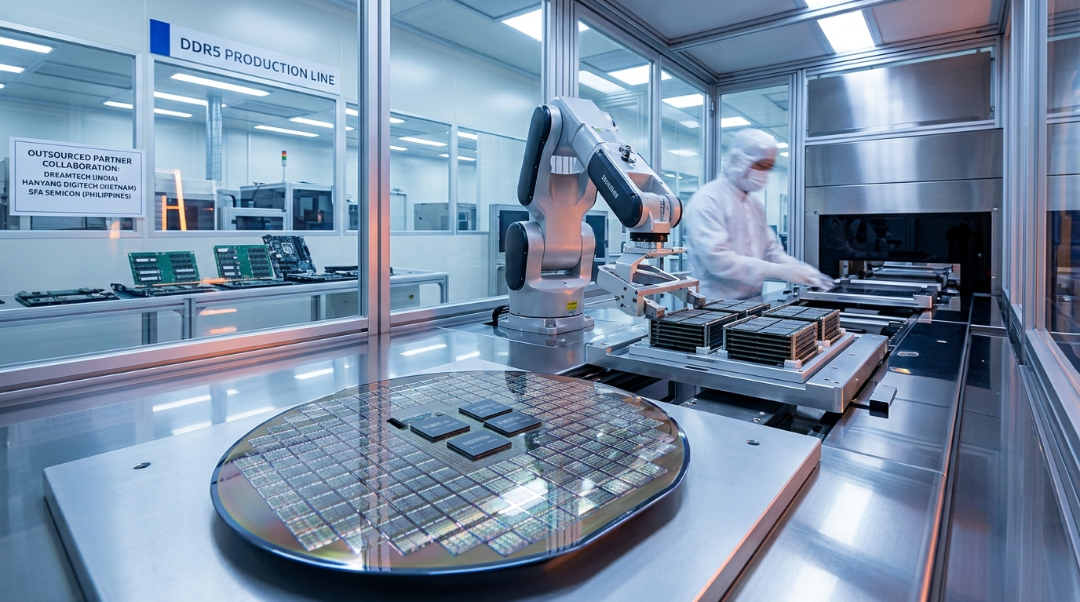
Samsung Shifts Focus to HBM Memory Production Amid Rising AI Hardware Demand



Follow Us:


5,028 views
Samsung is increasing its focus on high bandwidth memory (HBM) chip production as global demand for AI hardware rises. The company has seen significant growth in its HBM business, making it a key area of investment. Inside sources report that Samsung is urging its partners to complete DDR5 memory production lines ahead of schedule. This move aims to free up Samsung's own manufacturing capacity for HBM chip production, which offers higher value.
Key Highlights
- Samsung prioritizes HBM memory chip production due to rising AI hardware demand
- Company urges partners to complete DDR5 lines early to free up in-house capacity
- Samsung collaborates with firms in India, Vietnam, and the Philippines for outsourced DDR5 production
HBM Memory Drives Samsung Strategy
HBM memory chips are vital for supporting advanced AI applications. As the AI industry expands, the need for faster and more efficient memory solutions grows. Samsung has benefited from this trend, with HBM becoming its strongest-performing business segment in recent years. The company is now prioritizing HBM production to meet increasing market demand and maintain its competitive edge.
Impact on DDR5 Memory Market
Samsung's shift in focus may affect the DDR5 memory market. The DDR5 segment is already experiencing supply constraints, making it difficult for consumers and businesses to source memory for new PCs, servers, and laptops. By reallocating resources to HBM production, Samsung could further tighten DDR5 availability in the short term. The company is aware of these challenges and is working with partners to minimize disruptions.
Global Partnerships and Outsourcing Plans
To support its strategy, Samsung is collaborating with several international partners. The company has been in discussions with Dreamtech in India, Hanyang Digitech in Vietnam, and SFA Semicon in the Philippines. These partnerships aim to accelerate the completion of outsourced DDR5 production lines. Once these lines are operational, Samsung can dedicate more in-house capacity to HBM chip manufacturing.
Investing in outsourced production allows Samsung to respond quickly to changing market needs. By leveraging global partnerships, the company can scale its HBM output while maintaining a presence in the DDR5 market. This approach helps Samsung balance its business priorities during a period of rapid technological change.
Future Outlook for Memory Markets
The transition to increased HBM production highlights the evolving demands of the technology sector. As AI applications continue to grow, memory manufacturers like Samsung must adapt their strategies. The company's focus on HBM reflects a broader industry trend toward high-performance memory solutions. However, the impact on DDR5 supply will remain a concern for consumers and businesses in the near term.
Latest News




Reviews & Guides
View All


Samsung Galaxy Buds 4 Pro Review: क्या ₹22,999 में मिलते हैं सबसे बेहतरीन प्रीमियम वायरलेस ईयरबड्स?

कंटेंट क्रिएटर के लिए सबसे दमदार बैटरी लाइफ वाले Windows लैपटॉप, 18 घंटे की मिलेगी बैटरी लाइफ

Samsung Galaxy S26 Ultra क्यों है साल का सबसे बेहतरीन स्मार्टफोन? जानें 5 बड़े कारण

MacBook Neo Review: सस्ता नहीं, Apple का मास्टरस्ट्रोक है ये Laptop!

Samsung Galaxy S26 Ultra Review: AI से लेकर प्राइवेसी डिस्प्ले है सबसे खास, जानें कैसी है परफॉरमेंस

Vivo V70 Elite Review 2026: Price in India, Specs, Features

Best Haier LED TV Under Rs 30,000 in India

OnePlus Campus Dominate Season 3 Concludes in Delhi NCR

Raksha Bandhan Special: 6 vivo Smartphones for Every Kind of Sibling

Acer Launches New Nitro 5 Series in india starting price of 167,990

Flipkart Freedom Sale 2026 Starts August 8 With Big Discounts on Smart TVs

Samsung has unveiled its first credit card, Earn 5% back






 |
|
807, 808, 8th Floor,
IRIS Tech Tower Sohna Road Sector 48,
Gurugram, Haryana - 122018