


- News
- All News
- Mobiles
- Laptops
- Watches
- Cameras
- Printers
- Refrigerators
- Air Conditioners
- Washing Machines
- Air Purifiers
- Water Purifiers
- Expert Reviews
- All Reviews
- Mobiles
- Laptops
- Watches
- Cameras
- Printers
- Refrigerators
- Air Conditioners
- Washing Machines
- Air Purifiers
- Water Purifiers
- Articles
- All Articles
- Mobiles
- Laptops
- Watches
- Cameras
- Printers
- Refrigerators
- Air Conditioners
- Washing Machines
- Air Purifiers
- Water Purifiers
- Videos
- Videos

Ad
US Implements New Regulations to Limit AI Investments in China

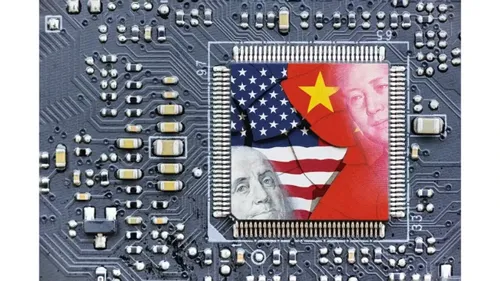
The Biden administration has announced the finalization of new regulations aimed at curtailing US investments in key technological sectors in China, particularly focusing on artificial intelligence (AI) and related fields. These rules, effective from January 2, 2025,, are part of a broader strategy to protect US national security and prevent adversaries from acquiring sensitive technological advancements.
Background and Motivation
These new regulations stem from an executive order signed by President Joe Biden in August 2023, which highlighted concerns over China's military ambitions and its potential to leverage advanced technologies for military and intelligence purposes. The order specifically targets three pivotal sectors: semiconductors and microelectronics, quantum information technologies, and certain AI systems. The urgency of these measures reflects the growing recognition that technologies in these areas are not merely commercial but are foundational to modern military and cybersecurity capabilities.
Scope of the Regulations
The Department of the Treasury, which is overseeing the implementation of these rules through its newly established Office of Global Transactions, has articulated that the technologies in question are integral to the future of military operations, surveillance, and intelligence-gathering. Paul Rosen, a senior official at the Treasury, emphasized that these regulations aim to prevent US investments from inadvertently assisting China in developing its military and intelligence infrastructure. This includes not only direct investments but also intangible benefits such as managerial expertise and access to talent networks that often accompany capital flows.
The regulations explicitly address technologies that could enhance China's military capabilities, including advanced computing systems capable of breaking codes and next-generation fighter jets. The intent is to safeguard critical innovations and prevent them from being repurposed for military applications by countries viewed as strategic competitors.
Investment Carve-Outs and Existing Regulations
While the new rules impose significant restrictions, they do include provisions that allow for US investment in publicly traded securities. This means that while direct investments in sensitive technologies will be limited, investments in publicly available stocks will still be permissible. However, US authorities already have mechanisms in place under previous executive orders to prohibit transactions involving specific Chinese companies identified as contributing to military advancements.
This dual approach aims to strike a balance between fostering investment opportunities for American investors while simultaneously ensuring that critical technologies do not fall into the hands of adversarial nations. The emphasis on publicly traded securities acknowledges the complexity of global financial markets and the necessity for American investors to navigate these changes without stifling potential returns.
Legislative and Industry Reactions
The House Select Committee on China has voiced concerns regarding the substantial flow of US investment into Chinese companies that are believed to be facilitating military advancements. Critics argue that major American index providers have been directing billions of dollars into these firms, potentially undermining US security interests. The committee has called for greater scrutiny and regulation of investment flows to ensure that American capital does not inadvertently support military developments in China.
Commerce Secretary Gina Raimondo has reiterated the administration's stance that these regulations are vital for protecting US technological supremacy and national security. The ongoing dialogue between government officials and industry leaders is essential in shaping these regulations, ensuring that they are both effective and adaptable to the rapidly changing technological landscape.
Broader Implications for US-China Relations
These regulations are not just a response to specific concerns about technology transfer but also reflect a broader geopolitical strategy. As tensions between the US and China continue to escalate, especially in areas related to technology and trade, these measures signify a more assertive posture by the US in safeguarding its technological advantages.
The implications of these regulations extend beyond just investment restrictions; they are likely to influence the overall dynamics of US-China relations. As the US seeks to maintain its competitive edge, there may be further regulatory actions aimed at other sectors and technologies deemed critical for national security.
Conclusion
In conclusion, the Biden administration's finalization of regulations to limit AI investments in China marks a significant development in the ongoing effort to protect US national security. By focusing on critical technologies that could enhance military capabilities, the US is taking a proactive stance in mitigating risks associated with foreign investments. As the regulations come into effect, the global tech landscape may witness shifts in investment patterns, with American firms reassessing their engagement with Chinese markets.
As these changes unfold, close attention will be needed to navigate the complexities of international investment and technology transfer, ensuring that American innovations remain safeguarded against potential adversarial threats. The interplay between regulatory measures and industry responses will be critical in shaping the future of US-China relations and the global technology landscape.
Ad
Ad
Confused? Choose Your Phone
What Matters Most


Get TheWeekly Brief
One email each morning: the launches,
the price changes and the reviews
worth reading.

Ad
Ad
 |
|
807, 808, 8th Floor,
IRIS Tech Tower Sohna Road Sector 48,
Gurugram, Haryana - 122018