



Ad
Expert Reviews
China Pitches Open-Source AI Bloc at BRICS Summit in New Delhi — What It Means for India's Tech Ecosystem



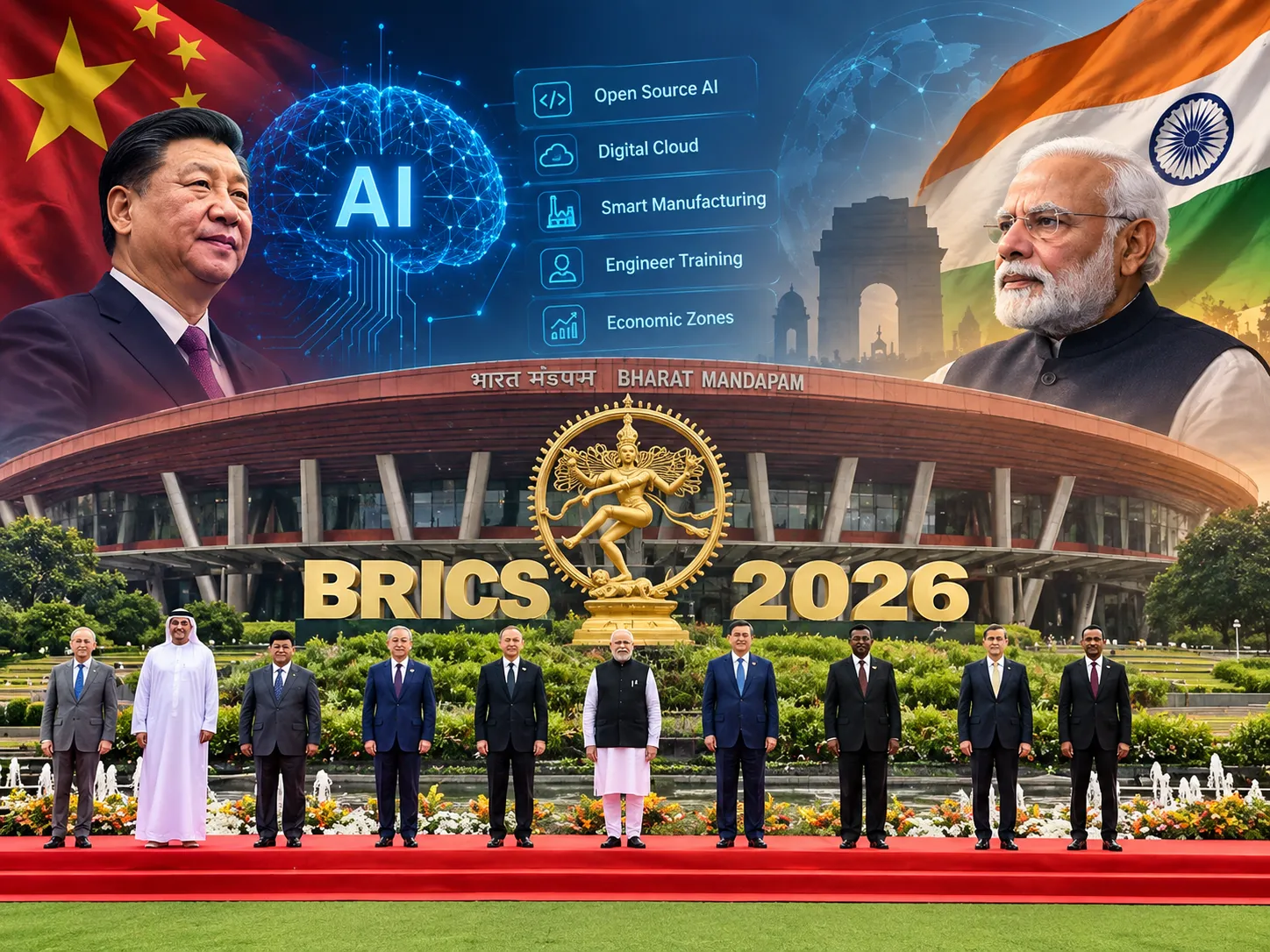
New Delhi, September 15, 2026 — The BRICS Summit just wrapped up in New Delhi, and on the surface, everyone left looking pretty chummy — a joint front against US tariffs, handshakes all around. But dig one layer down and there's a more interesting story: China trying to position itself as the AI godfather of the Global South, and India not quite ready to say yes.
Key highlights
- China to lead open-source AI ecosystem for BRICS's 11 members
- Part of Xi's five-point plan (also: economic zones, digital cloud, manufacturing, engineer training)
- China hosts next year's BRICS summit.Pitch timed against Silicon Valley's AI safety/slowdown debate
- Backed by competitive Chinese models like DeepSeek, Qwen.Xi also invited BRICS into a separate ~30-country AI coalition
- Modi's remarks on weaponized critical minerals hinted at India's unease
- India courting Western tech giants (OpenAI, Microsoft, Google, Amazon) too
- India lacks a homegrown foundation model — gap China's offer could fill.India keeping options open, not picking a side yet
Xi's five-point tech pitch
At the closing session, Xi Jinping stood up and said China would lead the charge on an open-source AI ecosystem for all 11 BRICS members. It's one part of a bigger five-point wishlist — special economic zones, a shared digital cloud, smart manufacturing, engineer training — but the AI piece is clearly the headline act. The plan: China helps build a shared open-source AI community, backs joint work on big language models, and runs training programs across member countries. Oh, and China's hosting next year's summit too, so expect more of this.
The timing here is almost too on-the-nose. While Silicon Valley's big names were busy arguing over whether AI needs to slow down for safety's sake, Xi shows up saying, basically, "we're not slowing down for anyone." And honestly, he's got receipts — Chinese labs like DeepSeek and Qwen are genuinely competitive with closed US models. He'd already sweetened the deal a day earlier by inviting BRICS countries into a separate ~30-country AI coalition China set up on its own.
A united front, with visible cracks
Now, officially, everyone smiled for the group photo. But if you were paying attention, the cracks were there. Modi used his own speaking time to warn about critical minerals getting turned into geopolitical leverage — which, let's be honest, wasn't a random tangent. It was India quietly saying: we're not about to trade one dependency for another.
Where does this leave India?
That hesitation makes total sense once you zoom out. Just months back, India was busy wooing OpenAI, Microsoft, Google and Amazon at its own AI summit, and those companies have collectively promised tens of billions toward Indian AI infrastructure. Meanwhile, India still doesn't have its own homegrown model that can go toe-to-toe with DeepSeek or GPT-class systems — chip access is limited, and training something that actually understands hundreds of Indian languages is no small task. That's exactly the gap China's cheap, open-source models could fill.
So India's caught in a bit of a bind. China's offer is genuinely tempting for cash-strapped startups and researchers. But leaning too hard into it clashes with India's whole strategy of staying the neutral middle-ground player between the West and the Global South — not to mention the border tensions that haven't really gone anywhere. Right now, it looks like India's keeping every door open rather than picking a team.
Follow Us:



Ad
Recent News

China Pitches Open-Source AI Bloc at BRICS Summit in New Delhi — What It Means for India's Tech Ecosystem
15-Sep-2026 11:43 AM

Oppo's Find X10 Leak Just Made Every Other Flagship Look Underpowered
14-Sep-2026 11:35 AM

Vivo X Fold6 global version spotted on Geekbench — Launch just weeks away
11-Sep-2026 11:30 AM

Samsung Certified Re-Newed Galaxy S26 and S26 Ultra Now Available in India
11-Sep-2026 10:30 AM

Apple iPhone 18 Pro and Duo Launch in India: Price Hikes, Market Impact, and Consumer Trends
11-Sep-2026 08:30 AM

XECH Unveils Atmos Portable Air Purifier at ₹2,999, Designed for Every Indian Home
07-Sep-2026 11:05 AM
Ad
Reviews & Guides
View All


Samsung Galaxy Buds 4 Pro Review: क्या ₹22,999 में मिलते हैं सबसे बेहतरीन प्रीमियम वायरलेस ईयरबड्स?

कंटेंट क्रिएटर के लिए सबसे दमदार बैटरी लाइफ वाले Windows लैपटॉप, 18 घंटे की मिलेगी बैटरी लाइफ

Samsung Galaxy S26 Ultra क्यों है साल का सबसे बेहतरीन स्मार्टफोन? जानें 5 बड़े कारण

MacBook Neo Review: सस्ता नहीं, Apple का मास्टरस्ट्रोक है ये Laptop!

Samsung Galaxy S26 Ultra Review: AI से लेकर प्राइवेसी डिस्प्ले है सबसे खास, जानें कैसी है परफॉरमेंस
Vivo V70 Elite Review 2026: Price in India, Specs, Features

OnePlus Campus Dominate Season 3 Concludes in Delhi NCR

Raksha Bandhan Special: 6 vivo Smartphones for Every Kind of Sibling

Acer Launches New Nitro 5 Series in india starting price of 167,990

Flipkart Freedom Sale 2026 Starts August 8 With Big Discounts on Smart TVs

Samsung has unveiled its first credit card, Earn 5% back

5 Anti-Scam Tools on WhatsApp that protect you from Digital Fraud








Ad
 |
|
807, 808, 8th Floor,
IRIS Tech Tower Sohna Road Sector 48,
Gurugram, Haryana - 122018