



Ad
AI’s Role in Cancer Vaccine Sparks Debate on Disease Cures and Timelines



Follow Us:


5,498 views
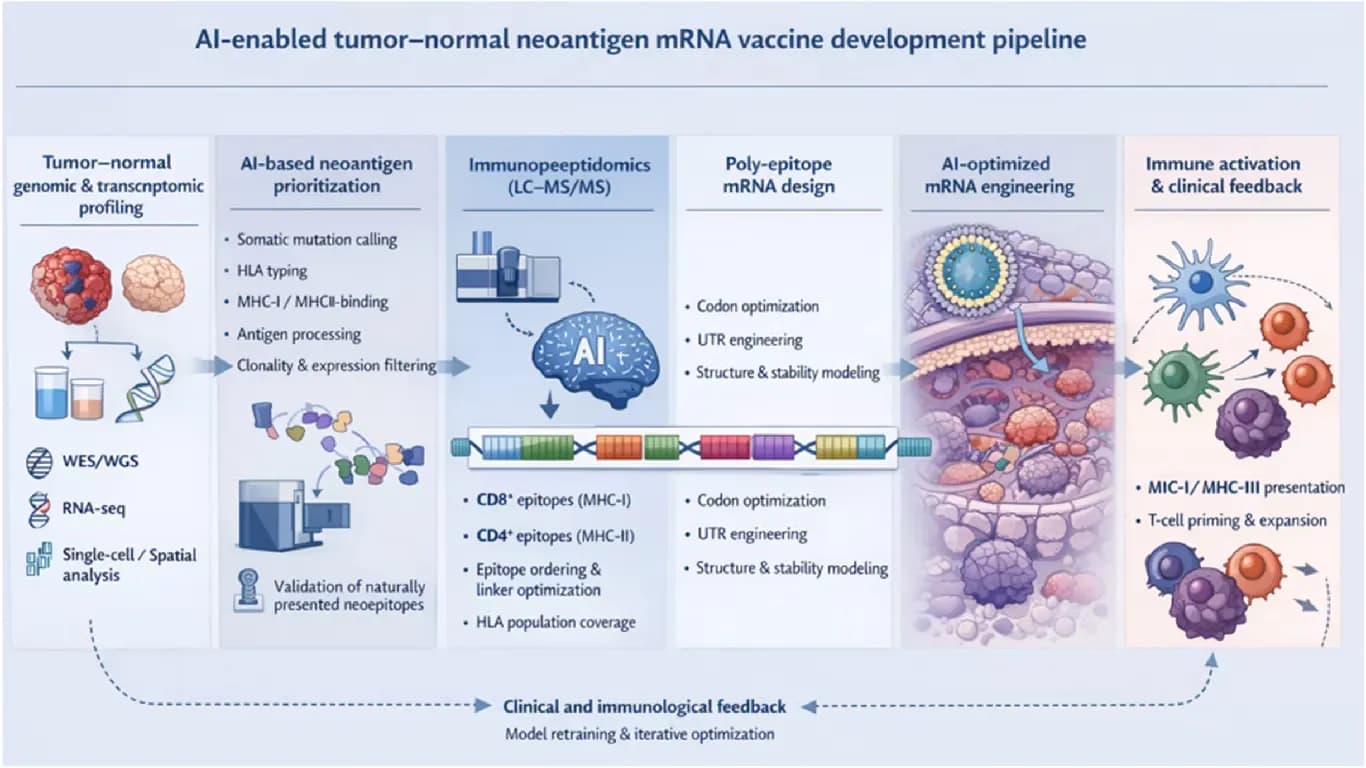
Researchers have announced a significant breakthrough in cancer treatment. Moderna and Merck have developed an mRNA vaccine that reduces the recurrence of melanoma, an aggressive skin cancer. Phase 3 trial data confirms the vaccine’s effectiveness. However, claims that artificial intelligence (AI) played a major role in this development are debated among experts.
Key Highlights
- Moderna and Merck developed an mRNA vaccine reducing melanoma recurrence in phase 3 trials.
- Silicon Valley leaders predict AI could cure most diseases within 5 to 10 years.
- Medical experts caution that biology’s complexity makes rapid cures unlikely despite AI advances.
- Doctors agree AI can accelerate research but stress that translating discoveries into treatments takes time.
AI’s Involvement in Medical Breakthroughs
Some headlines suggest AI was crucial in creating the new melanoma vaccine. While AI likely contributed to certain research processes, its exact impact remains unclear. The vaccine, named intismeran autogene, is a personalized treatment targeting melanoma. The announcement has reignited discussions about AI’s potential to revolutionize disease treatment.
Silicon Valley leaders, including Anthropic CEO Dario Amodei, believe AI could cure most human diseases within a decade. Amodei recently stated, “I think it will actually be possible to cure most human diseases in 5 to 10 years.” He shared a personal story about losing his father to Hepatitis C before the development of effective treatments, emphasizing the urgency of medical advances.
Elon Musk echoed these views, claiming AI will eliminate most diseases, including cancers, in the coming years. Musk also commented that artificial RNA technology could make curing diseases similar to solving software problems. He predicted that synthetic RNA will lead to many medical breakthroughs.
Demis Hassabis, former CEO of Google DeepMind and Nobel Prize winner, has also expressed confidence in AI’s role in medicine. He is known for his work in using AI to understand protein folding, which is vital for drug development. Hassabis recently told The Times that he is very confident major advances in medicine will occur within the next decade or two.
Medical Experts Assess AI’s Potential
Despite optimism from technology leaders, many doctors urge caution. Senior oncologists acknowledge AI’s potential but question the ambitious timelines suggested by Silicon Valley. Dr Garvit Chitkara, Associate Director at Nanavati Max Institute of Cancer Care in Mumbai, says AI can analyze biological and clinical data at a scale beyond human capacity. However, he believes curing most diseases within five years is unlikely, as biology does not follow fixed timelines.
Dr Mandeep Singh Malhotra, Director at The CK Birla Hospital in Delhi, agrees that AI can accelerate research. He notes that translating discoveries into safe, effective therapies requires laboratory validation, clinical trials, regulatory approval, and long-term monitoring. He views the 5 to 10-year prediction as an inspiring vision, not a guaranteed outcome.
Dr Sandeep Nayak, Chairman of Oncology at MACS-Renova Oncology Institute, KIMS Hospital in Bengaluru, highlights the complexity of biology. He points out that machine learning excels with abundant, high-quality data, which is often lacking in medical research. He considers the proposed timeline unrealistic.
Some doctors remain optimistic about AI’s impact. Dr Aanchal Bhatia, Orthopaedic Oncologist at Medicover Hospitals in Bengaluru, believes AI could speed up research, improve early disease detection, and help identify treatments faster. However, she stresses that accelerating research does not guarantee cures, given the complexity of biology.
Ongoing Debate Over AI and Disease Cures
The debate continues between technology executives and medical professionals. While AI is poised to transform medical research, experts caution that curing most diseases will require more time and careful validation. The recent melanoma vaccine marks progress, but the path from discovery to widespread cure remains complex.
Latest News



Reviews & Guides
View All


Samsung Galaxy Buds 4 Pro Review: क्या ₹22,999 में मिलते हैं सबसे बेहतरीन प्रीमियम वायरलेस ईयरबड्स?

कंटेंट क्रिएटर के लिए सबसे दमदार बैटरी लाइफ वाले Windows लैपटॉप, 18 घंटे की मिलेगी बैटरी लाइफ

Samsung Galaxy S26 Ultra क्यों है साल का सबसे बेहतरीन स्मार्टफोन? जानें 5 बड़े कारण

MacBook Neo Review: सस्ता नहीं, Apple का मास्टरस्ट्रोक है ये Laptop!

Samsung Galaxy S26 Ultra Review: AI से लेकर प्राइवेसी डिस्प्ले है सबसे खास, जानें कैसी है परफॉरमेंस
Vivo V70 Elite Review 2026: Price in India, Specs, Features

Raksha Bandhan Special: 6 vivo Smartphones for Every Kind of Sibling

Acer Launches New Nitro 5 Series in india starting price of 167,990

Flipkart Freedom Sale 2026 Starts August 8 With Big Discounts on Smart TVs

Samsung has unveiled its first credit card, Earn 5% back

5 Anti-Scam Tools on WhatsApp that protect you from Digital Fraud

How Samsung’s Galaxy S26 Series is Democratizing Mobile Filmmaking