


- News
- All News
- Mobiles
- Laptops
- Watches
- Cameras
- Printers
- Refrigerators
- Televisions
- Air Conditioners
- Washing Machines
- Air Purifiers
- Water Purifiers
- Expert Reviews
- All Reviews
- Mobiles
- Laptops
- Watches
- Cameras
- Printers
- Refrigerators
- Televisions
- Air Conditioners
- Washing Machines
- Air Purifiers
- Water Purifiers
- Articles
- All Articles
- Mobiles
- Laptops
- Watches
- Cameras
- Printers
- Refrigerators
- Televisions
- Air Conditioners
- Washing Machines
- Air Purifiers
- Water Purifiers
- Videos
- Videos

Ad
GST Fitment Committee Recommends No GST Relief On Air And Water Purifiers Despite Pollution Concerns


on Google
on Google
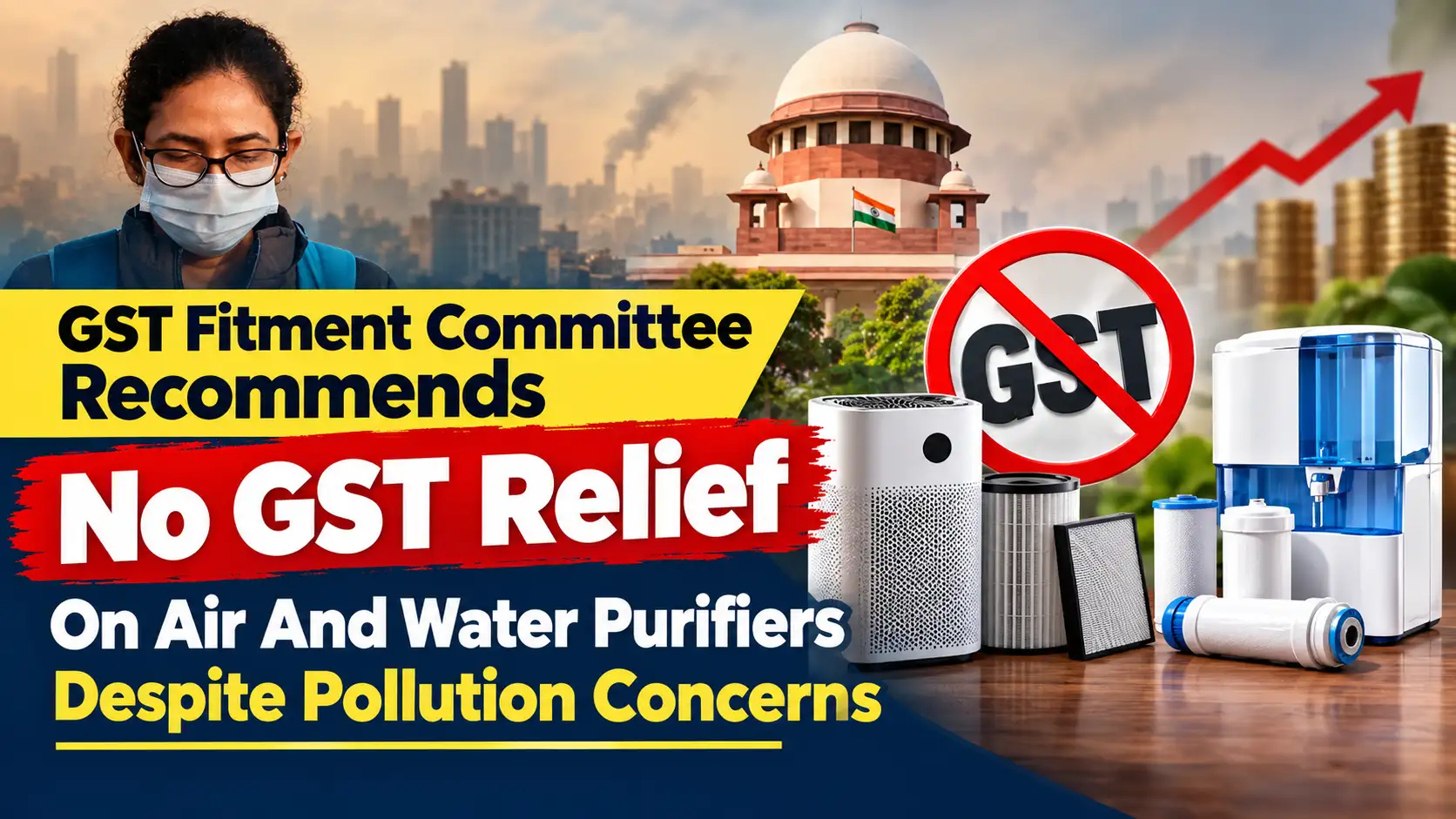
The GST Fitment Committee has recommended retaining the GST rate on air purifiers and water purifiers at 18%, even as there are increasing demands for tax relief on products, which are becoming more and more essential in the backdrop of worries over air and water pollution. However, the recommendation comes despite earlier calls by a parliamentary panel and observations by the Delhi High Court for a lighter tax burden on air purification devices and HEPA filters.
Earlier, the proposal had looked at bringing down GST on air purifiers to 5% or nil and a lower rate for household water purifiers was also considered. But the committee has expressed concerns on inverted duty structures, input tax credits, domestic manufacturing and classification issues and has decided to retain the existing 18% rate for the time being.
Major Highlights:
Air purifiers and HEPA filters will continue to attract the existing 18% GST rate despite demands for a reduction to 5% or nil.
The Fitment Committee raised concerns about inverted duty, input tax credit and domestic manufacturing.
Water purifiers and key consumables, including RO membranes and filter cartridges, are also recommended to remain under 18% GST.
GST Fitment Committee backs existing GST rate on purifiers
The GST Fitment Committee has recommended retaining the existing 18% GST on air purifiers and their parts, including HEPA filters, despite demands for tax relief amid growing concerns over air pollution. Proposals had sought a reduction in the tax rate to either 5% or zero to make purification devices more affordable for households.
The recommendation comes after concerns were raised by both a parliamentary panel and the Delhi High Court regarding the tax burden on products used by citizens to protect themselves from polluted air. Air purifiers have increasingly become household devices in cities dealing with poor air quality, making their taxation a closely watched issue.
The Delhi High Court, while hearing a public interest litigation in Kapil Madan vs Union of India concerning the classification of HEPA-equipped air purifiers as medical devices, had observed that GST on such products should be reduced. Separately, the Department-related Parliamentary Standing Committee on Science and Technology, Environment, Forests and Climate Change had recommended reducing or abolishing GST on air purifiers and HEPA filters.
Product | Existing GST | Proposed Relief | Fitment Committee Recommendation |
Air purifiers | 18% | 5% or Nil | No change |
HEPA filters | 18% | Lower rate | No change |
Water purifiers | 18% | 12% considered | No change |
RO membranes | 18% | Lower rate | No change |
Filter cartridges | 18% | Lower rate | No change |
Tax structure concerns influence air purifier decision
The Fitment Committee has pointed to the potential creation of an inverted duty structure if GST on air purifiers is reduced to 5%. Manufacturers would continue paying 18% GST on several inputs while charging only 5% GST on finished products, creating complications around input tax credit and tax accumulation.
A nil GST rate could create a different problem, and manufacturers would be unable to claim input tax credit, potentially resulting in taxes paid on inputs being incorporated into the ex-factory cost of the product.
The committee has also highlighted the broad use of HEPA filters; such filters are not limited to household air purifiers and are also used in HVAC systems, hospitals, laboratories, clean rooms and industrial facilities. A special lower rate for household applications could therefore create classification and compliance challenges.
Another concern relates to domestic manufacturing. The committee has flagged the possibility that cheaper imported air purifiers could gain an advantage if the GST rate were reduced, potentially affecting Indian manufacturers.
Water purifiers also set to retain 18% GST
The committee has similarly recommended no change to the 18% GST rate on water purifiers and consumable components such as RO membranes, filter cartridges and filter housings.
The GST Council previously considered a proposal to reduce GST on household water purifiers from 18% to 12% during the 45th meeting but did not accept it. The latest recommendation indicates that the existing tax treatment is likely to continue unless the GST Council takes a different view.
The decision leaves open the debate on taxing essential purification products, especially as households grapple with rising concerns about air and water quality. A lower GST could bring down consumer prices. The committee's recommendation stems from concerns about keeping a workable tax structure, preserving domestic manufacturing and avoiding classification disputes.
Ad
Ad
Confused? Choose Your Phone
What Matters Most


Get TheWeekly Brief
One email each morning: the launches,
the price changes and the reviews
worth reading.

Ad
Ad
 |
|
807, 808, 8th Floor,
IRIS Tech Tower Sohna Road Sector 48,
Gurugram, Haryana - 122018