


- News
- All News
- Mobiles
- Laptops
- Watches
- Cameras
- Printers
- Refrigerators
- Televisions
- Air Conditioners
- Washing Machines
- Air Purifiers
- Water Purifiers
- Expert Reviews
- All Reviews
- Mobiles
- Laptops
- Watches
- Cameras
- Printers
- Refrigerators
- Televisions
- Air Conditioners
- Washing Machines
- Air Purifiers
- Water Purifiers
- Articles
- All Articles
- Mobiles
- Laptops
- Watches
- Cameras
- Printers
- Refrigerators
- Televisions
- Air Conditioners
- Washing Machines
- Air Purifiers
- Water Purifiers
- Videos
- Videos

Ad
Samsung expects 780% quarterly operating profit jump on AI boom


on Google
on Google
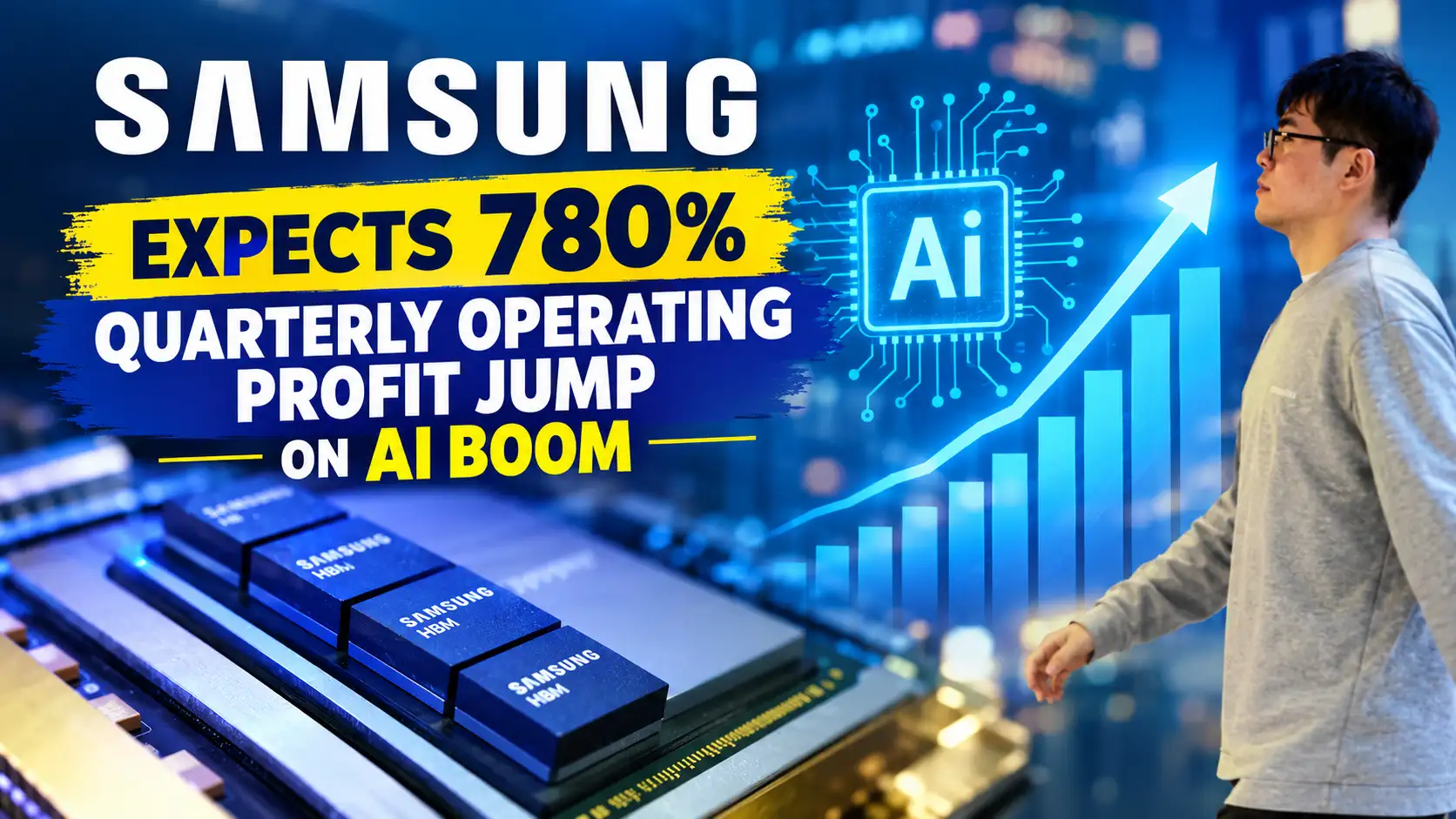
Samsung Electronics has forecast a dramatic 780% year-on-year increase in third-quarter operating profit, highlighting the powerful impact of the artificial intelligence boom on the global semiconductor industry, and the South Korean technology giant expects strong demand and higher prices for advanced memory chips to drive earnings to record levels.
The company said on October 8 that its operating profit for the July-September quarter is expected to reach 107.4 trillion South Korean won. All of that equivalent to approximately ₹7.76 lakh crore based on the October 8 KRW-INR exchange rate. Revenue is projected to reach 195 trillion won, or around ₹14.09 lakh crore.
Key Highlights
Samsung expects operating profit to surge 782.5% year-on-year in Q3.
Revenue is forecast to rise 127% to 195 trillion won.
AI data centre demand is driving strong memory chip sales and prices.
Samsung’s AI-driven earnings reach record territory
Samsung's projected operating profit represents a 782.5% increase from the same quarter a year earlier, according to the company's preliminary earnings statement. If confirmed in the final results, it would mark the first time a South Korean company has exceeded 100 trillion won in quarterly operating profit.
The expected revenue increase is equally significant. Samsung estimates third-quarter sales will climb 127% year-on-year to 195 trillion won, putting both revenue and operating profit at all-time highs.
The company would also extend a record-breaking streak, having now potentially set new quarterly records for both sales and operating profit for four consecutive quarters. Samsung is expected to release its complete third-quarter earnings report towards the end of October.
Memory chip demand fuels Samsung’s profit surge
The semiconductor business is at the centre of Samsung's earnings momentum as the global AI infrastructure build-out increases demand for high-performance memory. Advanced chips are increasingly required for data centres that support AI models and other intensive computing workloads.
Samsung is the world's largest memory chip manufacturer and competes alongside South Korea's SK hynix and US-based Micron in the market for high-bandwidth memory, or HBM. These specialised chips are increasingly important for AI data centres because they allow processors to access large volumes of data at high speeds.
The AI boom has therefore created favourable conditions for major memory manufacturers. Strong demand has tightened supply of advanced memory products, contributing to higher prices and improved profitability across the semiconductor industry.
Higher memory costs create pressure on mobile business
The same memory market that is strengthening Samsung's semiconductor earnings is also creating challenges for other parts of the company. Rising prices for DRAM and NAND flash memory are increasing the cost of components used in smartphones and other consumer electronics.
Samsung's mobile division must pay more for memory chips even as the company seeks to remain competitive in a crowded global smartphone market. Analysts have warned that rising production costs could become harder to absorb if memory prices continue climbing.
The company therefore faces a balancing act between protecting margins and maintaining shipment volumes and market share. For now, however, the strength of AI-related semiconductor demand is providing a powerful boost to Samsung's overall financial performance.
Ad
Ad
Confused? Choose Your Phone
What Matters Most


Get TheWeekly Brief
One email each morning: the launches,
the price changes and the reviews
worth reading.

Ad
Ad
 |
|
807, 808, 8th Floor,
IRIS Tech Tower Sohna Road Sector 48,
Gurugram, Haryana - 122018