



Ad
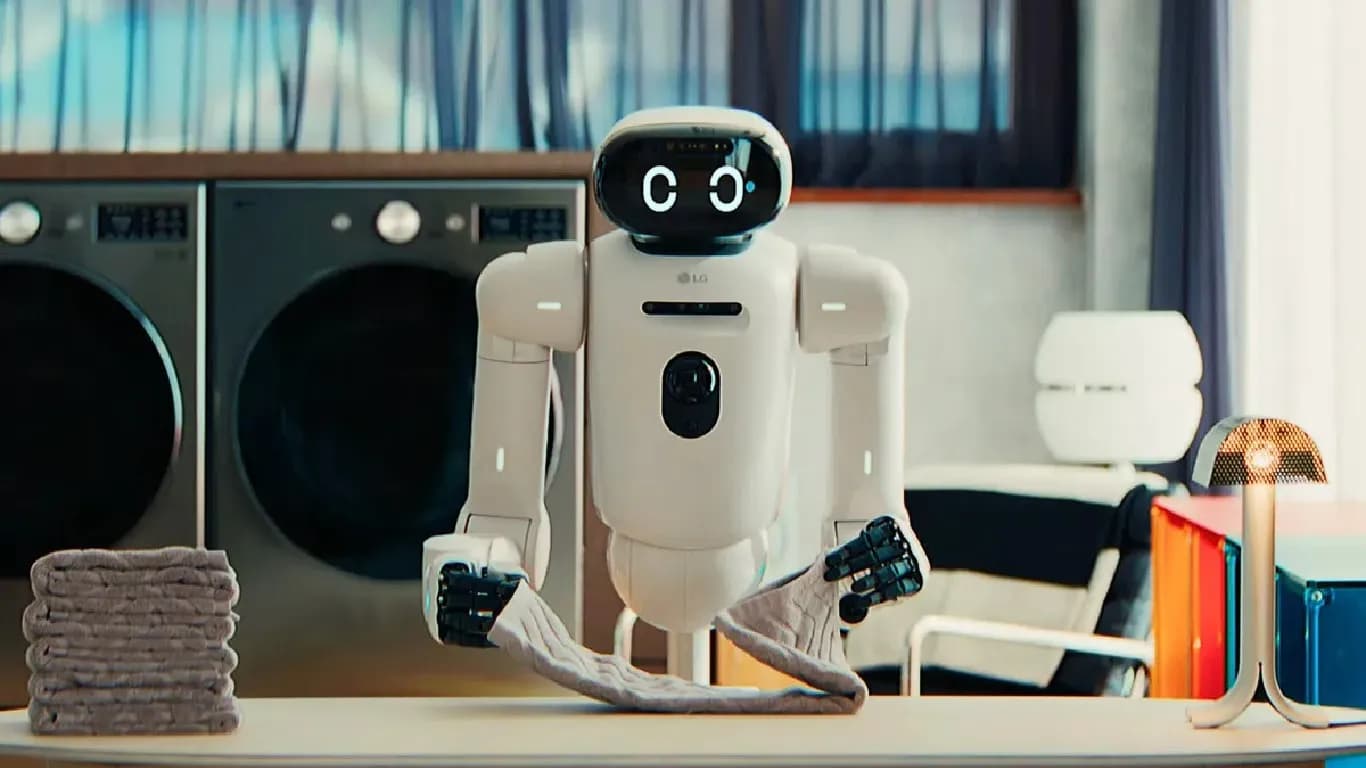
AI-Powered Robots Advance in Household Tasks and Physical Abilities in 2026



Follow Us:


6,014 views
In 2026, robots are showing new levels of intelligence and agility, moving beyond chatbots to perform complex real-world tasks. Recent developments highlight AI-powered robots tackling household chores and even participating in physical competitions. These advances signal a shift toward robots that can adapt and function in unpredictable environments.
Key Highlights
- Memo robot by Sunday Robotics folds laundry with over 99 percent accuracy in unfamiliar homes.
- EngineAI's T800 humanoid robot featured in a 32-team boxing tournament in Shenzhen.
- Robots are being trained for household chores and complex physical tasks in real-world settings.
- Developers use sensor-equipped gloves to teach robots human-like movements for daily tasks.
Robots Handling Household Chores
US startup Sunday Robotics has introduced Memo, a robot designed to fold clothes in unfamiliar homes. Memo uses a new AI model called ACT-2, which enables it to fold laundry with more than 99 percent accuracy. This performance holds even when Memo encounters garments it has not seen before or operates in new environments.
One of the main challenges in home robotics is teaching a robot to perform tasks reliably across different settings. Sunday Robotics addresses this by training Memo with data collected from people doing household chores while wearing sensor-equipped gloves. These gloves capture natural hand movements, allowing the robot to learn how humans complete various tasks.
Memo then practices these tasks repeatedly across a fleet of robots, learning from mistakes and improving reliability. The company refers to this capability as a "Solve," meaning the robot can perform a task consistently despite changing conditions. Sunday Robotics plans to test Memo in selected homes later this year.
Beyond laundry, Sunday Robotics is developing Memo's ability to clear dining tables, load dishwashers, make coffee, vacuum floors, organize toys, and fasten zippers. Many of these functions are still under development, but the company aims to expand Memo's usefulness in the home.
Robots Demonstrating Physical Skills
In China, Shenzhen-based EngineAI is exploring the physical limits of humanoid robots. The company recently hosted the Ultimate Robot Knock-out Legend (URKL), described as the world's first freestyle humanoid robot fighting tournament. The event took place in Shenzhen and featured full-sized humanoid robots in live combat.
A total of 32 teams competed using EngineAI's T800 humanoid robot as the standard platform. The T800 stands 1.73 meters tall and is designed to perform uppercuts, spinning kicks, and recover quickly after falls. The competition tested the robots' balance, decision-making speed, body coordination, and impact resistance in real-world conditions.
One notable moment during the tournament involved a robot receiving a powerful kick that left its head hanging loose, yet it continued fighting. Such events help developers evaluate and improve the robots' performance under stress and unpredictability.
Future Outlook for Humanoid Robots
These developments in both household assistance and physical competitions show that AI-powered humanoid robots are moving beyond laboratory prototypes. Robots like Memo and the T800 could soon become practical assistants in homes and workplaces. They may also play roles in new forms of entertainment and public events.
As robots become more capable, their integration into daily life is likely to increase, offering new solutions for both domestic and professional environments.
Latest News


Reviews & Guides
View All


Samsung Galaxy Buds 4 Pro Review: क्या ₹22,999 में मिलते हैं सबसे बेहतरीन प्रीमियम वायरलेस ईयरबड्स?

कंटेंट क्रिएटर के लिए सबसे दमदार बैटरी लाइफ वाले Windows लैपटॉप, 18 घंटे की मिलेगी बैटरी लाइफ

Samsung Galaxy S26 Ultra क्यों है साल का सबसे बेहतरीन स्मार्टफोन? जानें 5 बड़े कारण

MacBook Neo Review: सस्ता नहीं, Apple का मास्टरस्ट्रोक है ये Laptop!

Samsung Galaxy S26 Ultra Review: AI से लेकर प्राइवेसी डिस्प्ले है सबसे खास, जानें कैसी है परफॉरमेंस
Vivo V70 Elite Review 2026: Price in India, Specs, Features

Best 4K TVs Under ₹40,000 in India (2026)

Lava Virat Curve 5G Price in India, Launch Date & Specs 2026

Samsung Galaxy S26 FE Price in India ₹79,999, Specs & Offers

Samsung Galaxy S26 FE vs iPhone 17: Price & Specs

Best Haier TV in India 2026: Top Models, Prices & Specs

Best Haier LED TV Under Rs 30,000 in India