



Ad
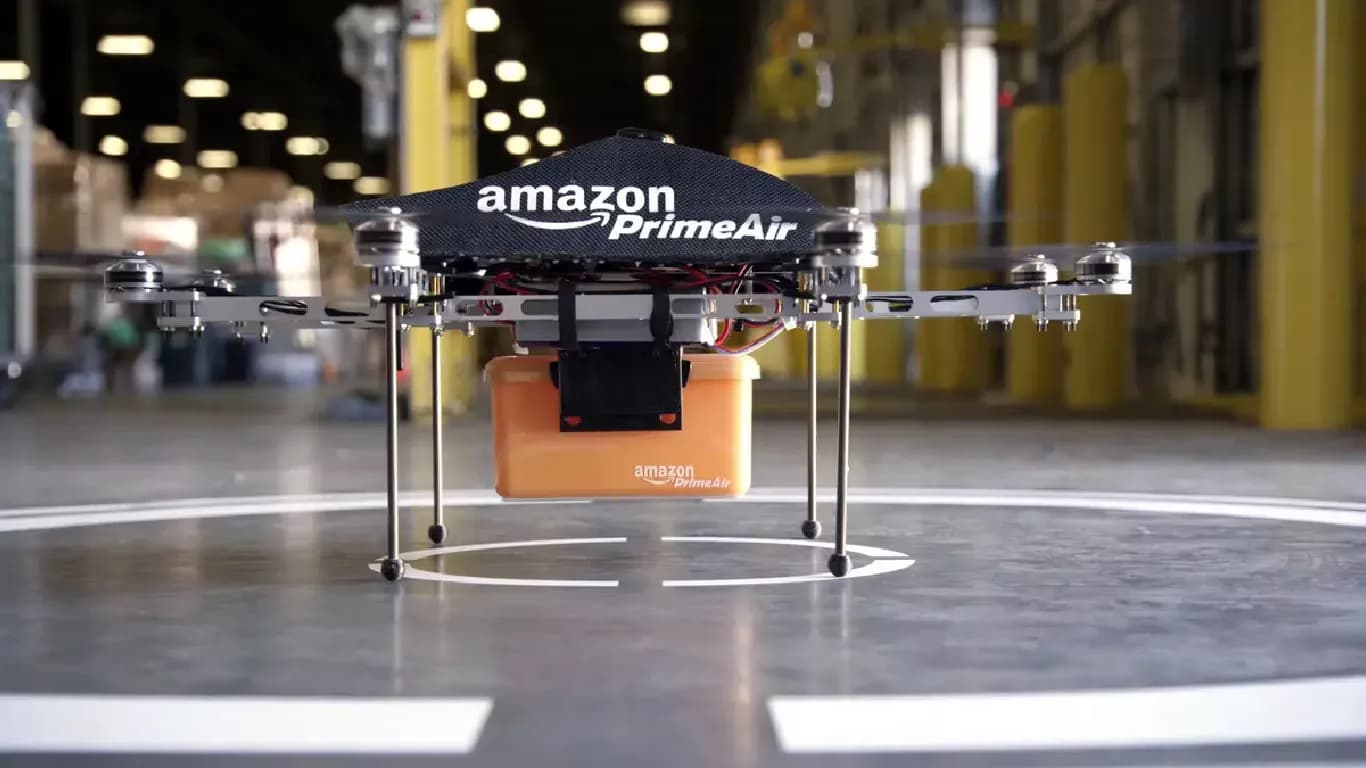
Amazon Prime Air Drone Delivery Raises Safety and Practicality Concerns



Follow Us:


318 views
Amazon's Prime Air drone delivery service has attracted attention after a video showed drones dropping packages from about 10 feet onto concrete. The service, which aims to speed up deliveries in several US cities, highlights both the promise and challenges of airborne delivery.
Key Highlights
- Amazon Prime Air drones drop packages from 10 feet to avoid obstacles
- Drones use ADS-B and onboard sensors for navigation and collision avoidance
- ADS-B broadcasts are unencrypted and vulnerable to GPS spoofing attacks
- Robots and drones still face challenges with obstacle detection and navigation
- Unitree Robotics' H1 humanoid robot set a sprint speed record at 10 meters per second
Drone Delivery Methods and Challenges
Prime Air drones operate autonomously and can fly beyond the line of sight of human operators. To avoid obstacles, drones use two main methods. The first method, ADS-B, broadcasts the drone’s altitude, heading, and airspeed. This creates a virtual environment where each drone knows the location of others. However, ADS-B records are unencrypted and can be hacked by spoofing GPS signals, raising security concerns.
The second method uses onboard sensors, similar to those in robots. These sensors help drones detect and avoid obstacles. However, robots using these sensors have struggled with navigation. For example, a robot at Disneyland Paris recently malfunctioned and collapsed in front of visitors. The technology still faces challenges in two-dimensional environments, and adding a third dimension for drones increases the risk of errors.
Global Delivery Trends and Technology Improvements
In India, 10-minute delivery services have become popular due to high population density. In contrast, the United States is testing drone delivery to address longer distances and lower population density. Companies continue to experiment with different delivery methods to meet rising consumer expectations for speed.
Despite current limitations, robotics technology is advancing rapidly. A Chinese startup, Unitree Robotics, recently set a world record with its H1 humanoid robot, which reached a sprint speed of 10 meters per second. The H1 robot weighs about 62 kilograms and has a combined thigh and calf length of 80 centimeters, making it similar in size to an average human.
Future of Drone and Robot Deliveries
Videos of delivery drones and robots struggling with navigation often go viral online. While these incidents highlight current shortcomings, they also show the rapid pace of technological improvement. The future of drone and robot deliveries will depend on how companies address safety, reliability, and efficiency concerns.
Latest News





Reviews & Guides
View All


Samsung Galaxy Buds 4 Pro Review: क्या ₹22,999 में मिलते हैं सबसे बेहतरीन प्रीमियम वायरलेस ईयरबड्स?

कंटेंट क्रिएटर के लिए सबसे दमदार बैटरी लाइफ वाले Windows लैपटॉप, 18 घंटे की मिलेगी बैटरी लाइफ

Samsung Galaxy S26 Ultra क्यों है साल का सबसे बेहतरीन स्मार्टफोन? जानें 5 बड़े कारण

MacBook Neo Review: सस्ता नहीं, Apple का मास्टरस्ट्रोक है ये Laptop!

Samsung Galaxy S26 Ultra Review: AI से लेकर प्राइवेसी डिस्प्ले है सबसे खास, जानें कैसी है परफॉरमेंस

Vivo V70 Elite Review 2026: Price in India, Specs, Features

Best 4K TVs Under ₹40,000 in India (2026)

Lava Virat Curve 5G Price in India, Launch Date & Specs 2026

Samsung Galaxy S26 FE Price in India ₹79,999, Specs & Offers

Samsung Galaxy S26 FE vs iPhone 17: Price & Specs

Best Haier TV in India 2026: Top Models, Prices & Specs

Best Haier LED TV Under Rs 30,000 in India