


Ad
Elon Musk Loses Key Claims Against OpenAI in Federal Jury Verdict



Follow Us:


9,047 views
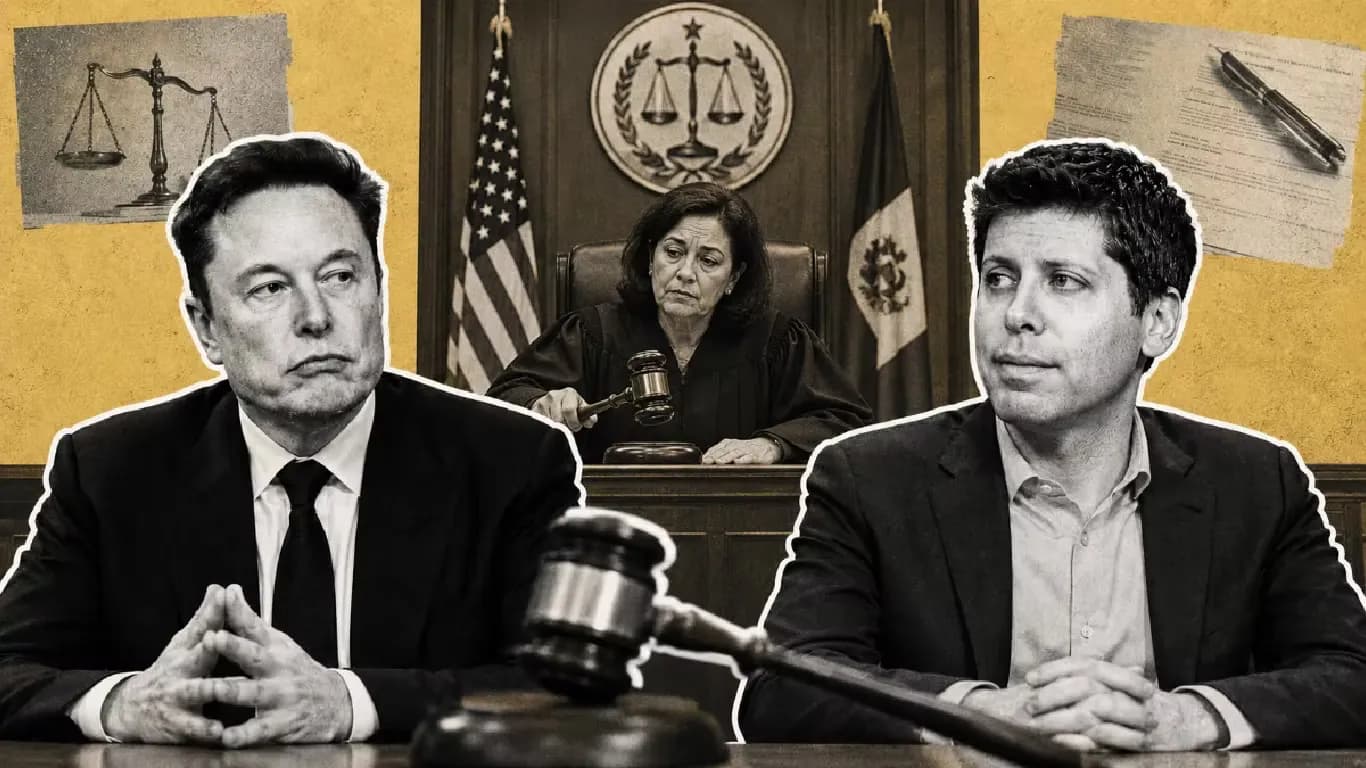
Elon Musk has lost three major claims in his lawsuit against OpenAI and its CEO Sam Altman. A federal jury in Oakland unanimously ruled against Musk on all three claims presented at trial. Judge Yvonne Gonzalez Rogers accepted the jury’s findings and dismissed these claims. However, other parts of Musk’s lawsuit against OpenAI remain unresolved and will continue in court.
Key Highlights
- Federal jury unanimously rejects Musk's three claims against OpenAI and Sam Altman.
- Claims dismissed on statute of limitations grounds, not based on evidence or merits.
- Musk plans to appeal the verdict and continue legal action against OpenAI.
Jury Dismisses Musk’s Claims
The two-week trial focused on Musk’s argument that OpenAI shifted from its original charitable mission to a profit-driven approach. Musk accused OpenAI leaders, including Altman and Greg Brockman, of benefiting from this restructuring. The jury dismissed all three claims: breach of charitable trust, unjust enrichment, and a claim against Microsoft for aiding and abetting breach of charitable trust. The Microsoft claim was dismissed because it relied on the charitable trust allegation.
The jury’s decision was based on legal timing. They found that Musk filed his claims too late under the statute of limitations. This means the court did not decide whether OpenAI’s leadership acted improperly. Instead, the claims were ruled time-barred and could not proceed regardless of the underlying facts.
Musk’s Response and Next Steps
After the verdict, Musk criticized the outcome, stating that the court did not examine the central issues of the case. He argued that the judge and jury ruled on a “calendar technicality” rather than the merits of the claims. Musk insisted that Altman and Brockman enriched themselves by turning a charity into a for-profit company. He warned that this precedent could harm charitable giving in the United States.
Musk announced plans to appeal the ruling to the Ninth Circuit Court of Appeals. In a post on X, he stated that the case was never judged on its merits and that he would continue to pursue legal action. Musk’s lawsuit sought $134 billion in damages, the removal of Altman and Brockman from OpenAI, and a reversal of OpenAI’s 2025 for-profit recapitalization.
Musk’s legal team argued that OpenAI raised support as a nonprofit AI lab dedicated to humanity, only to later become a commercial AI company with close ties to Microsoft. After the verdict, Musk’s lawyer Marc Toberoff said the legal battle is not over and accused OpenAI executives of enriching themselves by billions of dollars.
Ongoing Legal Proceedings
The broader Musk vs. OpenAI case remains active. Judge Gonzalez Rogers told lawyers that several claims are still pending and that the court will hold a status conference to determine the next steps. The recent trial only addressed the charitable trust theory. Other contract-related and federal claims in Musk’s amended complaint were not part of this jury trial and are still unresolved.
Musk’s lead lawyer, Steven Molo, has preserved Musk’s right to appeal. The legal dispute between Musk and OpenAI is expected to continue as the remaining claims are addressed in court.
Latest News


Reviews & Guides
View All


Samsung Galaxy Buds 4 Pro Review: क्या ₹22,999 में मिलते हैं सबसे बेहतरीन प्रीमियम वायरलेस ईयरबड्स?

कंटेंट क्रिएटर के लिए सबसे दमदार बैटरी लाइफ वाले Windows लैपटॉप, 18 घंटे की मिलेगी बैटरी लाइफ

Samsung Galaxy S26 Ultra क्यों है साल का सबसे बेहतरीन स्मार्टफोन? जानें 5 बड़े कारण

MacBook Neo Review: सस्ता नहीं, Apple का मास्टरस्ट्रोक है ये Laptop!

Samsung Galaxy S26 Ultra Review: AI से लेकर प्राइवेसी डिस्प्ले है सबसे खास, जानें कैसी है परफॉरमेंस
Vivo V70 Elite Review 2026: Price in India, Specs, Features

Best Phone Under ₹10,000 for Elderly and Senior Citizens

Haier 32, 43 & 55 Inch LED TV: Full Specifications & Price Comparison

Best 4K TVs Under ₹40,000 in India (2026)

Lava Virat Curve 5G Price in India, Launch Date & Specs 2026

Samsung Galaxy S26 FE Price in India ₹79,999, Specs & Offers

Samsung Galaxy S26 FE vs iPhone 17: Price & Specs