


Ad
Elon Musk vs. OpenAI Trial Nears Verdict as Closing Arguments Highlight Control Dispute



Follow Us:


12,272 views
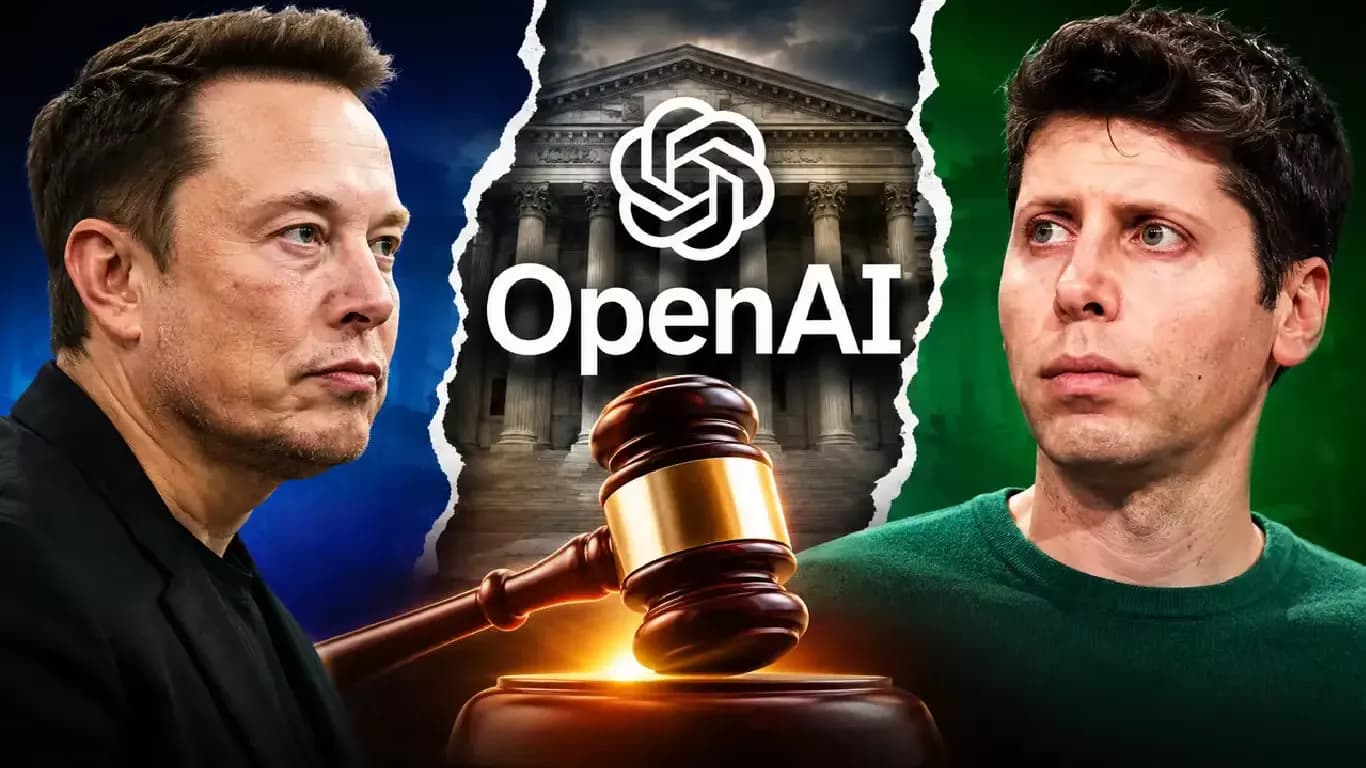
The high-profile legal battle between Elon Musk and OpenAI reached its final phase on Day 13, as closing arguments began in a trial that could impact the future of artificial intelligence. The jury must now decide if OpenAI abandoned its original charitable mission and if CEO Sam Altman, co-founder Greg Brockman, and the OpenAI Foundation should be held legally responsible.
Key Highlights
- Elon Musk and OpenAI await a jury verdict after closing arguments in a high-stakes trial.
- Musk’s legal team claims OpenAI abandoned its nonprofit mission and enriched executives.
- OpenAI’s defense argues Musk sought control and did not provide binding donation terms.
- Microsoft’s involvement in OpenAI’s transformation is a key point in the trial.
- A separate hearing may decide if OpenAI owes Musk billions if the jury rules in his favor.
Key Allegations Against OpenAI
Elon Musk’s lead attorney, Steven Molo, opened with strong criticism of OpenAI’s leadership. He told jurors the case centers on three claims: Musk donated money to OpenAI for a specific charitable purpose that was later abandoned; OpenAI executives benefited from those donations; and Microsoft knowingly helped OpenAI violate its founding mission.
Molo argued that OpenAI insiders turned a nonprofit research lab into a financial empire, enriching a small group of executives. He described them as “guys with $30 billion” who “never donated a nickel” but now claim rights to the organization’s value. Molo focused on Altman’s public statements about ownership and control, reminding jurors that Altman testified before the U.S. Senate that he held “no equity” in OpenAI. Molo claimed this was false, arguing that Altman has a significant financial stake worth tens of billions of dollars.
Molo also accused Altman of using his position for personal gain through outside investments, including undisclosed stakes in Helion Energy and Reddit. Even without direct equity in OpenAI, Molo said Altman exercised significant influence as CEO, shaping contracts, partnerships, and business decisions.
To clarify the case, Molo used an analogy: if someone steals $1 million from a bank, it is not a defense to say $100 million remains. He argued OpenAI’s nonprofit mission was breached regardless of remaining value. Molo further alleged Microsoft was deeply involved, saying the company was aware of OpenAI’s actions and helped Altman and Brockman violate OpenAI’s original mission.
The trial’s outcome could have major financial consequences. While the current proceedings focus on liability, a separate hearing scheduled for Monday will determine how much money OpenAI may have to return if the jury sides with Musk. The potential amount could reach billions of dollars.
OpenAI Defense and Musk’s Motives
OpenAI’s defense team countered by portraying Musk as someone who wanted control of OpenAI for himself. Defense lawyer Sarah Eddy argued there is no evidence Musk’s donations came with permanent restrictions. She told jurors Musk is trying to convince them that donations made years ago carried binding “strings.”
Eddy said no witness supported Musk’s version of events. The defense claimed Musk initially pushed to turn OpenAI into a for-profit company under his control, but other founders rejected this idea. They did not want one person controlling artificial general intelligence, or AGI. “They refused to turn the keys of AGI over to one man,” Eddy said, “let alone Elon Musk.”
The defense also accused Musk of demanding “unilateral control” during 2017 negotiations over OpenAI’s structure. Eddy presented evidence suggesting Musk wanted dominant authority and even envisioned his children inheriting control over AGI technology. The defense argued this contradicts Musk’s current image as a defender of nonprofit governance and AI safety.
Eddy highlighted that Musk pledged to donate $1 billion to OpenAI but ultimately contributed about $38 million. As the jury prepares to deliberate, the case raises broader questions about OpenAI’s transformation and whether its shift from nonprofit ideals was justified or if Musk sought control for personal reasons.
Latest News



Reviews & Guides
View All


Samsung Galaxy Buds 4 Pro Review: क्या ₹22,999 में मिलते हैं सबसे बेहतरीन प्रीमियम वायरलेस ईयरबड्स?

कंटेंट क्रिएटर के लिए सबसे दमदार बैटरी लाइफ वाले Windows लैपटॉप, 18 घंटे की मिलेगी बैटरी लाइफ

Samsung Galaxy S26 Ultra क्यों है साल का सबसे बेहतरीन स्मार्टफोन? जानें 5 बड़े कारण

MacBook Neo Review: सस्ता नहीं, Apple का मास्टरस्ट्रोक है ये Laptop!

Samsung Galaxy S26 Ultra Review: AI से लेकर प्राइवेसी डिस्प्ले है सबसे खास, जानें कैसी है परफॉरमेंस
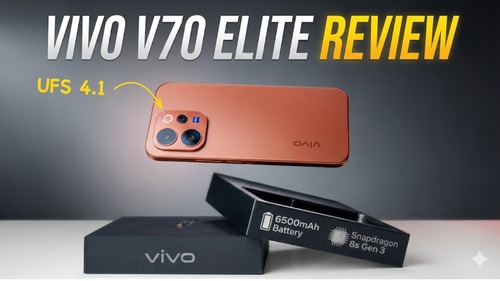
Vivo V70 Elite Review 2026: Price in India, Specs, Features

Best Phone Under ₹10,000 for Elderly and Senior Citizens

Haier 32, 43 & 55 Inch LED TV: Full Specifications & Price Comparison

Best 4K TVs Under ₹40,000 in India (2026)

Lava Virat Curve 5G Price in India, Launch Date & Specs 2026

Samsung Galaxy S26 FE Price in India ₹79,999, Specs & Offers

Samsung Galaxy S26 FE vs iPhone 17: Price & Specs