



Ad
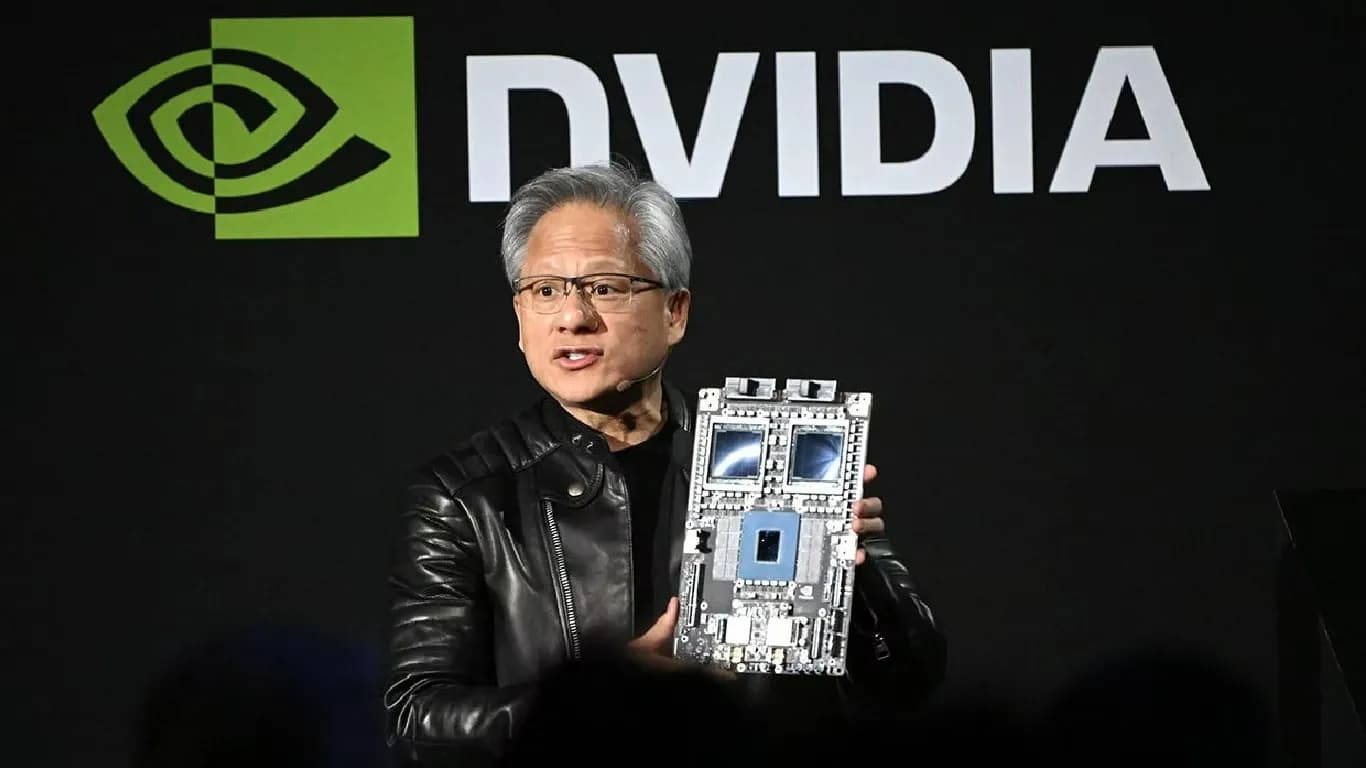
How Nvidia’s GPUs Became the Backbone of the AI Revolution



Follow Us:


5,682 views
On August 27, 2008, thousands gathered at the San Jose Convention Center for Nvidia's NVISION 08 conference. Attendees expected new graphics technology and gaming hardware. Instead, they witnessed a demonstration that previewed Nvidia’s future role in artificial intelligence. This event marked an early public display of the technology that would help make Nvidia the world’s most valuable company.
Key Highlights
- Nvidia's 2008 demo showcased parallel processing with a 1,100-barrel paintball machine.
- CUDA enabled GPUs to solve complex problems beyond gaming, including scientific simulations and AI.
- Most leading AI models, including ChatGPT and Gemini, are trained on Nvidia GPUs.
- Nvidia's ecosystem of hardware and software gives it a strong industry advantage.
- Competitors are developing AI chips, but Nvidia's mature platform remains dominant.
Nvidia’s Parallel Processing Breakthrough
Television personalities Adam Savage and Jamie Hyneman from MythBusters led the demonstration. They compared two machines: one with a single paintball gun and another with 1,100 paintball barrels. The first machine, called Leonardo, fired paintballs one at a time, representing how CPUs process tasks sequentially. The second machine fired all 1,100 paintballs at once, illustrating parallel processing. In less than a tenth of a second, the paintballs created a pixelated Mona Lisa on canvas. This showcased how Nvidia’s Graphics Processing Unit (GPU) could handle thousands of tasks simultaneously, unlike traditional CPUs.
Originally, GPUs were designed to improve gaming graphics by managing many calculations at the same time. Over time, these chips evolved into general-purpose computing engines. They now solve complex scientific problems, process large datasets, and train artificial intelligence models.
From Gaming Graphics to AI Infrastructure
Nvidia’s journey began in a Denny’s Diner in East San Jose, where Jensen Huang, Chris Malachowsky, and Curtis Priem discussed the need for a dedicated graphics processor. In 1999, Nvidia launched the GeForce 256, the first chip called a Graphics Processing Unit. This GPU allowed for richer graphics and smoother gameplay, establishing Nvidia as a major chipmaker.
That same year, Nvidia introduced CUDA, a software platform that allowed developers to use GPUs for more than just graphics. CUDA enabled GPUs to tackle tasks like data analysis, weather forecasting, and scientific simulations. Nvidia CEO Jensen Huang recalled that the initial reaction to CUDA was muted, but he remained confident in its potential.
In 2012, researchers used Nvidia GPUs to train AlexNet, an AI model that advanced image recognition. This demonstrated GPUs’ power for AI training. In 2016, Nvidia launched the DGX-1, an AI supercomputer priced at about $129,000. Elon Musk acquired one for OpenAI, with Huang personally delivering the system. This marked Nvidia’s deeper involvement in AI research.
Nvidia’s Ecosystem and Industry Impact
Today, most major AI models, including OpenAI’s ChatGPT and Google’s Gemini, are trained on Nvidia GPUs using CUDA. Nvidia’s ecosystem includes hardware, software libraries, developer tools, and networking technology. This comprehensive platform gives Nvidia a significant advantage over competitors like AMD and Intel.
Industry experts highlight that Nvidia’s dominance is not just due to its chips but also its ecosystem. The company’s infrastructure supports scientific discovery, autonomous vehicles, robotics, and industrial innovation. While competitors are developing their own AI chips, Nvidia’s mature ecosystem remains unmatched.
Experts note that if Nvidia disappeared, innovation would slow, though alternatives exist. Companies like Google, Amazon, Microsoft, and several startups are developing specialized AI hardware. OpenAI recently announced its own AI chip, built in nine months.
Some industry leaders suggest that countries should invest across the entire AI stack to reduce dependency on a single supplier. Nvidia’s GPUs, once intended for gaming, have become essential infrastructure for AI, influencing economic growth and national security.
Latest News




Reviews & Guides
View All


Samsung Galaxy Buds 4 Pro Review: क्या ₹22,999 में मिलते हैं सबसे बेहतरीन प्रीमियम वायरलेस ईयरबड्स?

कंटेंट क्रिएटर के लिए सबसे दमदार बैटरी लाइफ वाले Windows लैपटॉप, 18 घंटे की मिलेगी बैटरी लाइफ

Samsung Galaxy S26 Ultra क्यों है साल का सबसे बेहतरीन स्मार्टफोन? जानें 5 बड़े कारण

MacBook Neo Review: सस्ता नहीं, Apple का मास्टरस्ट्रोक है ये Laptop!

Samsung Galaxy S26 Ultra Review: AI से लेकर प्राइवेसी डिस्प्ले है सबसे खास, जानें कैसी है परफॉरमेंस

Vivo V70 Elite Review 2026: Price in India, Specs, Features

Raksha Bandhan Special: 6 vivo Smartphones for Every Kind of Sibling

Acer Launches New Nitro 5 Series in india starting price of 167,990

Flipkart Freedom Sale 2026 Starts August 8 With Big Discounts on Smart TVs

Samsung has unveiled its first credit card, Earn 5% back

5 Anti-Scam Tools on WhatsApp that protect you from Digital Fraud

How Samsung’s Galaxy S26 Series is Democratizing Mobile Filmmaking