



Ad
Expert Reviews
Dual Inverter AC vs Normal AC: Key Differences and Efficiency Explained



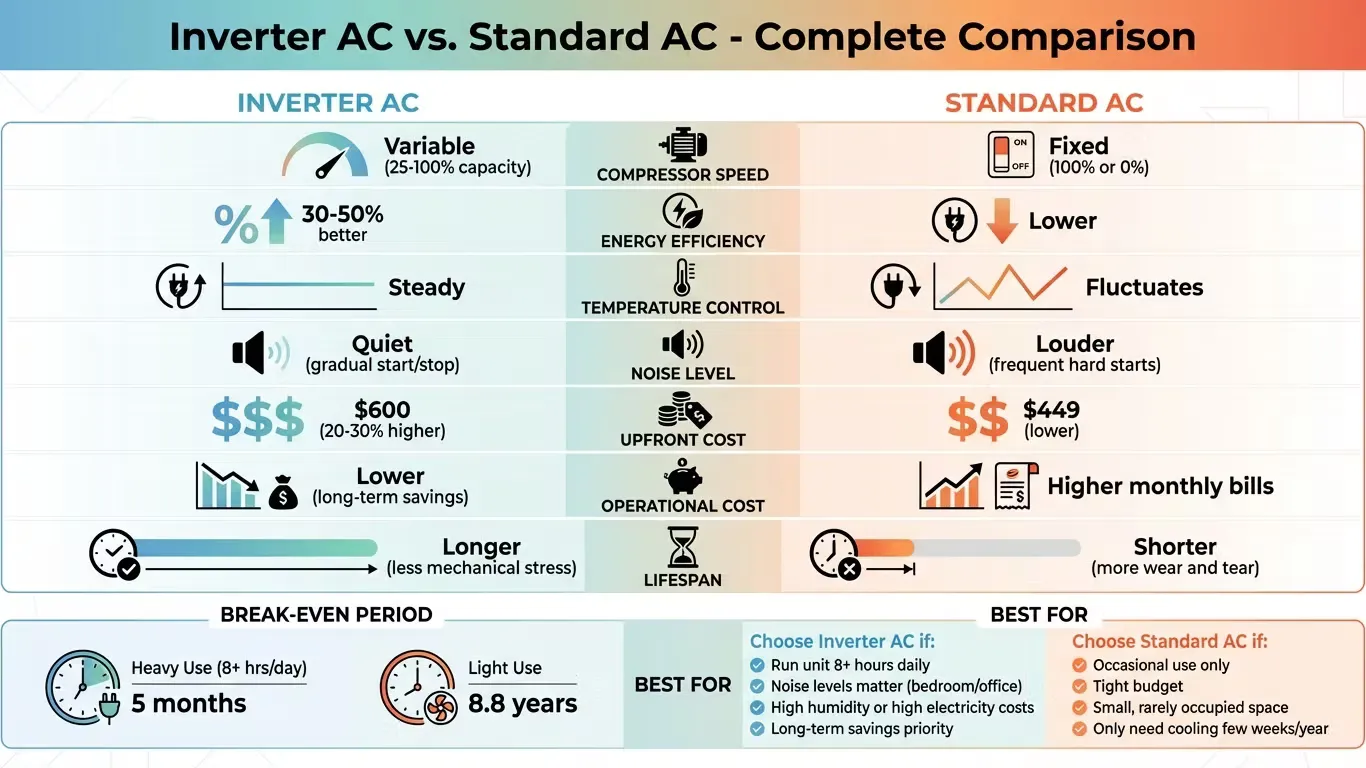
India experiences some of the highest temperatures globally, with about 95 to 98 of the world’s 100 hottest cities located in the country. As a result, air conditioners have become essential for comfortable living. However, choosing the right air conditioner can be challenging due to the variety of options available. Many consumers are unsure whether to invest in the latest dual inverter models or opt for standard air conditioners.
Key Highlights
- India has 95 to 98 of the world’s 100 hottest cities requiring effective air conditioning.
- Normal ACs operate in on-off cycles leading to higher energy use and temperature fluctuations.
- Dual inverter ACs adjust compressor speed for steady cooling and lower electricity consumption.
- Dual inverter models are quieter and recover extra cost through reduced utility bills over time.
Comparison of AC Technologies
Normal air conditioners operate in a simple on-off cycle. They run at full power until the room reaches the desired temperature, then switch off. When the room warms up again, the unit restarts at full power. This cycle repeats, causing energy waste and fluctuating room temperatures. The frequent starting and stopping also lead to higher electricity consumption.
Dual inverter air conditioners use a different approach. Instead of turning off completely, they adjust their compressor speed based on the cooling requirement. This allows the unit to run at varying speeds, maintaining a consistent room temperature. The technology reduces energy consumption by avoiding power surges from frequent restarts. As a result, dual inverter ACs provide more stable cooling and greater comfort.
Efficiency, Cost, and Performance
When comparing efficiency, dual inverter models outperform standard ACs. They consume less electricity during prolonged use because they do not need to restart frequently. Although normal ACs may cost less initially, dual inverter units often recover the price difference within a few seasons through lower utility bills. This is especially true for users who operate their air conditioners for more than five hours daily, where the long-term savings become significant.
Noise levels also differ between the two types. Dual inverter ACs use two rotors, which balance each other and reduce vibration. This design results in quieter operation compared to normal ACs, which can produce more noise and vibration, especially from the outdoor unit. Additionally, dual inverter models cool rooms faster and maintain a steady temperature, while standard ACs may cause the room to feel too cold or too warm at times.
Choosing the Right AC
Consumers should consider their usage patterns and budget when selecting an air conditioner. For those seeking long-term savings and consistent comfort, dual inverter ACs offer clear advantages. However, standard ACs may still be suitable for users with limited usage or lower initial budgets.
Follow Us:



Ad
Recent News

OnePlus Teases Nord Buds 4 Launch in India With New Design
12-Jun-2026 04:30 PM

Oppo Reno16 Series Expected to Launch Soon in Europe with Three Models
12-Jun-2026 12:30 PM

Nothing Ear (3a) Expected to Launch Soon in Four Colors at €99
12-Jun-2026 10:30 AM

Elon Musk Becomes World's First Trillionaire as SpaceX IPO Sets Record
12-Jun-2026 09:30 AM

Google Executive Resigns Over Pentagon AI Deal, Citing Ethical Concerns
12-Jun-2026 09:30 AM

Amazon Discloses 2025 Data Centre Water Use, Outlines Efficiency Efforts
12-Jun-2026 06:30 AM
Ad
Reviews & Guides
View All


कंटेंट क्रिएटर के लिए सबसे दमदार बैटरी लाइफ वाले Windows लैपटॉप, 18 घंटे की मिलेगी बैटरी लाइफ

Samsung Galaxy S26 Ultra क्यों है साल का सबसे बेहतरीन स्मार्टफोन? जानें 5 बड़े कारण

MacBook Neo Review: सस्ता नहीं, Apple का मास्टरस्ट्रोक है ये Laptop!

Samsung Galaxy S26 Ultra Review: AI से लेकर प्राइवेसी डिस्प्ले है सबसे खास, जानें कैसी है परफॉरमेंस
Vivo V70 Elite Review 2026: Price in India, Specs, Features
Asus Zenbook 14 UM3406G Review: All New Thin and Light Ai Laptop

5 Anti-Scam Tools on WhatsApp that protect you from Digital Fraud

How Samsung’s Galaxy S26 Series is Democratizing Mobile Filmmaking

30,000 से कम आने वाले बेस्ट स्मार्टफोन, 4K वीडियो शूट और फुल डे बैटरी लाइफ

Why switch to iPhone These Reasons Will Convince You Instantly

Haier Launches F11, India’s Only Ultra Fresh Air Technology Washing Machine with Full AI Color Touch Panel

Samsung Galaxy S26 Ultra Privacy Display Explained: How It Works
Ad






Latest Mobiles In India


Ad
Ad
 |
|
807, 808, 8th Floor,
IRIS Tech Tower Sohna Road Sector 48,
Gurugram, Haryana - 122018