



Ad
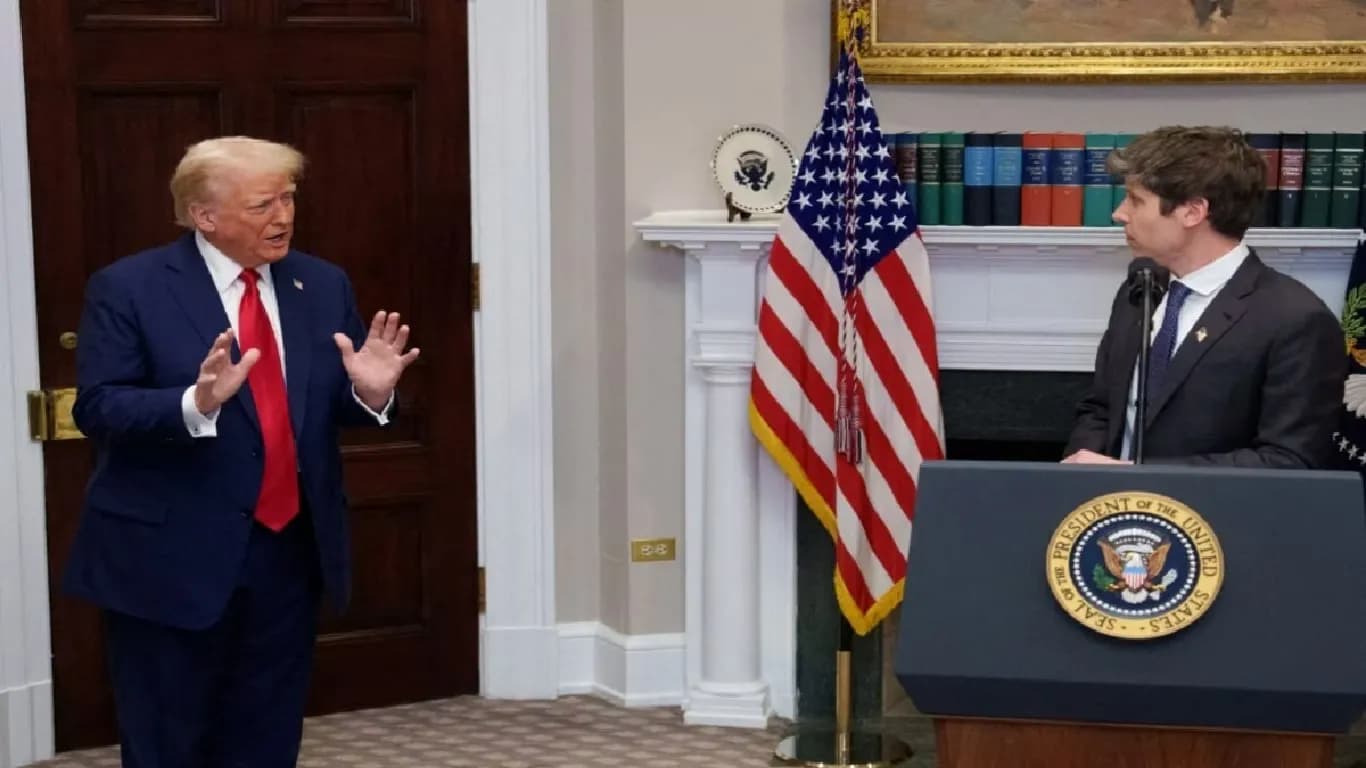
OpenAI Considers Offering 5% Stake to US Government Amid AI Regulation Talks



Follow Us:


4,723 views
OpenAI is in early discussions to offer the US government a 5 percent stake in the company, according to the Financial Times. The move aims to ensure Americans benefit from the growth of artificial intelligence while helping companies navigate regulatory scrutiny from Washington. Talks remain at a conceptual stage, and no final agreement has been reached.
Key Highlights
- OpenAI is considering giving the US government a 5 percent stake in the company.
- The proposal could be worth about $42.6 billion based on OpenAI's $852 billion valuation.
- Other AI firms like Anthropic, Google, and Meta have been discussed but have not agreed to participate.
- The plan aims to help Americans benefit from AI growth and address regulatory scrutiny.
- Discussions occur as the US government increases oversight of advanced AI systems.
Proposal Details and Potential Impact
The reported proposal extends beyond OpenAI. OpenAI CEO Sam Altman and other executives have suggested that major US AI companies could each allocate 5 percent of their equity to a government-backed investment vehicle or sovereign wealth fund. Companies reportedly included in these discussions are Anthropic, Google, and Meta. However, none have agreed to participate so far.
Based on OpenAI's latest post-money valuation of about $852 billion, a 5 percent stake would be worth approximately $42.6 billion. The proposal follows several conversations between Altman and US officials, including President Donald Trump, Commerce Secretary Howard Lutnick, and Treasury Secretary Scott Bessent. Altman has also met with Democratic Senator Bernie Sanders, who has separately advocated for a sovereign wealth fund funded through a one-time 50 percent tax on shares of the largest US AI companies.
The proposal could be modeled on the Alaska Permanent Fund, which invests oil revenues and pays annual dividends to residents. Another version explores using "Trump accounts" or similar investment mechanisms, allowing American households to benefit from AI company growth.
Industry Responses and Regulatory Context
The concept of a public wealth fund is not new for OpenAI. Earlier this year, OpenAI published a policy paper suggesting that such a fund could ensure all citizens, including those without stock market investments, benefit from AI-driven economic growth. The paper proposed that returns from the fund could eventually be distributed directly to the public.
Anthropic has proposed a similar idea, calling for "universal pre-distributive capital accounts" to support workers whose jobs are most at risk from AI disruption.
These discussions come as the Trump administration increases oversight of advanced AI systems. The White House is reviewing how and when OpenAI can release its most powerful AI models. The administration recently asked OpenAI to stagger the rollout of GPT-5.6, initially limiting access to a small group of trusted partners before a broader release.
Anthropic has faced similar regulatory pressure. Last month, it temporarily suspended access to its advanced Fable and Mythos models after a government order restricted foreign access on national security grounds. Access was restored earlier this week after the company addressed policymakers' concerns.
Mixed Reactions and Broader Implications
The proposal for government ownership in OpenAI has drawn mixed reactions. Some investors view it as a political gesture rather than a genuine wealth-sharing initiative. Others argue that government stakes in leading AI companies could distort competition and prompt other countries to seek similar arrangements with US firms.
Latest News


Reviews & Guides
View All


Samsung Galaxy Buds 4 Pro Review: क्या ₹22,999 में मिलते हैं सबसे बेहतरीन प्रीमियम वायरलेस ईयरबड्स?

कंटेंट क्रिएटर के लिए सबसे दमदार बैटरी लाइफ वाले Windows लैपटॉप, 18 घंटे की मिलेगी बैटरी लाइफ

Samsung Galaxy S26 Ultra क्यों है साल का सबसे बेहतरीन स्मार्टफोन? जानें 5 बड़े कारण

MacBook Neo Review: सस्ता नहीं, Apple का मास्टरस्ट्रोक है ये Laptop!

Samsung Galaxy S26 Ultra Review: AI से लेकर प्राइवेसी डिस्प्ले है सबसे खास, जानें कैसी है परफॉरमेंस

Vivo V70 Elite Review 2026: Price in India, Specs, Features

Best Phone Under ₹10,000 for Elderly and Senior Citizens

Haier 32, 43 & 55 Inch LED TV: Full Specifications & Price Comparison

Best 4K TVs Under ₹40,000 in India (2026)

Lava Virat Curve 5G Price in India, Launch Date & Specs 2026

Samsung Galaxy S26 FE Price in India ₹79,999, Specs & Offers

Samsung Galaxy S26 FE vs iPhone 17: Price & Specs