



Ad
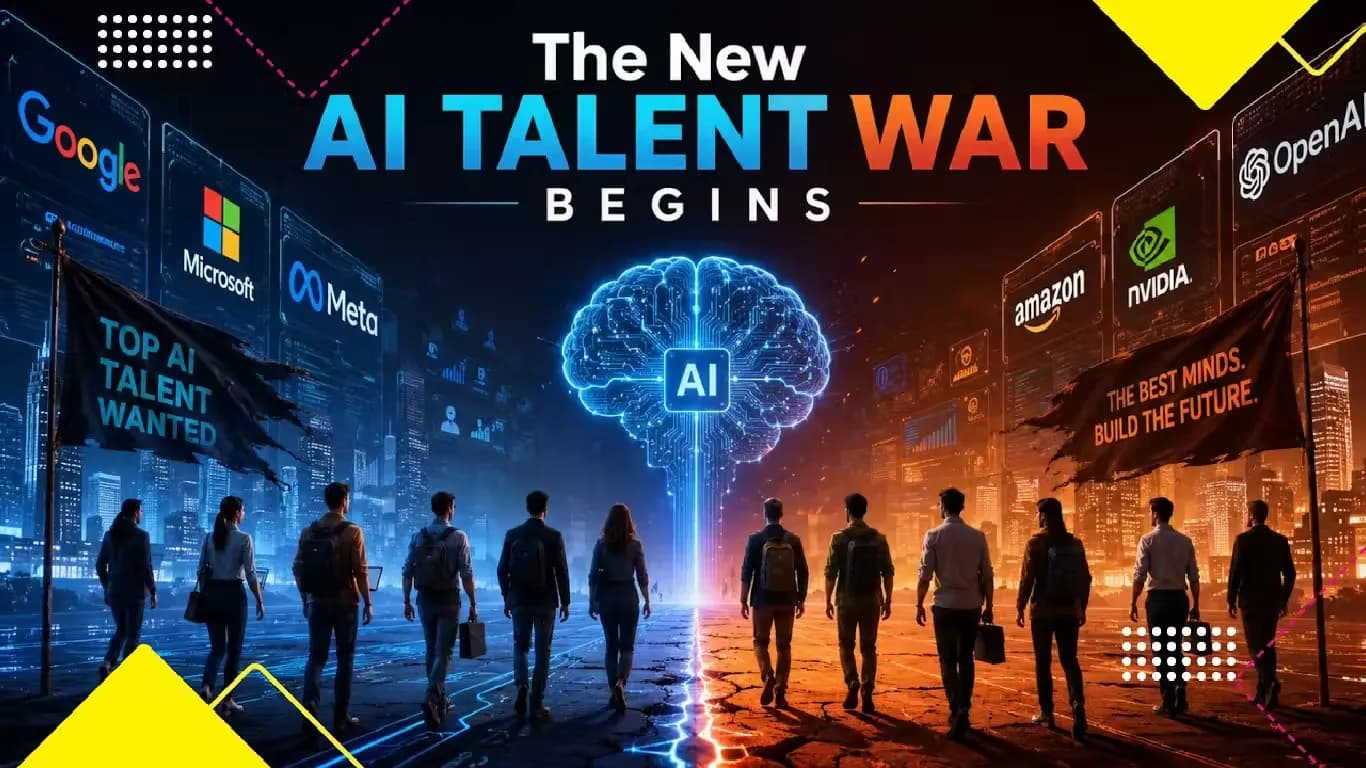
OpenAI Researcher Returns to India Amid Global AI Talent War



Follow Us:


7,655 views
The global competition for artificial intelligence talent has intensified, with major AI companies offering billions of dollars and high salaries to attract top researchers and executives. Amid this fierce hiring environment, an OpenAI researcher has chosen to leave Silicon Valley and return to India, expressing optimism about the country's potential for AI innovation.
Key Highlights
- OpenAI researcher Shyamal moved from Silicon Valley to India in early 2024.
- Major AI firms offer billions to hire top researchers and executives globally.
- India's AI sector grows but lags in homegrown model output compared to US and China.
- India AI Mission allocates $1.2 billion to support startups with subsidized GPU resources.
Global AI Companies Compete for Talent
In recent months, leading AI firms have accelerated efforts to recruit the brightest minds. OpenAI has made significant hires, including a former executive whom a major search company reportedly paid over $2 billion to rejoin just two years prior. The company also brought on Dean Ball, an AI scholar who shaped early AI policy for the Trump administration, to lead its policy efforts.
Another notable move involved John Jumper, a Nobel Prize winner from Google DeepMind. Jumper, who led the AlphaFold project that predicted the structure of 200 million proteins, announced his departure from DeepMind to join Anthropic. These high-profile moves highlight the intense competition among AI companies to secure top talent.
OpenAI Researcher Relocates to India
While the United States continues to attract and retain AI experts, one OpenAI researcher, known as Shyamal on X, has taken a different path. Earlier this year, Shyamal moved from the Bay Area back to India. In a post on X, he emphasized his commitment to ensuring that superintelligence accelerates science and remains accessible and beneficial to all.
Shyamal wrote, "After close to four years at OpenAI, I moved from the Bay Area to India earlier this year. I still believe deeply in ensuring true superintelligence accelerates science and remains accessible and beneficial to all. Having grown up here, I've also always felt deeply connected to the ecosystem here."
He shared that recent conversations with researchers, engineers, and thinkers across India and the Asia-Pacific region revealed a strong desire to build the future locally. "It's become clear that there are many who want to build the future from here," he stated. Shyamal noted that moving back initially seemed counterintuitive, but he no longer sees it that way.
He believes that what India has lacked is the belief and ambition to create globally significant institutions. "What's been missing is the belief that you can build institutions of global consequence from anywhere," he wrote. "And more importantly, the ambition and the will to pursue ideas that seem impossibly large at first." He described this as a "once in a generation opportunity."
India's Growing AI Ecosystem
India's AI sector has expanded rapidly in recent years. However, the country still produces fewer homegrown AI models compared to the US, Europe, and China. Most Indian startups focus on large language models or voice-based systems. To boost development, the government launched the India AI Mission, a $1.2 billion initiative. This program provides selected startups with subsidized GPU computing resources in exchange for releasing their AI models publicly.
Latest News



Reviews & Guides
View All


Samsung Galaxy Buds 4 Pro Review: क्या ₹22,999 में मिलते हैं सबसे बेहतरीन प्रीमियम वायरलेस ईयरबड्स?

कंटेंट क्रिएटर के लिए सबसे दमदार बैटरी लाइफ वाले Windows लैपटॉप, 18 घंटे की मिलेगी बैटरी लाइफ

Samsung Galaxy S26 Ultra क्यों है साल का सबसे बेहतरीन स्मार्टफोन? जानें 5 बड़े कारण

MacBook Neo Review: सस्ता नहीं, Apple का मास्टरस्ट्रोक है ये Laptop!

Samsung Galaxy S26 Ultra Review: AI से लेकर प्राइवेसी डिस्प्ले है सबसे खास, जानें कैसी है परफॉरमेंस
Vivo V70 Elite Review 2026: Price in India, Specs, Features

Apple AirPods 5: Price in India, Features and Specifications

Haier Smart TV Review 2026: Is It Worth Buying?

Best 55-Inch TVs Under ₹50,000 in India

Best 5 AI TVs in India – LG, Samsung, Sony & TCL Compared

Best Phone Under ₹10,000 for Elderly and Senior Citizens

Haier 32, 43 & 55 Inch LED TV: Full Specifications & Price Comparison