


Ad
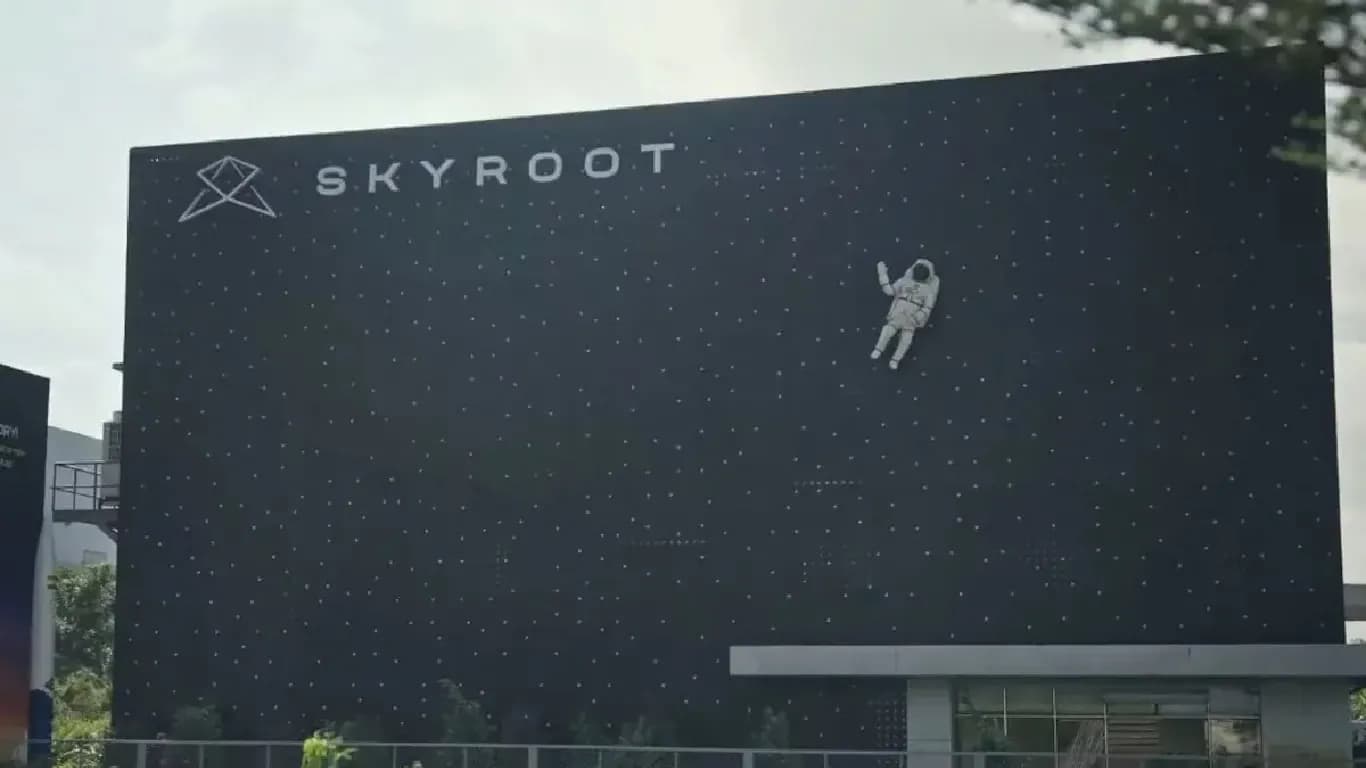
Skyroot Aerospace Becomes India’s First Spacetech Unicorn With Haldiram’s Investment



Follow Us:


7,740 views
Skyroot Aerospace has become India’s first spacetech unicorn, following the successful launch of its Vikram-1 rocket last week. The company, founded in 2018, has raised about $160 million through several funding rounds. Notably, Indian food giant Haldiram’s invested in Skyroot during a Series B round in January 2022, according to Tracxn. The exact amount of Haldiram’s investment remains undisclosed.
Key Highlights
- Skyroot Aerospace becomes India's first spacetech unicorn after Vikram-1 rocket launch.
- Haldiram’s invested in Skyroot during a Series B round in January 2022.
- Skyroot targets the sub-1,000 kilogram satellite launch market with precise payload placement.
- Company has raised around $160 million from investors including BlackRock and GIC.
- Market for small satellite launches is estimated at $5 billion and expected to grow.
Key Investors and Funding
Skyroot Aerospace has attracted several prominent investors. Alongside Haldiram’s, Indian billionaire Lakshmi Niwas Mittal has invested through LNM India Internet Ventures. Other backers include private equity firms such as BlackRock and Singapore’s GIC. The company’s valuation now exceeds $1 billion, making it a unicorn in the Indian spacetech sector.
The involvement of Haldiram’s, a well-known food brand, surprised many observers. Social media users noted the unexpected connection between a traditional food company and a high-tech aerospace firm. Despite this, Haldiram’s is one of several Indian investors supporting Skyroot’s growth.
Company Background and Mission
Skyroot Aerospace was founded by former ISRO employees Pawan Kumar Chandana and Naga Bharath Daka. The company aims to provide commercial satellite launch services. It plans to begin full commercial operations as early as next year, targeting the growing market for small satellite launches.
On Saturday, July 18, Skyroot launched a test rocket carrying a 350-kilogram payload into low Earth orbit. This achievement made Skyroot the first Indian private company to reach orbital space launch capability. The company’s Vikram-1 rocket is designed for the sub-1,000 kilogram payload market.
Market Competition and Growth
Skyroot Aerospace will compete with US-based startups such as Rocket Lab, Firefly Aerospace, and Astra Space. It will also face competition from Chinese private firms like i-Space, Galactic Energy, and CAS Space. Unlike larger launches that deliver multiple payloads to approximate locations, Skyroot’s approach focuses on precise placement of individual payloads.
This precision allows satellite operators to avoid using extra fuel and time to reach their desired orbits. The current market for small satellite launches is estimated at $5 billion, with expectations for rapid growth as more companies deploy satellites. In May, Rocket Lab reported its order backlog had more than doubled to $2.2 billion, with launches booked through 2029. The company’s market capitalisation now exceeds $43 billion.
Future Outlook
Skyroot Aerospace’s entry into the unicorn club marks a significant milestone for India’s private space sector. With support from both domestic and international investors, the company is positioned to expand its commercial launch services and compete globally in the small satellite market.
Latest News


Reviews & Guides
View All


Samsung Galaxy Buds 4 Pro Review: क्या ₹22,999 में मिलते हैं सबसे बेहतरीन प्रीमियम वायरलेस ईयरबड्स?

कंटेंट क्रिएटर के लिए सबसे दमदार बैटरी लाइफ वाले Windows लैपटॉप, 18 घंटे की मिलेगी बैटरी लाइफ

Samsung Galaxy S26 Ultra क्यों है साल का सबसे बेहतरीन स्मार्टफोन? जानें 5 बड़े कारण

MacBook Neo Review: सस्ता नहीं, Apple का मास्टरस्ट्रोक है ये Laptop!

Samsung Galaxy S26 Ultra Review: AI से लेकर प्राइवेसी डिस्प्ले है सबसे खास, जानें कैसी है परफॉरमेंस
Vivo V70 Elite Review 2026: Price in India, Specs, Features

Best 4K TVs Under ₹40,000 in India (2026)

Lava Virat Curve 5G Price in India, Launch Date & Specs 2026

Samsung Galaxy S26 FE Price in India ₹79,999, Specs & Offers

Samsung Galaxy S26 FE vs iPhone 17: Price & Specs

Best Haier TV in India 2026: Top Models, Prices & Specs

Best Haier LED TV Under Rs 30,000 in India