


Ad
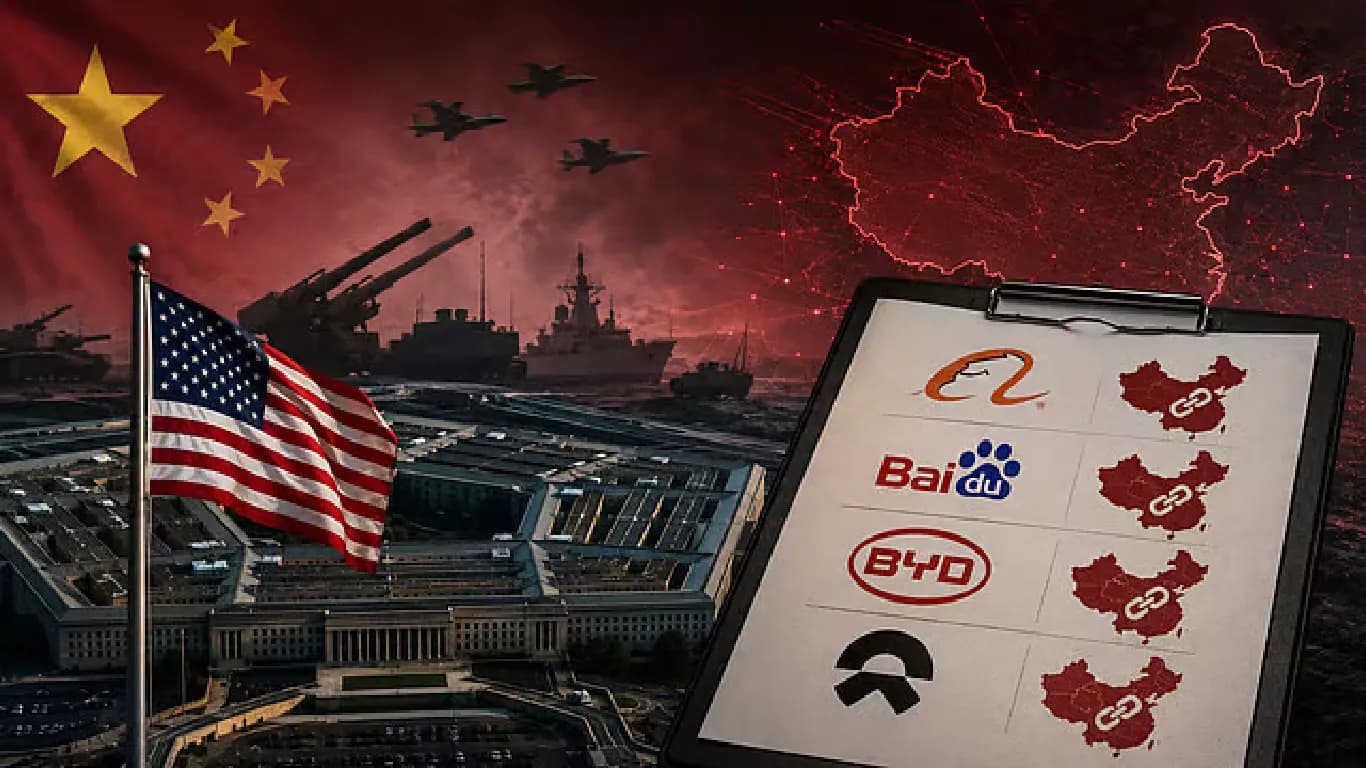
US Adds Alibaba, Baidu, BYD, and Unitree to Chinese Military Support List



Follow Us:


6,890 views
The US Department of Defense has expanded its 1260H list, adding major Chinese companies it claims support the Chinese military. Newly included firms are Alibaba, Baidu, humanoid robot maker Unitree, and electric vehicle manufacturer BYD. The Pentagon released the updated list on Monday, targeting leading Chinese companies in artificial intelligence, robotics, and electric vehicles.
Key Highlights
- US adds Alibaba, Baidu, BYD, and Unitree to its 1260H list of Chinese military supporters.
- The updated list now includes 188 companies from AI, robotics, and electric vehicle sectors.
- Inclusion may restrict US military contracts and research funding for listed companies.
- Chinese embassy criticizes the move, calling it discriminatory and politically motivated.
The Department of Defense stated, “The United States Government reserves the right to take additional actions on these entities under authorities other than Section 1260H.” According to Bloomberg News, this update was initially published in February but was withdrawn soon after. The 1260H list is a tool the US uses to restrict Chinese technology firms and was established under the 2021 National Defense Authorization Act.
Details of the Updated 1260H List
The revised list now includes 188 companies, up from previous versions. While being listed does not automatically trigger sanctions, it can limit a company’s ability to contract with the US military or receive research funding. This designation may also serve as a warning to US investors and could precede stricter trade or investment restrictions.
Alibaba and Baidu are described as “military-civil fusion” contributors to China’s defense industrial base. The Pentagon claims both companies are affiliated with China’s Ministry of Industry and Information Technology (MIIT). Under China’s military-civil fusion policy, private sector firms are required to collaborate with the armed forces.
This action now restricts three major Chinese AI companies: Alibaba, Baidu, and Tencent. Tencent has been on the list since 2025. Unitree is cited for “knowingly receiving assistance from the Government of China through science, technology, or industrial efforts.”
Additional Companies and Reactions
Other companies added include Nio, battery manufacturers Calb Group and Eve Energy, and lidar maker RoboSense. The Pentagon stated these entities qualify as Chinese military companies operating directly or indirectly in the US. Their alleged activities include providing commercial services, manufacturing, producing, or exporting.
The Chinese embassy criticized the US move, accusing it of “overstretching the concept of national security and making discriminatory lists to go after Chinese companies.” The embassy also stated that Chinese businesses comply with local laws and regulations wherever they operate.
This update follows a recent meeting between former President Trump and President Xi in Beijing. The summit was closely watched for signs of easing trade tensions between the US and China, but it did not yield major progress on advanced technology issues, particularly artificial intelligence.
Artificial intelligence remains a global concern for governments. China has previously cited national security in its own regulatory actions. The US has restricted sales of advanced chips to China from companies like Nvidia and AMD. US AI firms such as OpenAI and Anthropic have also alleged that Chinese companies have used their models without authorization.
Latest News

Reviews & Guides
View All


Samsung Galaxy Buds 4 Pro Review: क्या ₹22,999 में मिलते हैं सबसे बेहतरीन प्रीमियम वायरलेस ईयरबड्स?

कंटेंट क्रिएटर के लिए सबसे दमदार बैटरी लाइफ वाले Windows लैपटॉप, 18 घंटे की मिलेगी बैटरी लाइफ

Samsung Galaxy S26 Ultra क्यों है साल का सबसे बेहतरीन स्मार्टफोन? जानें 5 बड़े कारण

MacBook Neo Review: सस्ता नहीं, Apple का मास्टरस्ट्रोक है ये Laptop!

Samsung Galaxy S26 Ultra Review: AI से लेकर प्राइवेसी डिस्प्ले है सबसे खास, जानें कैसी है परफॉरमेंस
Vivo V70 Elite Review 2026: Price in India, Specs, Features

Best 4K TVs Under ₹40,000 in India (2026)

Lava Virat Curve 5G Price in India, Launch Date & Specs 2026

Samsung Galaxy S26 FE Price in India ₹79,999, Specs & Offers

Samsung Galaxy S26 FE vs iPhone 17: Price & Specs

Best Haier TV in India 2026: Top Models, Prices & Specs

Best Haier LED TV Under Rs 30,000 in India