



Ad
Amaravati Achieves 4 Kelvin Milestone in Indigenous Quantum Computing Effort



Follow Us:


4,817 views
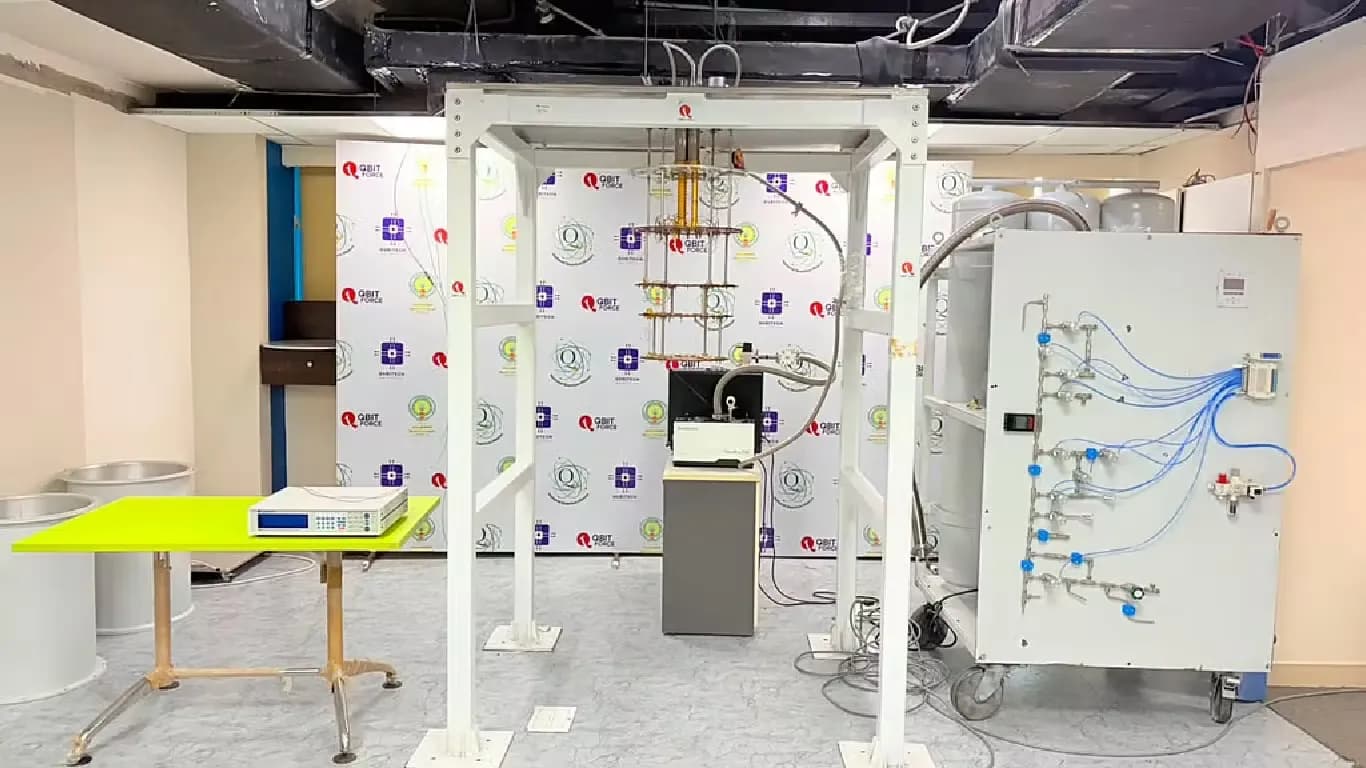
Amaravati in Andhra Pradesh has achieved a significant milestone in quantum computing. The city’s Quantum Reference Facility at Medha Towers has developed an indigenous dilution refrigerator that reached 4 Kelvin, or minus 269 degrees Celsius. This marks the first major technical achievement for the state’s quantum hardware facility.
Key Highlights
- Amaravati's dilution refrigerator reached 4 Kelvin using over 80 percent locally sourced components.
- Quantum computers require near absolute zero temperatures to maintain qubit stability and function.
- The facility will support testing of superconducting devices, quantum sensors, and cryogenic electronics.
- AQV partnered with Qbit Force and Qubitech to strengthen India's quantum hardware supply chain.
Quantum Refrigerator Breakthrough
The dilution refrigerator was built with over 80 percent domestically-sourced components. According to the Andhra Pradesh government, this is one of the coldest temperatures reached in an Indian research facility using such a high proportion of local materials. This accomplishment positions Amaravati as a leader in India’s quantum technology sector.
The achievement is part of the Amaravati Quantum Valley (AQV) initiative, which aims to advance quantum computing capabilities in India. The facility will continue to lower temperatures toward the ultra-low millikelvin range required for advanced quantum computing applications.
Understanding Quantum Computing
Quantum computing differs from traditional computing. While regular computers use bits that represent either 0 or 1, quantum computers use qubits. Qubits can represent multiple states at once, allowing quantum computers to process complex problems much faster than classical computers. This ability could enable research and problem-solving that would otherwise take hundreds of years to complete.
However, qubits are fragile and require extremely cold conditions to function. They must be cooled to near absolute zero, or about 15 millikelvin, to maintain their quantum state. Dilution refrigerators are essential for achieving these temperatures, typically cooling systems to just above absolute zero, around 10 millikelvin or minus 273.14 degrees Celsius.
Facility’s Role in Quantum Hardware
The 4 Kelvin milestone is the first step in Amaravati’s journey toward supporting advanced quantum computing. The dilution refrigerator will enable testing and characterization of superconducting devices, quantum sensors, and cryogenic electronics. This makes the facility a crucial testing ground for the development of quantum computing hardware in India.
Andhra Pradesh has been focusing on quantum computing for some time. In September last year, scientists, researchers, startups, and industry leaders met with Chief Minister N. Chandrababu Naidu. They presented findings that nearly 85 percent of the components needed for quantum computing infrastructure could be developed within India.
Since then, AQV has partnered with Qbit Force and Qubitech to map India’s quantum hardware supply chain. These partnerships aim to identify opportunities for indigenous development, especially in cryogenic technologies.
India’s Quantum Reference Facility
In April 2026, India’s first Quantum Reference Facility was established at Medha Towers, Amaravati. This facility is the same one that tested the indigenous dilution refrigerator. The ongoing work at this center is expected to support the development and deployment of quantum computers in India.
Latest News



Reviews & Guides
View All


Samsung Galaxy Buds 4 Pro Review: क्या ₹22,999 में मिलते हैं सबसे बेहतरीन प्रीमियम वायरलेस ईयरबड्स?

कंटेंट क्रिएटर के लिए सबसे दमदार बैटरी लाइफ वाले Windows लैपटॉप, 18 घंटे की मिलेगी बैटरी लाइफ

Samsung Galaxy S26 Ultra क्यों है साल का सबसे बेहतरीन स्मार्टफोन? जानें 5 बड़े कारण

MacBook Neo Review: सस्ता नहीं, Apple का मास्टरस्ट्रोक है ये Laptop!

Samsung Galaxy S26 Ultra Review: AI से लेकर प्राइवेसी डिस्प्ले है सबसे खास, जानें कैसी है परफॉरमेंस
Vivo V70 Elite Review 2026: Price in India, Specs, Features

Apple AirPods 5: Price in India, Features and Specifications

Haier Smart TV Review 2026: Is It Worth Buying?

Best 55-Inch TVs Under ₹50,000 in India

Best 5 AI TVs in India – LG, Samsung, Sony & TCL Compared

Best Phone Under ₹10,000 for Elderly and Senior Citizens

Haier 32, 43 & 55 Inch LED TV: Full Specifications & Price Comparison