



Ad

Anthropic Launches Claude Opus 4.8 With Enhanced Honesty and Cost Efficiency



Follow Us:


7,858 views
Anthropic has released Claude Opus 4.8, its latest flagship AI model, just 41 days after the previous version. The company highlights improved honesty as the main advancement, alongside gains in intelligence and cost efficiency. Early testers report that Opus 4.8 is more likely to admit uncertainty and less likely to make unsupported claims. This addresses a common concern among AI users about models making unsubstantiated statements.
Key Highlights
- Anthropic releases Claude Opus 4.8 with improved honesty and reduced unsupported claims.
- Opus 4.8 fast mode operates at one third the cost of previous Anthropic models.
- Effort Control and Dynamic Workflows features offer greater flexibility and task handling.
- Mythos-class capabilities with enhanced safeguards to be available to customers soon.
Key Improvements in Claude Opus 4.8
Anthropic describes Opus 4.8 as a modest but tangible upgrade over Opus 4.7. The new model offers better performance in coding, reasoning, and general knowledge tasks. Testers found it sharper in judgment and more reliable, especially during complex agentic tasks. The company has focused on making the model more transparent, aiming to reduce the risk of misleading outputs.
Another significant change is the reduction in operating costs. Opus 4.8’s fast mode is three times cheaper than previous Anthropic models. This cost reduction is important as companies like Microsoft and Uber have recently raised concerns about the rising expenses of running advanced AI systems. Lower costs could make large-scale AI adoption more feasible for businesses.
New Features and Capabilities
Claude Opus 4.8 introduces a feature called Effort Control. This allows users to select how much computational effort the AI should use before responding. A high-effort setting prompts the AI to reason more deeply, while a low-effort setting delivers faster answers and uses fewer resources. This flexibility lets users balance speed, depth, and resource consumption according to their needs.
Another addition is Dynamic Workflows, available in research preview. This feature is designed for handling large and complex tasks that exceed the capacity of a single AI agent. Dynamic Workflows enables the coordination of hundreds of parallel AI subagents. It can be used for tasks such as reviewing thousands of lines of code, identifying software bugs across entire services, or testing large-scale migrations before deployment.
Upcoming Mythos-Class Capabilities
Anthropic has also addressed concerns about Mythos-class capabilities, which recently alarmed cybersecurity experts due to their advanced vulnerability detection. The company states it has made rapid progress on safeguards and plans to offer Mythos-class capabilities to customers in the coming weeks. These advancements are expected to further enhance the model’s utility in security and other critical applications.
Anthropic continues to update its AI models rapidly, focusing on reliability, transparency, and cost control. The company’s latest release aims to address both technical and practical challenges faced by users and organizations deploying advanced AI systems.
Latest News





Reviews & Guides
View All


Samsung Galaxy Buds 4 Pro Review: क्या ₹22,999 में मिलते हैं सबसे बेहतरीन प्रीमियम वायरलेस ईयरबड्स?

कंटेंट क्रिएटर के लिए सबसे दमदार बैटरी लाइफ वाले Windows लैपटॉप, 18 घंटे की मिलेगी बैटरी लाइफ

Samsung Galaxy S26 Ultra क्यों है साल का सबसे बेहतरीन स्मार्टफोन? जानें 5 बड़े कारण

MacBook Neo Review: सस्ता नहीं, Apple का मास्टरस्ट्रोक है ये Laptop!

Samsung Galaxy S26 Ultra Review: AI से लेकर प्राइवेसी डिस्प्ले है सबसे खास, जानें कैसी है परफॉरमेंस
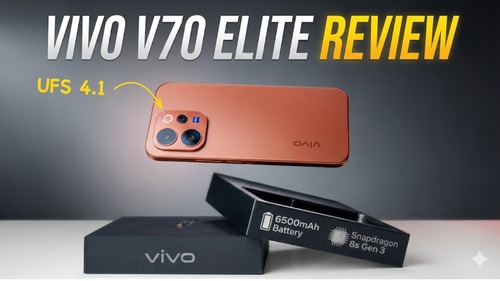
Vivo V70 Elite Review 2026: Price in India, Specs, Features

Best 4K TVs Under ₹40,000 in India (2026)

Lava Virat Curve 5G Price in India, Launch Date & Specs 2026

Samsung Galaxy S26 FE Price in India ₹79,999, Specs & Offers

Samsung Galaxy S26 FE vs iPhone 17: Price & Specs

Best Haier TV in India 2026: Top Models, Prices & Specs

Best Haier LED TV Under Rs 30,000 in India