



Ad
Expert Reviews
Global Debate Grows Over Access to Anthropic’s Claude Mythos AI System



Access to Anthropic’s advanced AI system, Claude Mythos, has become a major issue in global technology and security policy. Mythos, known for its strong cybersecurity capabilities, is currently available only to a select group of US companies under Project Glasswing. The White House is closely monitoring the situation, and major firms like Apple, Google, Microsoft, and Nvidia have access. Indian companies and other international firms remain excluded from the initial rollout, raising concerns about global equity and security.
Key Highlights
- Anthropic's Claude Mythos AI is restricted to select US companies under Project Glasswing.
- Mythos has detected thousands of high-severity software flaws, including one hidden for 27 years.
- India and other countries are seeking access amid concerns over cybersecurity and global equity.
- US government limits Mythos access to 40 organizations, citing national security and misuse risks.
Mythos AI and Cybersecurity Risks
Claude Mythos is designed to detect hidden flaws in software systems, including vulnerabilities that may have existed for decades. Anthropic reports that Mythos Preview has already discovered thousands of high-severity flaws, some affecting every major operating system and web browser. One notable case involved the identification of a vulnerability that had remained undetected for 27 years. These findings are significant because many critical sectors, such as banking, telecom, and government infrastructure, still rely on legacy software.
The dual-use nature of Mythos has sparked debate. While it can strengthen cyber defenses and improve software security, the same technology could be misused to exploit vulnerabilities at scale. This potential for misuse has led to heightened caution among government and industry leaders worldwide. Mythos is not seen as just another AI assistant but as a strategic tool that could influence national cybersecurity preparedness.
International Responses and Policy Concerns
India has expressed strong interest in gaining access to Mythos, citing its large developer base and growing ambitions in AI. Indian officials worry that exclusion from Project Glasswing could leave domestic firms behind in the next phase of AI development. Following a high-level review led by Finance Minister Nirmala Sitharaman, India is exploring technical and policy options to secure controlled access for its companies. Discussions are ongoing with US officials, Anthropic, and early users of Mythos. Industry group NASSCOM has also urged for Indian inclusion, noting the country’s role in global software security.
The debate over Mythos has extended to other countries as well. Canadian Finance Minister Franois-Philippe Champagne confirmed that the issue was discussed at an International Monetary Fund meeting in Washington DC, describing Mythos as an "unknown unknown." In the UK, Bank of England Governor Andrew Bailey said authorities are assessing the impact of advanced AI on cyber-crime risks. The European Union has also engaged Anthropic on related concerns, indicating that the issue is now part of broader international policy discussions.
US Policy and Strategic Considerations
The US government has taken a cautious approach, limiting Mythos access to about 40 organizations and resisting expansion to 70 more until stronger safeguards are in place. White House officials are concerned about the risks of widespread deployment before regulatory frameworks can ensure responsible use. Supporters of restricted access argue that advanced AI systems, once widely distributed, are difficult to monitor and control. There is also a strategic element, as countries leading in AI could gain significant economic and cybersecurity advantages. Restricting access may help maintain this lead while global regulations evolve.
Follow Us:



Ad
Recent News

Major Discounts on Samsung Galaxy S26 Series and Competing Smartphones in 2026
02-May-2026 11:00 AM

Global Debate Grows Over Access to Anthropic’s Claude Mythos AI System
02-May-2026 09:00 AM

Why Smartphones Remain Unmatched Despite Efforts to Replace Them
02-May-2026 08:00 AM

Apple May Keep iPhone 18 Pro Prices Steady Despite RAM Cost Increases
02-May-2026 08:00 AM

NDMA Emergency Alert on Phones: What It Means and What to Do
02-May-2026 07:00 AM

India Conducts Nationwide Mobile Disaster Alert System Trial Using Cell Broadcast Technology
02-May-2026 07:00 AM
Ad
Reviews & Guides
View All

Samsung Galaxy S26 Ultra Review: AI से लेकर प्राइवेसी डिस्प्ले है सबसे खास, जानें कैसी है परफॉरमेंस

Vivo V70 Elite Review 2026: Price in India, Specs, Features
Asus Zenbook 14 UM3406G Review: All New Thin and Light Ai Laptop

Realme P4 Power 5G First Impressions: Massive Battery and Power
Brother MFC-J5855DW Printer Review 2026: Features, Specs, Performance

Haier H5E Series 4K Ultra HD Smart Google TV Review: Price and specification

Why switch to iPhone These Reasons Will Convince You Instantly

Haier Launches F11, India’s Only Ultra Fresh Air Technology Washing Machine with Full AI Color Touch Panel
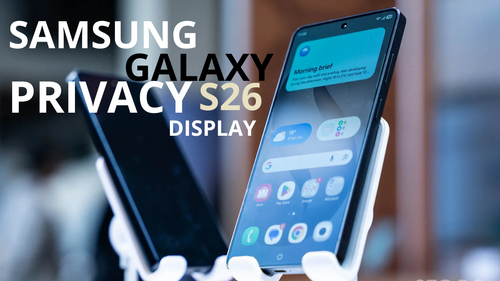
Samsung Galaxy S26 Ultra Privacy Display Explained: How It Works
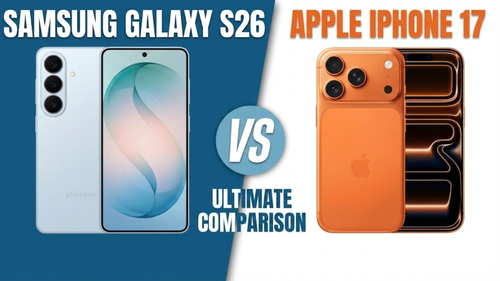
Apple iPhone 17 vs Samsung Galaxy S26: Price in India, Specifications

Should You Buy a Smart AC in India 2026? Pros, Cons, and Top Models

Window AC or Split AC: What Should You Choose in 2026?
Ad






Latest Mobiles In India


Ad
Ad
 |
|
807, 808, 8th Floor,
IRIS Tech Tower Sohna Road Sector 48,
Gurugram, Haryana - 122018